by BAR editor and columnist Jemima Pierre
Despite the fact that Barack Obama’s “approach to domestic economic and social policy has savaged the U.S. Black community on every front,” the election season will see increased demands that Blacks circle the wagons around “their” president. Narrow group thinking leads African Americans to behave as if “it does not matter that targeted assassinations and indefinite detention are the order of the day, or that a Black man is helping to foment war on the African continent.” Ignoring both the lessons of history and Obama’s role in the current Black economic catastrophe, “our establishment Blacks continue to be imprisoned in an imperialist capitalism.”
The World Went to Hell and the Black Man Didn’t Go Free
by BAR editor and columnist Jemima Pierre
“Important segments of the community have decided that they are willing to sacrifice their souls so that a few individuals can have a place in the imperial machine.”
In his memoir, Dusk of Dawn, published in 1940, W. E. B. DuBois attempted to explain why he called on Black Americans to “close ranks” to support the U.S. effort against the Axis powers during World War I. “That which the German power represents,” he wrote, “spells the death to the aspirations of Negroes and all darker races for equality, freedom and democracy.” However, DuBois admitted that at the time, he “did not realize the full horror of war,” and, just as importantly, he was deluded into believing that victory for the U.S. abroad would lead to victory for African Americans at home. With this revelation, DuBois realized that his logic for supporting the war effort was shaped by a central dilemma of African American political strategy. “I was thinking narrowly of the interest of my group,” wrote DuBois, “and was willing to let the world go to hell, if the black man went free.”
The world went to hell, the black man didn’t go free, and more to the point, Dubois’ dilemma persists today. African Americans are steadfast in their support for Barack Obama even as his policies push us to the brink of disaster. Certainly, there is an understandable psychic or emotional need for African Americans to support “their” Black President against the increasingly virulent personal racist attacks on him and his family. Those attacks are not only on the President but also on the entire Black community. Yet at the same time, Obama, though a victim of racism, is also a perpetrator of U.S. imperialism. Under his rule we have seen the expansion of the so-called “war on terror” and U.S. military aggression in the form of drone attacks, targeted assassinations, regime changes, and threats of sanctions and war. Meanwhile, his approach to domestic economic and social policy – not only continuing many of the policies of the Bush regime, but extending and intensifying them – have savaged the U.S. Black community, on every front, allowing the growth of the prison- and military- industrial complexes, the rise in deportations, and most recently, the erosion of civil liberties through the signing of the National Defense Authorization Act.
“African Americans are steadfast in their support for Barack Obama even as his policies push us to the brink of disaster.”
Obama’s policies, however, are beyond the realm of critique. The U.S. Black political and intellectual classes seem delighted by the mere cosmetic elements of the Obama presidency – Al Sharpton on MSNBC, Barack being a wonderful husband to Michelle and father to Sasha and Malia, a Black woman major general, and a Black Attorney General– and are only outraged when this pristine image is sullied by the slurs and epithets of Republican racists. It does not matter that targeted assassinations and indefinite detention are the order of the day, or that a Black man is helping to foment war on the African continent. While it would be easy to read the complicity of a large group of U.S. Blacks as delusional, it seems that the real issue is that at some point, important segments of the community have decided that they are willing to sacrifice their souls so that a few individuals can have a place in the imperial machine.
We would do well to remember that W.E.B. DuBois was more than willing to break ranks with the African American establishment and take positions that were independent, radical, and unpopular—but ultimately humane and just. Rather than continue to support the narrow racial patriotism promoted by the NAACP during the Cold War era, he sought new alliances across races, classes, and nations for the good of peace, disarmament, and anti-imperialism. Significantly, he stressed the internationalism that he knew was necessary for true global Black emancipation, arguing that U.S. Black survival depends on those of “West Indians and Africans, and all the colored races of the world.” In the face of gradual alienation from mainstream U.S. Black groups, Du Bois joined ranks with other radicals such as Paul Robeson and the Council on African Affairs, as well as the Southern Negro Youth Congress. These groups were international and radically anti-imperialist and anti-capitalist, and saw the Black struggle for civil rights in the U.S. linked directly to the global fight against white racial and class supremacy. “We American Negroes,” Du Bois would later say, “can no longer lead the colored peoples of the world because they far better than we understand what is happening in the world today.”
What we can learn most from DuBois are his consistent protest against the exploitation of empire, his acceptance of the reality that establishment Blacks would forsake him, and his willingness to find new alliances beyond the narrow confines of a stifling, pro-imperial Blackness. These are important strategies to adopt as the world slouches toward hell and as our establishment Blacks continue to be imprisoned in an imperialist capitalism that cuts them off from the progressive and humanist movements of the day—and keeps us all from being free.
Jemima Pierre can be reached at BAR1804@gmail.com.

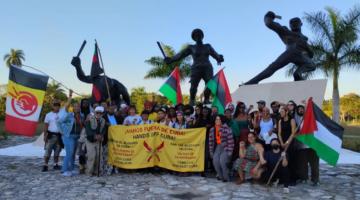 The House Ways and Means subpoenas against peace and justice organizations, paired with the State Department's designation of Cuba as the center of global terrorism, represent a coordinated…
 In this week’s segment, we discuss sportswashing and the rationale of the calls to boycott the U.S. and the recent World Cup. But we begin with the Trump administration’s domestic repression and…
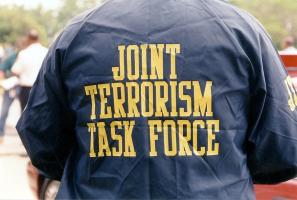 The Trump administration has accelerated its attacks on leftist organizations and individuals while also justifying its genocidal siege of Cuba with the release of the document "Cuba: The Capital of…
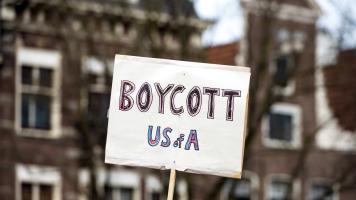 Austin Cole is a Black Alliance for Peace (BAP) National Co-Coordinator. BAP and other organizations called on the international community to boycott the 2026 World Cup, which was held in the United…
 Black political self-determination is always tenuous, even when Black people hold office. Now that DSA and other leftists are winning elections, the contradictions of Black politics are becoming more…


