by BAR editor and columnist Marsha Coleman-Adebayo
What useful function do intellectuals serve in the life of the Black community? Clearly, “it is not our role to sweep by the poor in black limousines and to smile from behind cut glass, whether diamonds or Waterford.” Nor does the Black intellectual serve the people by groveling to Power, even its name is Obama. “He has failed to live up to the promises that could have helped stop African Americans still being systematically disadvantaged, thrown out of their homes by malicious banks, disproportionately unemployed and languishing in poor achieving public schools.” The Black intellectual shows her worth by contributing to the “distribution of knowledge and skills” – and by telling the truth.
The Role of Black Intellectuals
by BAR editor and columnist Marsha Coleman-Adebayo
“Obama may be the chosen one, but what needs to be defined is ‘chosen by whom?’”
Cornel West wrote in 1985 that the black intellectual was “caught between an insolent American society and an insouciant black community.”
Twenty-seven years later, with a black president in office his words have the insistence of a drum roll. We see President Barack Obama battered by the harsh racism of a Republican right in Congress that is prepared to paralyze government and harm the nation if it means defying his attempts at reform. Insolence has never been more insulting.
And while the black community certainly does not have the blithe unconcern that completes the meaning of insouciant, they certainly are not doing much to interrogate their own conditions. We hear pastors of African American church congregations across the South still tell parishioners that Barack “is the chosen one.” The parishioners repeat it to each other, any criticism of such a deified man would surely be treason?
And yet the prisons bulge with African American men and women, cannibalized by a racist and class-based judicial system. The Washington Post reported as the year ended that in the Washington area, African American students were suspended and expelled two to five times as often as whites. “Last year, for example,” the Post’s writer reported, “one in seven black students in St. Mary’s County were suspended from school, compared with one in 20 white students. In Alexandria, black students were nearly six times as likely to be suspended as their white peers… Nearly 6 percent of black students were suspended or expelled from school last year, compared with 1.2 percent of white students.”
“The prisons bulge with African American men and women, cannibalized by a racist and class-based judicial system.”
In August the White House reported that unemployment among young African Americans was 32%, by December it had leapt to 41.3% – the national average for all races is nine percent.
The role of the African American intellectual is even more important now than it was 40 or 50 years ago, propaganda has become more virulent. Obama may be the chosen one, but what needs to be defined is “chosen by whom?” We the voters certainly voted for him but he has failed to live up to the promises that could have helped stop African Americans still being systematically disadvantaged, thrown out of their homes by malicious banks, disproportionately unemployed and languishing in poor achieving public schools.
It can be little surprise that African American children think it is better to have the pale skin and blonde hair of a Beyonce; the whole notion of black is beautiful has gone the way of jobs and opportunity.
When African Americans elected Barack Obama they assumed he would understand what it meant to be black and oppressed, to be insulted, to be hazed, to be profiled by cops or given a harsher sentence because it is believed that it is within your DNA to be criminal.
At this stage in our history, with the first term of the first black president nearing its end, we have more African Americans in prison than in college.
The role of the black intellectual has never been to be an ivory tower scribbler and despite what one sees in Washington D.C. or Atlanta it is not our role to sweep by the poor in black limousines and to smile from behind cut glass, whether diamonds or Waterford.
“The whole notion of black is beautiful has gone the way of jobs and opportunity.”
In 1986 at Harvard University during a discussion commemorating the life and work of W.E.B. du Bois, Harold Cruse, then Professor of History Emeritus at the University of Michigan, and author of The Crisis of the Negro Intellectual, said a resurgence of black intellectualism would require a "conscious community of intellectuals who are committed at an institutional level to create new lines of communication." But he said this was not happening because the black elites coming out of the major universities like Harvard and Yale were isolated from the general Black population.
Jeffrey Howard, a Harvard social psychologist, at the same conference said African Americans failed to coach our children adequately, that it was we as parents who did not do enough. "The distribution of knowledge, skills, and exposure to an aggressive and competitive spirit is fundamental to any group's success in society."
I believe it goes beyond that, it requires that we get out of our cars and onto the sidewalks to engage in protest. We need to serve on committees and school boards in our communities. We complain and theorize but we do not do enough to wrestle control of the ship away from the captains of industry. This is an election year, there is an African American president in office who on New Year’s Eve signed into effect legislation that will allow detention without trial of American citizens at home. In whose interest was that decision made? And, who do you believe is the intended target?
This is the year you and I need to lift ourselves out of our chairs, become involved in our communities and occupy the future we believe in, and that our children deserve.
Dr. Marsha Coleman-Adebayo is the author of No FEAR: A Whistleblowers Triumph over Corruption and Retaliation at the EPA is available through amazon.com and the National Whistleblower Center. Dr. Coleman-Adebayo worked at the EPA for 18 years and blew the whistle on a US multinational corporation that endangered vanadium mine workers. Marsha's successful lawsuit lead to the introduction and passage of the first civil rights and whistleblower law of the 21st century: the Notification of Federal Employees Anti-discrimination and Retaliation Act of 2002 ( No FEAR.)

 The convict labor system was once notorious in Mississippi – and it still is, under the guise of debt restitution.
 Black Self-Defense is Important, But Ideology is Paramount
 The US became deeply involved in global counterinsurgency after World War Two, said Stuart Schrader, a sociologist at Johns Hopkins University and author of “Badges Without Bo
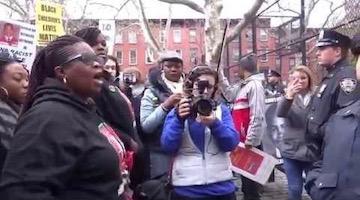 On January 31 activists plan to confront New York City cops in protests over high transit fares and police brutality, under the banner “F.T.P,” according to Shannon Jones, of
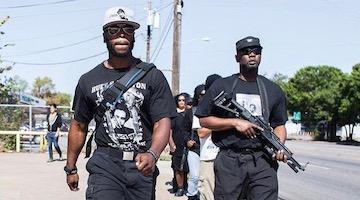 Yafeuh Balogun, a leader of the Dallas-based Huey P Newton Gun Club, which advocates armed Black self-defense, said the club was inspired by the “founding of the Black Panther



