by Mark P. Fancher
President Obama uses his training as a constitutional lawyer to find opportunities to spread violence and impose U.S. imperial will on Africa. He makes war against Libya and then denies having done any such thing. He sends troops to Uganda and other central African nations, at precisely the time when Uganda is discovered to possess huge reserves of oil. Are the soldiers there to protect Uganda, whose army is quite capable, or is it there to draw a line against China’s commercial “advance into the Congo basin.”
Obama’s Tragic Rorschach Perceptions of the Law, Africa and Military Intervention
by Mark P. Fancher
“It is very debatable whether circumstances that are lawful reasons for use of the military have been present in either Libya or Uganda.”
More remarkable than recent U.S. military interventions in Libya and Uganda are the legal analyses that have been proffered by the Obama Administration to justify them. Contrary to what many believe, the law does not allow the President to deploy U.S. troops any time he feels like it – even if he is the Commander in Chief. The U.S. Constitution gives the power to declare war solely to the U.S. Congress.
Of course there are emergencies that make use of military force necessary before a formal declaration of war, so the Congress passed the War Powers Resolution to give the President authority to use military force in cases where there is a specific law authorizing it or in cases where the U.S. is attacked. However, it is very debatable whether circumstances that are lawful reasons for use of the military have been present in either Libya or Uganda. Nevertheless, this has not been an impediment to an administration that appears determined to place U.S. forces on African soil.
When Libyan “rebels” who called themselves “The Brigade to Purge Slaves/Black Skin” and others began their attacks on the Libyan government along with systematic beatings and lynching of blacks, U.S. Africa Command (AFRICOM) rushed to the aid of these violent mobs masquerading as revolutionaries. By doing so, they helped put into motion a massive invasion by NATO that culminated in the grisly assassination of Muammar Gadhafi. When hostilities began in Libya, Congress had not declared war, there was no law on the books authorizing an attack on that country, and Libya had in no way attacked the U.S. Yet, in response to challenges to the use of the U.S. military in Libya, President Obama, an acknowledged constitutional law scholar, conveniently ignored the Constitution and pointed instead to United Nations Security Council Resolution 1973.
“U.S. Africa Command rushed to the aid of these violent mobs masquerading as revolutionaries.”
However one might interpret Resolution 1973, it is not possible to reasonably conclude that it ruled out all methods of resolving the Libyan crisis except an immediate armed effort to effect regime change. It specifically called for, among other things, the African Union to “send its ad hoc High-Level Committee to Libya with the aim of facilitating dialogue to lead to the political reforms necessary to find a peaceful and sustainable solution.”
Likewise, in the case of Uganda, the Obama Administration recently deployed 100 U.S. troops with “additional forces” to be deployed within a month. Their pursuit of the leadership of the “Lord’s Resistance Army” (which is alleged to be responsible for widespread atrocities and mayhem for more than two decades) was rationalized by claims that the mission “furthers U.S. national security interests and foreign policy.” Yet, as in the case of Libya, there is no Congressionally-declared war on the Lord’s Resistance Army.
President Obama claims his authority to send combat-equipped troops into Uganda is found in a 2010 law called “The Lord’s Resistance Army Disarmament and Northern Uganda Recovery Act.” Admittedly, that law declares that it is official U.S. policy “to work with regional governments toward a comprehensive and lasting resolution to the conflict in Uganda and other affected areas by providing political, economic, military, and intelligence support for viable multilateral efforts to protect civilians from the Lord’s Resistance Army…”
However, that law also provides very specific instructions to the President. The President’s role was to simply develop a plan that would:
*strengthen UN and regional government efforts to cope with the Lord’s Resistance Army;
*assess options for US cooperation with regional governments;
*present an interagency plan for review of U.S. policy related to the Lord’s Resistance Army; and
*describe diplomatic engagement in the region.
Even if we assume for the sake of discussion that authority to deploy troops is implicit in the 2010 law, the text is also ambiguous enough that President Obama could have just as easily avoided the use of the military altogether. This all leads logically to questions about why the Obama Administration has felt compelled to either distort or interpret the law in ways that lead to use of armed forces in Libya and Uganda.
With respect to Libya, the ready answer by many is that there is an interest in gaining full control of that country’s oil reserves. Gadhafi’s continuing campaign for African unity and total independence from the west provided additional incentive. But what about Uganda? Historically, it has not been widely regarded as a focal point for potential oil-inspired military intervention.
“There is no Congressionally-declared war on the Lord’s Resistance Army.”
An article in The Economist last year provided some answers when it noted: “Uganda will soon become a mid-sized [oil] producer, alongside countries such as Mexico. Foreign investment in Uganda may nearly double this year to $3 billion. The country expects to earn $2 billion a year from oil by 2015.”
The article gives further clues to U.S. motives with its observation that Uganda’s president: “…seems dazzled by Chinese promises to help build an oil refinery and to help turn oil into Ugandan-produced plastics and fertilizer…[S]everal jealous Western governments and companies want to stall China’s advance into the Congo basin, with its vast reserves of minerals and timber.”
The African World grows weary of many things. They include the Obama Administration’s steadfast maintenance of AFRICOM, and the general use of the military to protect the interests of western corporations. But adding insult to injury is the opportunistic use or distortion of legal limits on executive power to accomplish corporate objectives in Africa. It is tragic when people of good will can look at a body of law and see opportunities for peaceful, productive resolution of crises, and at the same time the Obama Administration can see only opportunities for violence and the imposition of its imperial will on a battered, exploited continent.
Mark P. Fancher is an attorney and the author of the book “I Ain’t Got Tired Yet.” He can be contacted at mfancher@comcast.net.

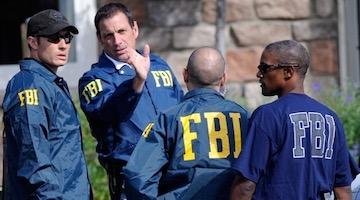 The attorney general’s theory rests on the premise that there is a set path by which one radicalizes into becoming violent.
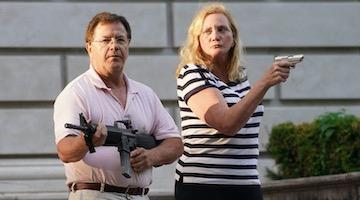 Does the belatedness and ubiquity/banality of allyship echo an anxiety about the enormous restraint that African Americans have exercised?
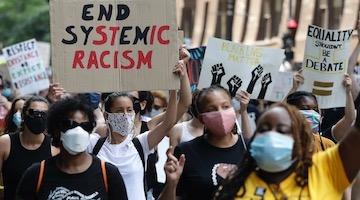 White labor leaders are failing to understand non-traditional organizing that has developed from viral social media movements.
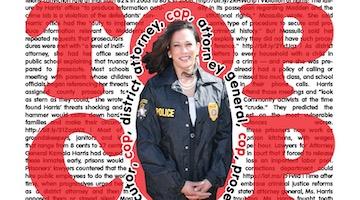 The Democrats are likely to put forward a Black woman prosecutor to legitimize the mass incarceration plague that Joe Biden helped inflict on Black America.
 Black Alliance for Peace national organizer Ajamu Baraka urged vigilance against US “attempts to control the narrative” of the Black Lives Matter movement.



