by Lee A. Daniels
The “New Jim Crow” that has thrown unprecedented numbers of Blacks behind bars and made crime and stigmatized an entire people, has also mangled the lives of Black children – whether a parent has been incarcerated or not. The generalized effects on Black kids include “increased physical aggressiveness, on the one hand, and, on the other, a sense of worthlessness that reaches levels warranting clinical intervention.” Inequalities are being generationally transferred on a massive scale.
America’s Mass Incarceration Policy: Bad for Children
by Lee A. Daniels
This article originally appeared in The Defenders Online, a publication of the NAACP Legal Defense and Educational Fund.
“The harmful effects of mass incarceration on individual children are multiplied by the fact that their neighborhoods are almost always highly racially segregated.”
America’s policy of mass incarceration – under which the number of black state and federal inmates especially has exploded over the past three decades – has had a starkly negative impact on the lives of millions of black children, and is contributing to “an intergenerational transfer of racial inequality” on a massive scale, two scholars assert in the current issue of an academic journal.
Those effects on the children, identified by several recent studies, include increased physical aggressiveness, on the one hand, and, on the other, a sense of worthlessness that reaches levels warranting clinical intervention.
That turbulent combination of forces, on children likely to be “already vulnerable” because their families and the neighborhoods they live in are desperately poor, often stunts these childrens’ ability to even attempt to do well in school and capture the crucial building-block in forging a chance to do well in life.
The harmful effects of mass incarceration on individual children are multiplied, the scholars point out in the current issue of Criminology & Public Policy, by the fact that their neighborhoods are almost always highly racially segregated, too.
That means that the “disruptive influences of mass incarceration”—and their intergenerational effects – in such areas spread beyond individual families and affect the well-being of all children living there, not just inmates’ relatives.
“The disruptive influences of mass incarceration spread beyond individual families and affect the well-being of all children living there, not just inmates’ relatives.”
The scholars are Sara Wakefield, an assistant professor of criminology, law, and society and sociology at the University of California, Irvine, and Christopher Wildeman, an assistant professor of sociology at Yale University. Their article is “Mass imprisonment and racial disparities in childhood behavioral problems.”
Their work focuses on one of the lesser-researched facets of the imprisonment policy, described by Ohio State law professor Michelle Alexander as “the new Jim Crow.”
Its fundamental purpose, Alexander asserts, is to use the criminal justice system and ostensibly race-neutral policies to effectively bar millions of African Americans from competing for society’s status and resources – first, by imprisoning them, and then, once they’re released, subjecting them to legalized discrimination in employment, housing, education, public benefits and jury service (and, in many instances, the right to vote), just as their parents, grandparents, and great-grandparents were.”
“Rather than rely on race,” Alexander contends, “we use our criminal justice system to label people of color ‘criminals’ and then … discriminate against criminals in nearly all the ways that it was once legal to discriminate against African Americans … We have not ended racial caste in America; we have merely redesigned it.”
The Wakefield-Wildeman article offers a keen examination of how the mass-imprisonment policy has set in place significant obstacles to the upward-mobility of an entire segment of black Americans. Because of poverty and their families’ and neighborhoods’ blasted social structure, the incarceration of parents is likely to become a key component in their childrens’ failure to successfully navigate the pathways – chief among them, school success, and the ability to get and hold a job – to enter mainstream society.
The article focuses on incarcerated fathers because they have overwhelmingly made up the majority of African Americans imprisoned. (Recently, however, the number of black female inmates has been increasing more rapidly than that of men.)
It does put forward an obvious question: Assuming that most of the fathers incarcerated were involved in criminal activity, why is their incarceration so bad for children?
The answer is that while children do benefit from the incarceration of fathers who are violent sex offenders or domestic abusers, the large majority of the nation’s inmates are jailed for relatively small-scale drug offenses and nonviolent and property crimes.
“Because of poverty and their families’ and neighborhoods’ blasted social structure, the incarceration of parents is likely to become a key component in their childrens’ failure to successfully navigate the pathways to enter mainstream society.”
“Mass incarceration has not resulted from greater efficiency on the part of police catching violent offenders,” Wakefield and Wildeman state, “nor [is it] a response to ever-increasing crime rates. Instead, sentencing policy shifts and the politicization of crime resulted in the imprisonment of those who might not have been incarcerated in the past and in longer sentences for those who would have been.”
In other words, the average inmate incarcerated today “is much less likely to be a serious, high-rate, and violent offender than in the past,” and conceals their criminal activities from their children rather than try to involve them in it and tries to economically support their family.
There are many questions yet to be explored about the long-term effects of mass incarceration on children, the authors acknowledge. But they contend that the clear harm done to children and its producing an intergenerational transmission of racial inequality join “a growing list of concerns about a continued reliance on a punishment strategy that incarcerates such a large percentage of the American population.”
That should compel policy-makers, they conclude “to consider the substantial and often invisible harms and disparities that are produced by mass incarceration, especially those that are transmitted to the next generation …”
Lee A. Daniels is Director of Communications for the NAACP Legal Defense and Educational Fund and Editor in Chief of TheDefendersOnline.com.

 A UN "peacekeeping" mission continues operations in Somalia.
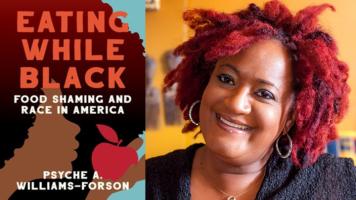 This week’s featured author is Psyche A. Williams-Forson. Williams-Forson is Professor and Chair of American Studies at the University of Maryland, College Park. Her book is Eating While Black: Food…
 The recent Supreme Court decision which banned the use of race as a criterion for college admissions is indeed racist. The decision also obscures the need for Black unity and for a new Black…
 The 4th of July celebration is a relic of American exceptionalist ideology. There is very little independence in a capitalist dictatorship.


