by BAR editor and senior columnist Margaret Kimberley
History will record that “the benefits to black America from the Obama administration have been non-existent” – and, at some point, African Americans will also have to face the fact. “Never again should one candidate for office, even the highest office of all, give voters amnesia about their history and experience.” Obama fever took all the oxygen out of the room, starving Black people’s brains. It is past time that African Americans became reacquainted with reality: Obama has been a disaster for the historical Black political agenda.
Freedom Rider: Thinking Post-Obama
by BAR editor and senior columnist Margaret Kimberley
“How does black America refocus itself on its traditional hunger for self-determination after the Obama party ends?”
Barack Obama will run for president again and he will officially declare his intention to do so in a federal election commission filing this week. This fact is not in itself newsworthy, given that the last president who declined to run for re-election was Lyndon Johnson in 1968.
Another Obama presidential election campaign presents an opportunity for thoughtful discussion about him – a discussion that was absent during the 2008 campaign. After all, now he is president. There is no more conjecture about how he would govern because we now have a two year long record to review, dissect and debate.
Not only do we have that record, but we also have an opportunity to look back at his 2008 support in the black community and ask ourselves how deep or how shallow that support may prove itself to be on election day in November 2012. The excitement created by the prospect of a black president and first family drove much of that support, but the novelty is now over and some of the bloom is off the rose. It remains to be seen, but it is doubtful that polling places will have the droves of eager voters who showed up on that election day.
Aside from the still resonating feelings of pride engendered by the sight of a black man wearing a POTUS jacket on Air Force One, the benefits to black America from the Obama administration have been non-existent. It is still difficult to find any willingness to criticize the president still beloved by the vast majority of black people, but that reservoir of support is tepid, and never moved beyond the historical significance of Obama’s election.
“The novelty is now over and some of the bloom is off the rose.”
In 2012, Obama will not have a primary opponent. There will be no Hillary Clinton claiming that Obama “Isn’t a Muslim, as far as I know,” or desperately stating that she is reaching out to the “good voters, the white voters.” Every time Clinton displayed her ham handed inability to achieve the fine American art of being racist in code, Obama received a boost from black voters. Without Clinton, there is no one to give those voters an incentive to show their loyalty.
Both the degree of turnout and the levels of excitement for black voters will be decreased in 2012. It will be difficult to gauge because very few people will be willing to openly express their disappointment in the lack of achievement from the Obama administration. While those words will be muted, the reality of high unemployment, foreclosures and austerity cuts, which disproportionately effect black people, will all be in the back of voter minds. Those same voters may not ever speak a word against Obama, but those who didn’t vote or did so sporadically, may go back to old ways of engaging – or perhaps not engaging at all – with the political system. While the probability of Obama winning again is high, it is time to think about the post-Obama political world as it concerns black America.
When the day comes that Obama does leave office, it will be important to examine the significance of his presidency and the effect it had on black politics. Obama fever was dangerous in more ways than one, having taken all of the oxygen out of the political room. The joy of seeing a black president took away the significance of any other political victories. In 2009 and 2010 cities and states across the country saw large declines in black voter participation. There would be no Republican-led assault on public worker unions if black voters in Wisconsin, Ohio and other states had shown 2008 levels of interest on election day in November 2010.
“It is time to think about the post-Obama political world as it concerns black America.”
The Democratic Party as a whole can be blamed for those poor showings, but Obamaism is also at fault. The discussions must begin now and not in January 2017 when Obama hands over the White House to someone else. How does black America refocus itself on its traditional hunger for self-determination after the Obama party ends? The recession, unemployment and housing market depression have not ended, and black people can expect to be even worse off in the foreseeable future.
A political state absent Obama provides an opportunity to recast black politics and to at least ask the pertinent questions about the state of black America. Never again should one candidate for office, even the highest office of all, give voters amnesia about their history and experience. The Obama phenomenon should be nothing but a tragic story of betrayal and lost opportunity. The damage has already been done and shouldn’t be allowed to worsen.
Margaret Kimberley's Freedom Rider column appears weekly in BAR, and is widely reprinted elsewhere. She maintains a frequently updated blog as well as at http://freedomrider.blogspot.com. Ms. Kimberley lives in New York City, and can be reached via e-Mail at Margaret.Kimberley(at)BlackAgandaReport.com.

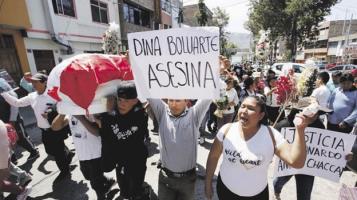 Clau O'Brien Moscoso continues her dispatches from Peru in the wake of a natural disaster and the ongoing coup against President Castillo. A Spanish translation follows.
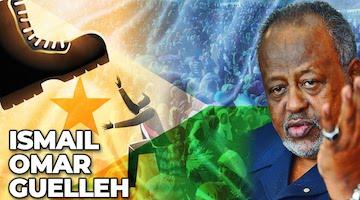 The legacy of colonialism and interference from the U.S. and other states keeps Djibouti's president in office after 25 years. Djibouti needs democracy and sovereignty for its people.
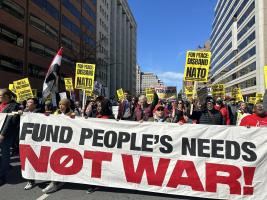 On March 18 thousands of people rallied in Washington DC to mark the 20th anniversary of the invasion of Iraq and to call for an end to the war in Ukraine.
 Being a white ally is a very serious matter. They can be "martyred on a shrine of white supremacy in an effort to discourage other whites from following their lead."
 The FBI raid on the Uhuru Movement has resulted in economic sanctions like those imposed on countries that dare to be sovereign despite being under U.S. attack.


