by BAR editor and columnist Dr. Jared A. Ball
If hip hop is more than a movement, but a “nation,” as some have suggested, then some militant hip hop nationalism is in order. Logically, such a militant hip hop nationalism would seek to seize control of the means of cultural production – which would earn a niche for hip hop in future May Day celebrations.
May Day and Hip-Hop Nationalism
by BAR editor and columnist Dr. Jared A. Ball
The Washington Post reported last week that the “first hip-hop president” has not included hip-hop in any of his many “White House Music Series” events. How could the community that so many say was responsible for his election not be invited? This issue of hip-hop’s involvement in electing the president has come up persistently since 2008 as it did again recently during a talk at the Center for Black Diaspora at DePaul University. But, as one present cynic questioned, “what did hip-hop do?” This question was answered quite accurately in a recent Boondocks spoof which reduced hip-hop’s participation to riding the president’s genitalia and truly does capture the role played. Hip-hop, just like the Black community, merely responded, as the powerless often do, to what leadership is put before them and then summarily played their role in promoting the latest brand or fad. Those who did not were summarily dismissed from relevance.
I thought of this again in the context of this week’s May Day celebrations. May Day is commemorated by people all over the world as representative of their struggles for equality, justice and power. Its origins are pre-religious commemorations of a coming summer that were later politicized as part of the labor movement in 1886 when workers fighting for an 8 hour work day were massacred in Chicago. Hip-hop is commemorated by people all over the world as representative of their struggles for equality, justice and power. Its origins are pre-religious and often include “bangers” as commemorations of coming summers and are still at times politicized by workers seeking to address their hopes which are being massacred by a politician from Chicago.
“KRS-One says he is willing to give up his ‘African-American-ness to become Hip-Hop.’”
Evo Morales, the first indigenous president of Bolivia, uses each May Day to pay tribute to the nationalism which produced him by nationalizing his country’s resources, saying that “basic services cannot be private business.” KRS-One, the first “teacher,” “philosopher,” and now “citizen of Hip-Hop” has, with others, called for a “governing body” of pioneers through whom all hip-hop-related projects must go. Tabling, at least momentarily, our own tendencies towards dismissive criticism, lets consider encouraging this as a step towards a much needed Hip-Hop Nationalism. If, as Charise Cheney has said, Black people are a “nation within a nation… and a nation without a nation,” certainly hip-hop too can claim Benedict Anderson’s definition of nation as, “an imagined political community.” That’s cool with me, but then lets act like it.
KRS-One claims that his new book, The Gospel of Hip-Hop, is about his concept of hip-hop being a new civilization. He says he is willing to give up his “African-American-ness to become Hip-Hop.” And before we all hate on that idea we should consider it as a logical progression from previous positions taken by many that hip-hop is indeed a “nation;” a multi-racial, multi-ethnic, anyone is down, community. If so, then we should have our own religious texts and myths, our own leadership and clarity that the wealth we create be used to benefit those who make it. This is the essence of May Day, and of Morales’ plans, and if we can make this the plan for our new “governing body,” it would certainly be better than what we have now. Remember, for example, one of the companies being forced out of Morales’ Bolivia is France’s Suez, who along with another French company Vivendi are looking to control the world’s water. But Vivendi also owns Universal Music Group which owns millions of songs and works in league with 2 other companies to, through their ownership, determine at least 90% of all rap music played on radio and video across the nation every week. They make a ton, the stations make tons and advertisers make tons while the artists and their communities make nothing. Morales is throwing them out. So why not we take a cue from Bolivia and push KRS and other hip-hop leaders to do the same.
For Black Agenda Radio, I’m Jared Ball. Online go to www.BlackAgendaReport.com. Jared Ball can be reached at jared.ball@morgan.edu.

 “Postal banking can be profitable through economies of scale and the elimination of profit-taking middlemen, as postal banks globally have demonstrated.”
 Black Agenda Radio for Week of March 19, 2018 U.S. Slavery Was Uniquely Capitalist
 “The United Nations is deliberately participating in war propaganda” favoring the US-backed “terrorists” in Syria, said Eva Bartlett, an independent Canadian journalist who helped
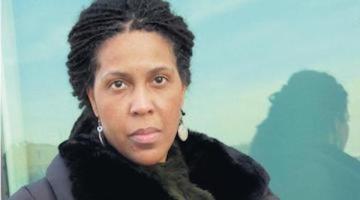 “Immigrants have been increasingly criminalized by the state in ways that are very similar to African Americans,” said Dr.
 Although US incarceration rates have been going down in recent years, at the current pace it would take 75 years to cut the prison population in half, according to Nazgol Ghandnoosh



