A book review by Seth Sandronsky
A review of How Race Survived US History: From Settlement and Slavery to the Obama Phenomenon, by David Roediger (Verso, hardcover, 2008). The author lays out the historical roots of modern American white supremacy, in which “lawmakers foment race-thinking to deepen white backlash against non-whites.”
Race-Making Nation
A review by Seth Sandronsky
This article previously appeared in The Progressive Populist.
“Campaigns of white settler violence against blacks and Indians lay the groundwork for the development of the American nation that ‘has never been without race.’”
How, David R. Roediger asks, has race persisted in the US despite “changes that we generally regard as constant, dramatic, and, in the main, progressive?” In How Race Survived US History: From Settlement and Slavery to the Obama Phenomenon, he helps us to see the factors and forces driving the growth of racial rankings.
What began as campaigns of white settler violence against blacks and Indians lay the groundwork for the development of the American nation that “has never been without race,” unlike the rest of the world for most of its history, Roediger writes. He re-interprets how a belief in and practice of white race supremacy has persisted, parried challenges and made concessions in ways that strengthened labor and legal systems that spur land expansion and capital accumulation.
In the 1600s, elites in the British colonies of Maryland, South Carolina and Virginia, presiding over an agricultural economy that relied upon the slave trade and chattel labor system alongside white workers, began to systematize “distinctions between Europeans and Africans.” Race-based policies grew. They meshed with anti-Indian land grabs. Anti-black and anti-Indian actions intersected with male oppression of women, white and non-white, a fateful beginning. White supremacy’s roots would deepen and spread.
“Race-based policies meshed with anti-Indian land grabs.”
This complex web of class, gender, labor and race spread in pre-Civil War America as white female abolitionists connected patriarchy and race servitude. Roediger writes of an “anti-racist rainbow” following the Civil War. Lifetime enslavement ended. But new forms of workplace control began. Black slavery and plantations paved the way to industry and plants. This factory system created capitalist investors and wage workers. The latter divided and in some cases united across gender and race lines. Roediger fleshes out the deep structures of class, gender and race clashes and conflicts as the nation industrialized and expanded westward.
White bosses fostered what Roediger terms “race management” to keep workers down and divided. Southern employers pitted African Americans and southern Italian workers against each other. Out West, owners of a transcontinental railroad played Chinese and Irish laborers off each other. He cites Herman Melville’s satire on race and labor management and Indian-hating in The Confidence-Man: His Masquerade as a light on such insanity.
Roediger writes: “Capital and management helped to reproduce racial differences over long stretches of US history and to divide workers in ways that compromised labor’s efforts to address either race or class inequalities.” The impacts resonate in 2010. Lawmakers foment race-thinking to deepen white backlash against non-whites. Arizona’s “Juan Crow” immigration law illustrates this skin-color approach. The fetid prison-industrial complex is another example, locking up black and brown Americans disproportionately. Meanwhile, the two-party monopoly misrepresents the US working class, politically disorganized and economically oppressed. It’s a fertile socio-economic ground for focusing repressive state power on non-white people, foreign-born and natives.
“Race-thinking percolates with ugliness in the post-Sept. 11 era of white nationalism.”
Roediger’s take on Barack Obama, the first African-American president of the US, is crucial. Some tea-baggers, boiling mad about his policies such as the corporate-friendly health-care insurance reform, express race-thinking. It percolates with ugliness in the post-Sept. 11 era of white nationalism, and dovetails with US foreign aggression to sow the seeds of Islamophobia, or hatred of and intolerance towards Muslims. This part of the US narrative has been present in past military actions, from the Philippines to Haiti and Vietnam, Roediger notes. It should surprise no one that race cements a link between prisons and torture in the War on Terror and War on Drugs.
Roediger unpacks the language of a supposed post-race nation in the Obama era. He draws attention to the “two sevens” of white supremacy: wealth of white families is seven times higher than African American families. Moreover, black male teens and young adults are seven times more likely to be behind bars than their white peers. Similar data prevails for Latinas/os and American Indians.
Roediger ends with these thoughts on addressing the pivotal role of race in US society: “It will require new alliances, especially of African-Americans with immigrants, and of feminist and working class organizations with anti-racist forces, in movements not only to be represented within a highly unequal order, but also to transform that order. The alternative is that race-thinking will survive in new and destructive permutations, and will continue to serve not simply as a diversion from other brutalities, but also as a prop on which they rest.”
This is a provocative book well worth readers’ time.
Seth Sandronsky lives and writes in Sacramento. Email ssandronsky@yahoo.com.

 School closings are central to gentrification and Black dispersal from prime urban real estate.
 Nnamdi Lumumba: all parties have a class charac
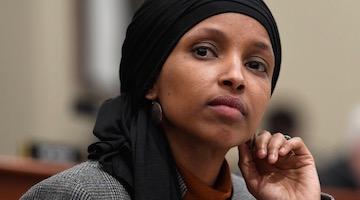 Suad Abdul Khabeer and Asha Noor joined with two other Muslim and Jewish women to publish an article titled, “How Targeting Ilhan Omar Instead of Wh
 The Trump regime will host NATO’s 70th anniversary celebrations in Washington on April 4, the day Dr. Martin Luther King was assassinated in 1968.
 “We have over 2000 people sitting in prison that were convicted under this racist, unconstitutional Jim Crow law” that allows guilty verdicts by just 10 of 12 jurors, said Belinda Parker-Brown, pre



