by BAR editor and senior columnist Margaret Kimberley
Frederick Douglass and other abolitionists welcomed the Civil War, and John Brown gave his life attempting to kindle the armed conflict as the only route to freedom for the slave. Rather than denounce the very idea of celebrating the 150th anniversary of arguably the only “good” war the United States ever fought, African Americans should be planning their own festivities. “It was not just Lincoln’s determination to preserve the Union that defeated the South, but the determination of black Americans to bring about their own liberation.”
Celebrating Secession
by BAR editor and senior columnist Margaret Kimberley
“If there had been no secession, no civil war, and no confederate defeat, there would have been no end of slavery in 1865.”
On December 20, 1860, South Carolina became the first of the southern states to secede from the United States. While no shots were fired until April 1861, again by South Carolina, the Civil War began when that first state left the union. This seminal event in the history of the United States will be endlessly studied and debated as sesquicentennial events are commemorated, and there is no better time for black America to begin discussing how to participate in a meaningful way.
Predictably, white southerners are celebrating the anniversary of the war, despite the fact that their beloved ancestors were soundly defeated. In South Carolina, the Sons of Confederate Veterans will hold a secession ball on December 20th in honor of “states rights” and “southern heritage.” The claim that chattel slavery, the very foundation of the southern political and economic system, played no role in secession is quite bizarre. South Carolina’s declaration of secession makes it clear that upholding the rights of the slave-holding states was the primary motivation in forming the Confederacy.
While white Americans debate the role of slavery in the march towards the Civil War, black Americans are largely silent. Our voices are only heard in reaction to the Sons of the Confederate Veterans and their ilk. The South Carolina NAACP has rightly spoken out in protest of the anniversary celebration but protest alone doesn’t offer a means for black Americans to communicate in a way that makes sense of the past or its influence on the present.
“Free and enslaved black Americans themselves took actions which hastened the end of the peculiar institution, and they must be seen as active, not passive players in these events.”
The secession so vigorously celebrated by neo-Confederates ought to be celebrated by black Americans more than anyone else. Slavery in this country ended precisely because the slave holding powers were decisively defeated on the battlefield. Not only is that true, but free and enslaved black Americans themselves took actions which hastened the end of the peculiar institution, and they must be seen as active, not passive players in these events.
For more than one hundred years, black people thought of Abraham Lincoln as the Great Emancipator, the president who hated slavery and loved the slave. His death at the hands of a pro-Confederate assassin sealed his image as a martyr, and the mythology of the saintly president was commonly accepted.
It is all to the good that this tall tale was revealed to be just that. Lincoln’s openly expressed racism and plans to colonize the black population to some distant shore ought to be more widely known. Lincoln held this view even after two years of war, and he was aptly labeled a “first rate, second rate man” by one of his detractors.
The inability of the North to quickly defeat the South and the refusal of white northerners to accept that they were fighting an anti-slavery war forced Lincoln’s hand. Every enslaved person who escaped to Union lines put another nail in the Confederacy’s coffin. The Emancipation Proclamation was an act of necessity and expediency, not love and nobility. Lincoln signed the Proclamation and permitted black soldiers to fight because the actions of black people made these the only viable solutions. It was not just Lincoln’s determination to preserve the Union that defeated the South, but the determination of black Americans to bring about their own liberation.
“The Emancipation Proclamation was an act of necessity and expediency, not love and nobility.”
The ability to balance the knowledge of Lincoln’s reluctance to make the Civil War a war against slavery and the outcome of the war bringing about liberation, is apparently still difficult for many to master. As a result, only the white supremacists have given themselves a voice in recalling this history.
Black Americans should be actively and forcefully proclaiming their own celebrations this year. If there had been no secession, no civil war, and no confederate defeat, there would have been no end of slavery in 1865. Absent war, slavery in America may have lasted until the 20th century.
Black America must claim its own history and not leave the telling of it to unrepentant neo-Confederates. There is still great reluctance to acknowledge that a four-year-long and very bloody war was the only way to end a two hundred year horror. Yet if there ever was a good war fought by Americans, the Civil War fits the bill and black Americans should be the first to say so.
Margaret Kimberley's Freedom Rider column appears weekly in BAR, and is widely reprinted elsewhere. She maintains a frequently updated blog as well as at http://freedomrider.blogspot.com. Ms. Kimberley lives in New York City, and can be reached via e-Mail at Margaret.Kimberley(at)BlackAgandaReport.com.

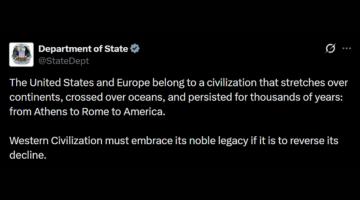 The crisis of late-stage capitalism has stripped away the liberal disguise and revealed white supremacy as the official ideology of the U.S. state.
 “It is perfectly clear that the war of aggression waged by Morocco against the [Western] Saharan people is a purely colonial war.”
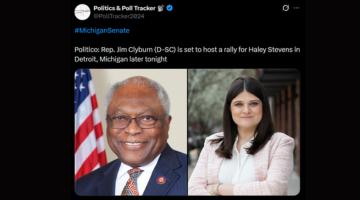 The Congressional Black Caucus electoral strategy has turned the 2026 midterm elections into a dumpster dive for corporate interests and Zionist approval.
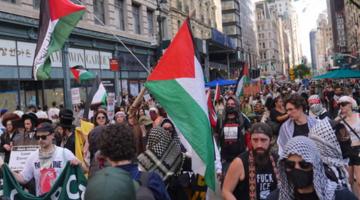 The Democratic Party's continued support for Israel's genocide is not just a moral and political liability but also an economic one which impacts its voters, yet the party refuses to frame it as such.
 "hand ‘em another $350 billion to fight Communism?" is the latest from BAR's Poet-in-Residence.


