 A Black Agenda Radio commentary by Glen Ford
The gentry-pursued Black and poor population of Chicago got a reprieve from the Olympic committee last week. Now it's Rio de Janeiro's turn to invent clever ways to clear out the shantytowns so the games may begin without the distractions of poverty. Walls are already going up around the favelas, to keep the dark hordes from spoiling the sports.
The Olympics and Rio's Black Poor
A Black Agenda Radio commentary by Glen Ford
“The city recently resorted to building walls around the shantytowns.”
For the poor, the Olympics is like Russian roulette. If your city is chosen to host the games, it's time for you to start looking for somewhere else to live. The people of Chicago dodged that bullet, last week, and now the poor residents of Rio de Janeiro have until 2016 to figure out how they will survive the world's biggest traveling urban redevelopment machine, posing as an athletic event.
Losing the Olympics was a victory for the plurality of Chicagoans who didn't want the honor, anyway. Not that the Windy City ever stood a chance. If American corporate media cared anything about elementary journalism, they would have discovered that Chicago was way down the Olympic delegates' list of places to go. If the truth be known, ever since 9/11, the United States has had a reputation of not being very hospitable to foreigners.
Gentrification is moving along at a steady clip in Chicago, without the boost of Olympic madness. Back in 1996, Atlanta wound up showing its backside to the nation and the world, arresting 9,000 homeless residents and displacing as many as 30,000 poor people, many of whom had to leave the city entirely. Now Atlanta's Black elite has taken a look around and discovered that the shrinking African American base of population might not be sufficient to keep a Black mayor in office. Gentrification and Black power don't mix.
“There's nothing Rio's elite would like better than to send the favela residents someplace far, far away.”
Now the poor people's pushout machine is bound for South America, which has never had an Olympic experience. When Brazil got thumbs up this time around, there was dancing in the streets of Rio – but that's nothing new. Much of Rio de Janeiro is so desperately poor, they've got to dance to keep from crying. As many as two million people, one-third of the population, live in the hillside shantytowns called favelas, places the police treat like enemy territory and where residents build houses with cement walls six inches thick to stop bullets. There's nothing Rio's elite would like better than to send the favela residents someplace far, far away, and the powers-that-be can be counted on to undertake Olympian efforts towards wholesale favela-removal between now and 2016. In fact, 2016 is two years too late, since Rio is hosting the World Cup soccer games in 2014. So the clock is ticking on the city's poor.
The war against the heavily Black favelas has always been ugly. The city recently resorted to building walls around the shantytowns. Ostensibly, the walls are designed to protect the tropical forest, which is indeed endangered by all those poor people spilling up the sides of the mountains overlooking the city and the sea. But everyone knows the walls' real purpose is to fence the poor in. Some critics are comparing the favela walls to the walls Israel has built to confine the Palestinians.
The Olympics are advertised as agents for peace, understanding and human fellowship. In the real world, the games are occasions for world-class real estate deals and expulsion of the poor and powerless.
BAR executive editor Glen Ford can be contacted at Glen.Ford@BlackAgendaReport.com.

 This week’s featured author is Last Moyo. Moyo lectures in the Department of Communications and Multimedia Design at the American University, Nigeria. His book is The Decolonial Turn in Media Studies…
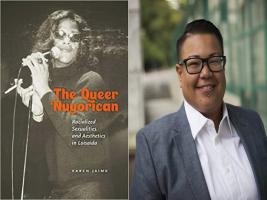 This week’s featured author is Karen Jaime. Jaime is Assistant Professor of Performing and Media Arts and Latina/o Studies at Cornell University. Jaime’s book is The Queer Nuyorican: Racialized…
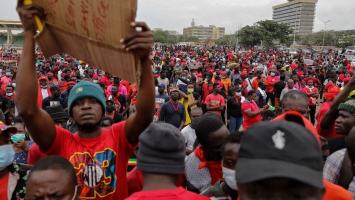 Ghana has initiated talks with the International Monetary Fund to seek a potential bailout amid a major economic crisis. This has been rejected by the Socialist Movement of Ghana and trade unions who…
 US police departments spend tens of millions of dollars every year to manipulate the news, flooding the discourse with “copaganda.” These aggressive tactics give the public a distorted view of what…
 Behind rolling power cuts loom deep-seated socioeconomic issues worsened by the rich countries of the world.


