
A Black Agenda Radio commentary by BAR editor Jared A. Ball
Hip-hop has become a meaningless word – or worse, a word shellacked with so many saleable commercial and political meanings that it becomes a weapon against the very people that originated the genre. A new film is circulating, with clarifying impact. “The film forces a real conflict over who defines hip-hop, who uses it for what and what those of us who claim to know better are actually doing to address these and related concerns.”
Black August and Crises of Hip-Hop as Euphemism
A Black Agenda Radio commentary by BAR editor Jared A. Ball
“’Hip-hop’ has become more a euphemism that erases the blackness of its progenitors and their condition.”
If you didn’t know already, let me be the first to tell you that there is indeed a crisis in hip-hop politics and intellectualism. It is a crisis of separation, a crisis of deracination and of political trajectory. In part it is a crisis of euphemism and in this case it’s as old as calling the horrors of enslavement a “triangular trade.” But unlike the way, say, “urban” has become a euphemism for Black, and one known as such, “hip-hop” has become more a euphemism that erases the blackness of its progenitors and their condition. The euphemistic erasure of blackness, of Africanness, has long-reached crisis proportions, where it is used to confuse, justify or make invisible the people and their lived experiences. And it is a crisis that needs to be more aggressively addressed by those who accept the brand-naming of a “hip-hop generation,” “hip-hop studies” or “hip-hop activism.” And whether or not she meant to challenge this euphemism, Dream Hampton has so nicely done so with her new film, Black August: A Hip-Hop Documentary Concert.
Since 1998 the Malcolm X Grassroots Movement’s Black August Hip-Hop Project has made its mission the exposure of political prisoners and the issues surrounding political imprisonment to new generations of young people. Since then organizers have created nice blends of concert performances and political education as methods of raising funds for and awareness of political prisoners. The existence of the work and the making of a film about the work by definition explodes the fallacy of hip-hop’s popular separation by euphemism from the communities of Black and Brown people that created it, the conditions these communities still suffer and the status of some of those captured in struggle against those conditions. The film forces a real conflict over who defines hip-hop, who uses it for what and what those of us who claim to know better are actually doing to address these and related concerns. And at a recent screening of the film in Washington, D.C. all of these wonderful tensions were evident.
“De-politicized and empty conversations simply cannot coexist with this film, hence its unyielding brilliance.”
After watching the film, which explores some of the history of Black August, first organized to honor “fallen freedom fighters” like George Jackson in the 1970s, a lively discussion occurred. It was clear that this discussion was one of euphemism v. unmasked reality. Some expressed shock at the very existence of political prisoners. Others talked of joining and reviving a chapter of the Malcolm X Grassroots Movement. Others exchanged community efforts to support and even mimic aspects of the work of those currently incarcerated, exiled or those who had been assassinated. But what was most clear was that no euphemism could withstand the film itself. No tired discussions of hip-hop as some distinct culture divorced from any specific origin, no nonsense of hip-hop being color blind, or of hip-hop as a mechanism of communal economic empowerment or some disconnected intellectual enterprise were even attempted. Nobody even repeated ridiculous claims that hip-hop elected Obama in 2008 or caused his party’s downfall in 2010. In fact, Obama was only raised as an issue of what now impedes the work represented in the film. No, de-politicized and empty conversations simply cannot coexist with this film, hence its unyielding brilliance.
The post-screening discussion, which was not held just among activist circle regulars, or what Obama’s folks call the “professional left,” went straight to the matters at hand. What and who are political prisoners, what do they want, what did they do then and what are we going to do now since not one of their issues has been positively resolved. And this is the power of the film and the work depicted in the film. That those themes might resonate beyond the activist or intellectual elite and explode the euphemism hip-hop has become is precisely the point. Black August addresses the crisis of euphemism which is a crisis in our political consistency. Dead Prez have famously said that “it’s bigger than hip-hop,” and so is this film. It may depict performance but, as Black August organizer Monifa Bandele can be heard closing the film, “It ain’t no damn concert.”
For Black Agenda Radio, I’m Jared Ball. Click, link and bookmark us at BlackAgendaReport.com.
Jared A. Ball can be reached via email at freemixradio@gmail.com.

 Today’s seekers of social justice need to grapple with what the legacies of past freedom fighters actually demand of us.”
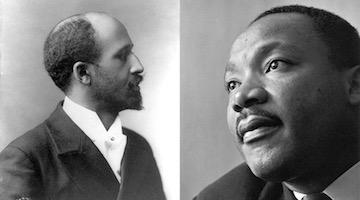 Black natural law allows us to identify the ideas of the powers that be, the ideas of the wealthy and the white, and demolish them.
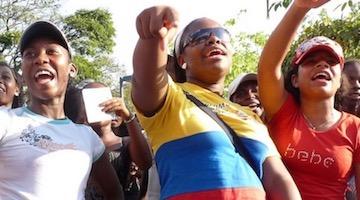 In principle, the government of Colombia recognized Black people’s right to collective ownership of land back in 1993, but these rights have not been fully achieved, in practice.
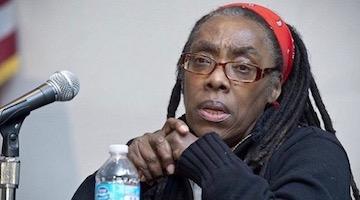 Longtime MOVE Family spokesperson Ramona Africa’s health took a turn for the worse, necessitating an emergency appeal for assistance.



