
A Black Agenda Radio commentary by Glen Ford
The U.S. war against Somalia expands outwards and “has now blown back to Uganda,” the U.S. ally that, “along with the minority Tutsi dictatorship in Rwanda, is America's most reliable mercenary force in Black Africa.” Ethiopia and Kenya prepare to join Uganda in an offensive against the Somali resistance, to save America’s puppet mini-state in Mogadishu.
U.S.-backed War in Somalia Comes to Uganda, Threatens to Set Whole Region Aflame
A Black Agenda Radio commentary by Glen Ford
“The bombing in Kampala must be understood in the context of the planned expansion of the war in Somalia.”
The bombs that exploded in Kampala earlier this month, killing 76 people and unleashing a wave of arrests and deportations by the Ugandan regime, are chickens coming home to roost from the U.S.-sponsored war in Somalia. U.S. corporate media routinely fail to note that the Ugandan military and other U.S. African allies are all that prevent the farcical U.S.-backed mini-government in Somalia from being evicted from the few neighborhoods it still controls in Mogadishu, the Somali capital. The rest of south and central Somalia belongs to the Shabab and another Islamist group, that earned their nationalist credentials in fighting Ethiopian troops that invaded Somalia with full U.S. backing in late 2006. The invasion interrupted a brief period of relative peace in Somalia and plunged the country into what United Nations officials called the “worst humanitarian crisis in Africa – worse than Darfur.”
The Shabab justified the Uganda bomb attacks on the grounds that Ugandan troops have been killing Somali civilians for years. Under the guise of African Union peacekeepers, the Ugandan and Burundian soldiers have been able keep open the road to Mogadishu's airport, the Somali regime’s lifeline to U.S. arms and supplies. But the puppet state is a government in name only, without the popular support to field an army capable of defending itself. The rump faction has been reduced to recruiting child soldiers as young as 12, causing the United Nations Security Council to threaten sanctions. Of all the world’s governments, only the United States and Somalia have failed to ratify the UN Convention on the Rights of the Child, which outlaws the use of child soldiers.
“Washington’s African allies propose to send 15,000 more troops to Somalia to engage in offensive operations.”
Frustrated at the failure of massive U.S. arms and money in Somalia, Washington has encouraged its Ugandan, Kenyan, Ethiopian and other U.S. client states to launch their own offensive against the Somali resistance, in violation of United Nations resolutions. Washington’s African allies propose to send 15,000 more troops to Somalia to engage in offensive operations. This would include the formal re-entrance of Ethiopian soldiers, some of whom never left Somalia, and thousands of troops from Kenya’s large Somali minority and others from Somali refugee camps – a violation of international law.
The bombing in Kampala must be understood in the context of this planned expansion of the war in Somalia. The conflict has now blown back to Uganda, whose strongman, Yoweri Museveni, now uses the bombings to justify the already-planned Somali offensive. Along with the minority Tutsi dictatorship in Rwanda, Uganda is America's most reliable mercenary force in Black Africa. Both countries bear much of the responsibility for the death of millions in eastern Congo, following their invasions with the backing of the United States.
Kenya will certainly be further destabilized, as well, in the course of the Somalia offensive.
This is what passes for “soft power” in the Obama administration: arming and instigating Africans to fight each other. It will backfire on the United States, sooner rather than later – but not before many thousands more Africans have died. For Black Agenda Radio, I'm Glen Ford. On the web, go to www.BlackAgendaReport.com.
BAR executive editor Glen Ford can be contacted at Glen.Ford@BlackAgendaReport.com.

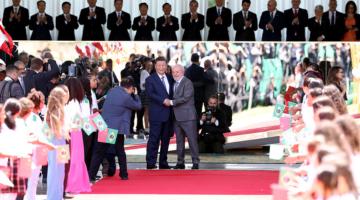 The United States is continuing its economic battle against China in South America. However, its influence in the region is in decline as nations seek alternatives in order to forestall U.S. hegemony.
 In this series, we ask acclaimed authors to answer five questions about their book. This week’s featured authors are Maya Schenwar and Kim Wilson.
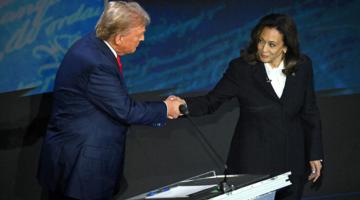 While genocide is a clear cause of the democrats' defeat, economic issues are usually mentioned. What lingers behind the significance of the “it’s the economy” narrative?
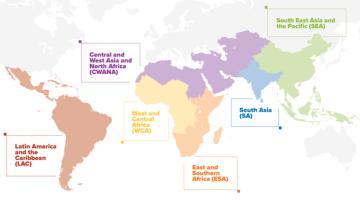 Tricontinentalism is the lens through which we should analyze the anti-imperialist movement, not only to understand the past but to build the movement against imperialist domination today. of the…
 In Africa, the leading forces of capitalism have ruthlessly wielded a neoliberal conception of corruption to undermine states’ sovereignty and open the continent to plunder at the hands of Western…


