
A Black Agenda Radio commentary by BAR editor and columnist Jared A. Ball, Ph.D.
The bad news has come hot and heavy, lately: leniency for a killer cop, a draconian sentence for a people’s lawyer, no parole for political prisoners, and death. “But this is the life to which we have been consigned by the dysfunction and disarray of the movements these women and men represent.”
A Roller Coaster Week in the Anti-Amusement Park of Radical Politics
by BAR editor and columnist Jared A. Ball, Ph.D.
“The release of one political prisoner, is horribly balanced against the exchange for another and the further entrenchment of suffering for two more amidst the loss of a father, activist and frontline progressive.”
I received an email the other day from a veteran political activist. It read, “Cynthia's pops died today, Marilyn Buck was released, Lynne Stewart got 10 years and so did Sundiata Acoli. Herman Bell was denied parole again. What a roller coaster.” “Cynthia’s pop,” is James Edwards “Billy” McKinney, a former member of the Georgia State legislature and Atlanta policeman. McKinney, as Bruce Dixon has explained, was a cop in Atlanta “when Black police officers couldn’t arrest white people.” And, of course, he was the father of former Green Party presidential nominee Cynthia McKinney. Marilyn Buck, a white supporter of the Black Liberation Movement who was convicted for (among other things) having aided in the escape of Assata Shakur, was released after more than 25 years in prison. But people’s lawyer Lynne Stewart was sentenced to 10 years for her defense of an accused “terrorist” which some say is a death sentence given her age and health. Black Panther and Black Liberation Movement veterans Sundiata Acoli and Herman Bell were both given 10 more years in prison and denied parole respectively. And this is that “roller coaster.” The tiniest of good news, the release of one political prisoner, is horribly balanced against the exchange for another and the further entrenchment of suffering for two more amidst the loss of a father, activist and frontline progressive.
But this is the life to which we have been consigned by the dysfunction and disarray of the movements these women and men represent. We have said many times before that the very existence of these prisoners is proof of the incompleteness of these movements. The mere image or thought of the politics represented by these people is deemed threatening and worthy of the worst forms of punishment, up to and including death. Remember, it was reported that Lynne Stewart, for example, was likely given such a harsh sentence not because of her particular alleged “crime,” but because she was seen by the judge as insufficiently repentant. A reporter following the case said that the judge felt compelled to his act because of comments Stewart made publicly regarding her case which he took “as evidence that she was not as remorseful as she should be and that [therefore] he should increase the sentence.”
“Not any alleged act but the acknowledged ideas they represent has these and others paying such a heavy toll.”
Of course many other political prisoners have had their political views be the anchor to which they are tethered behind prison walls more so than any “crime” for which they have been convicted. In the trials of Mumia Abu-Jamal and Leonard Peltier their involvement with the Black Panther Party and American Indian Movement respectively was introduced as a reason for their incarceration. Jalil Muntaqim was told by the sitting judge that he and his co-defendants were seen as “prisoners of war.” Even the victim’s statement given by the son of the police officer they were convicted of killing says that he forgives them for “the positions they took back then” and that Herman Bell and Muntaqim were, “both victims as well of a much larger scheme which got them incarcerated to this day.” Not any alleged act but the acknowledged ideas they represent has these and others paying such a heavy toll.
As another veteran activist tells me all the time: “We must remember that desiring and working to be free is illegal.” This was again made obvious this past week. And remember the condemnation to death of Stanley “Tookie” Williams by the Arnold Schwarzenegger in 2005. In it the governor was clear. Williams was not being denied clemency because of any prior crime and certainly not as a result of his stellar behavior as a model prisoner. Schwarzenegger made clear that it was his public appreciation for other political prisoners, members of the Black Liberation Movement and, in particular, George Jackson. The governor wrote, “But the inclusion of George Jackson on this list defies reason and is a significant indicator that Williams is not reformed and that he still sees violence and lawlessness as a legitimate means to address societal problems.”
In other words, it was an affinity for unsanctioned ideas that secured his murder by the state. So as we continue to support the people themselves we must also fight for the right to think without sanction of the state. Perhaps Funkadelic was already too late when warning us to, “Think! It ain’t illegal yet.”
For Black Agenda Radio, I’m Jared Ball. Online visit www.BlackAgendaReport.com.
Jared Ball can be reached at jared.ball@morgan.edu.

 This article was written on the occasion of the sixth summit between the European Union and the African Union which was held in Brussels on 17 and 18 of February 2022. These meetings are…
 The history and significance of Black August, presidential elections and politics in Kenya, and reflections on the anniversary of the Sandinista Revolution.
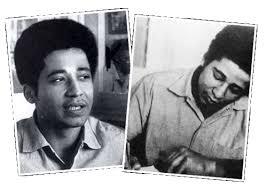 Kalonji Changa is co-founder of Black Power Media and founder of FTP Movement. He joins us from Atlanta to talk about Black August, which has been a fixture of the liberation movement for 43 years.
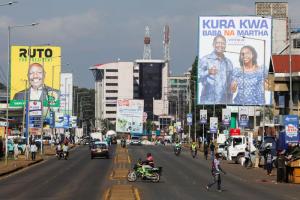 Irene Asuwa joins us from Nairobi, Kenya. She is co-convener of Ecological Justice and supports outreach at Ukombozi Library. We discuss the recent presidential election in that country.
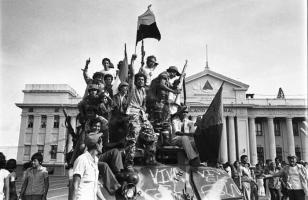 In a recent webinar hosted by the United National Antiwar Coalition (UNAC), Margaret Kimberley discussed what she witnessed during the commemoration events for the 43rd anniversary of the Sandinista…


