
by Khalil Gibran Muhammad
With maddening repetition, we are taught and re-taught the same lesson: Black life is cheap in America. “The burden of blackness is to prove one’s innocence, to justify one’s humanity; the privilege of whiteness is to take both for granted.”
Old Wounds and New Pain: The Oscar Grant Tragedy
by Khalil Gibran Muhammad
This article previously appeared in TheDefendersOnline, a publication of the NAACP Legal Defense and Educational Fund.
“At the root of the outcry over the failure to get a murder conviction for another willing executioner of a black man is the painful reminder, and concurrent denial, of the cheapness of black life in America.”
The past can be like an old wound that never heals, especially when the scab keeps being picked at. In the wake of Oakland transit cop Johannes Mesherle’s recent involuntary manslaughter conviction for the on-duty shooting death of unarmed, 22 year-old Oscar Grant, the injury of his death and so many black men before him is as raw and bloody now as it was the day they were killed.
The pain runs deep not just because another mother lost her son to a quick-triggered cop; or because no black jurors were yet again allowed to stand in judgment of a white man; or because some observers claim that Grant’s prior trouble with the law made him a willing partner to his own summary execution.
The hurt runs deep because at the root of the outcry over the failure to get a murder conviction for another willing executioner of a black man is the painful reminder, and concurrent denial, of the cheapness of black life in America.
Just remembering the horrors of slavery or the tragedy of Scottsboro in this context is enough to make many want to scream, holler, burn, and pillage. And yet such hot memories are too often soothed by the cool comfort of our post Civil Rights, post Jim Crow triumphalism. However, by the measure of police brutality, outside of the South, not much has changed.
In a 1929 Illinois Crime Survey, researchers found that African Americans made up 30 percent of the recorded police killings but only 5 percent of the population. In one case, for example, a manhunt for a sixteen-year-old Chicagoan accused of breaking a restaurant window, ended with police entering his home without a warrant, guns blazing. Alfred Lingle died in a hail of thirty-five bullets.
“There is a thin blue line separating the past from the present.”
North of the Mason-Dixon Line, unlawful police violence has produced long suffering in silence. In response to a 1930 federal report of police brutality, Lawlessness and Law Enforcement, which highlighted conditions in the Jim Crow South, members of the Philadelphia black press cried foul. They told officials that the report prominently covered brutality in the “uncivilized wilds of Mississippi.” However, nothing in the urban North appeared, such as the local beating of a sick elderly black woman; the torture of a man “choked, hung upside down, his joints twisted and told that Negroes should be treated like dogs;” and the “drag net” arrests and beatings of blacks on the “steps of their own homes.”
There is a thin blue line separating the past from the present, as evident by the arrest of Henry Louis Gates, Jr. on the steps of his own Cambridge home last summer, and the recent federal indictment of six New Orleans officers charged in connection with the execution-style shootings of six unarmed people, two whom died.
Society’s enduring denial of police repression in black communities inflicts the most harm, ripping off the scab of racial injustice every time an officer’s humanity is affirmed by the presumption of innocence and little to no punishment. In Mesherle’s case, as was true for the officers acquitted in the killings of Amadou Diallo and Sean Bell, it is the innocence of fear of black men that decriminalizes murder in police killings, rendering them tragic “accidents.”
“Society’s enduring denial of police repression in black communities inflicts the most harm, ripping off the scab of racial injustice every time an officer’s humanity is affirmed by the presumption of innocence and little to no punishment.”
Fear affirms the shared humanity of all who presume the guilt of black men. The burden of blackness is to prove one’s innocence, to justify one’s humanity; the privilege of whiteness is to take both for granted.
Recall New York Mayor Rudolph Giuliani’s smear that the slain Patrick Dorismond was “No altar boy” after he was goaded into a fight with undercover narcotics agents (later acquitted) while innocently and soberly minding his own business.
“Again? Again? Again?” were the anguished cries of Dorismond’s mother as she mourned, side by side, with Kadiatou Diallo at Sean Bell’s funeral in 2006.
Wanda Johnson, the mother of Oscar Grant, now feels the sharp sting of the scab pulling from an old and festering wound. We hear her cries of pain, “my son was murdered,” linking her to a troubling past and present.
As for the future, in order for wounds to heal properly, scabs must not be allowed to form. Wounds must be thoroughly cleaned, properly treated, and vigilantly monitored for healthy tissue to grow properly.
Khalil Gibran Muhammad is an assistant professor of history and author of The Condemnation of Blackness: Race, Crime, and the Making of Modern Urban America (Harvard).

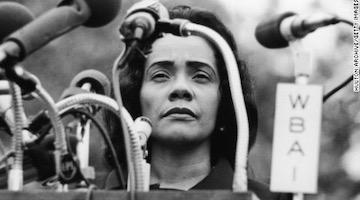 Scott King was spied on constantly by the FBI – surveillance that was authorized by the Kings’ “friends,” the Kennedy brothers.
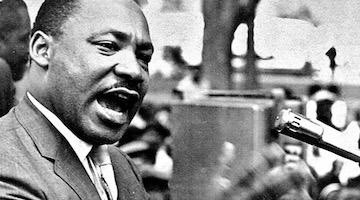 Both Newton and King sought to create a united front for peace and socialism.
 The convict labor system was once notorious in Mississippi – and it still is, under the guise of debt restitution.
 Black Self-Defense is Important, But Ideology is Paramount
 The US became deeply involved in global counterinsurgency after World War Two, said Stuart Schrader, a sociologist at Johns Hopkins University and author of “Badges Without Bo



