by APSP
The Black political party that confronted then-candidate Barack Obama on the campaign trail in August, 2008 with the simple question, “What about the Black community, Mr. Obama?” holds its annual Congress in Washington, next month. African People’s Socialist Party chairman Omali Yeshitela says there is an historic opportunity “for black people everywhere to take back the power to control our own destiny as a people.”
Black Congress, Critical of Obama, to Convene in D.C. to Set Black Agenda
by APSP
“The APSP will unveil its program to address the current crises facing black communities across the U.S.”
As criticisms of President Obama’s war and economic policies mount, the group that first questioned his intentions regarding the concerns of the black community is holding a national Congress to define a black agenda to serve the interests of black people.
From July 10–14, community activists from throughout the U.S. will converge on Washington, D.C. for the 5th Congress of the African People’s Socialist Party (APSP). An organization with philosophical roots in the teachings of Marcus Garvey and Malcolm X, the APSP will unveil its program to address the current crises facing black communities across the U.S., including the unprecedented loss of homes through the subprime fraud, skyrocketing unemployment reaching 50% in some urban areas, increasingly widespread accounts of police brutality and discriminatory incarceration in private for-profit prisons.
Under the banner of “One People! One Party! One Destiny!” the Congress will be convened by African Socialist International Chairman Omali Yeshitela, a veteran of the African liberation struggle. Yeshitela issues a call to black communities to get organized. “The worldwide economic and political crises we are witnessing today present a great opportunity for black people everywhere to take back the power to control our own destiny as a people. African workers must organize ourselves into our own independent organization and prepare to govern.”
Also present will be APSP-USA member Diop Olugbala who got worldwide media coverage when he represented the Party in publicly challenging Barack Obama during a campaign event in St. Petersburg, FL in 2008. Olugbala demanded to know why the then-presidential candidate would not denounce police violence and economic exploitation in African communities of the U.S., leading a chant, “what about the black community, Obama?”
“African workers must organize ourselves into our own independent organization and prepare to govern.”
A broad spectrum of black leaders will address the Congress, including Malik Zulu Shabazz, Founder of Black Lawyers for Justice and Chairman of the New Black Panther Party; Jackson, Mississippi City Councilperson Chokwe Lumumba, Chairman of the New Afrikan People’s Organization; Glen Ford, Executive Editor of Black Agenda Report, which has published scathing critiques of Obama’s policies; Efia Nwangaza, veteran of SNCC’s Atlanta Project, broadcaster, leader of the Malcolm X Grassroots Center for Self-Determination in South Carolina, and member of the Black is Back Coalition that held the first black-led protest in D.C. opposing the Obama regime’s war policies; Alex Morley, attorney and workers’ rights expert from the Bahamas; Nellie Bailey, leader of the Harlem Tenant’s Council; MOVE Family member Pam Africa, leader of the campaign to free Mumia Abu Jamal; Lawrence Hamm, Chairman of New Jersey’s People’s Organization for Progress; and Queen Mother Dorothy Lewis, a lifelong fighter for reparations to African people.
International allies of the black freedom struggle will also be present at the Congress, including Marcos Garcia, the Labor Attaché of the Venezuelan Embassy; Ernesto Bustillos of Union del Barrio, a Chicano-Mexicano rights organization in southern California; and a representative of the Nicaraguan Embassy.
The Congress will take place at the Kellogg Center, located at 800 Florida Ave. NE on the Gallaudet University Campus in Washington, D.C. and is open to the public. For more information or to register, visit apspcongress.org or call 727-821-6620.

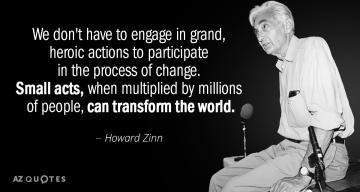 Howard Zinn showed that scholarship can fuel solidarity and liberation—but now, some white leftists use it to undermine Black struggle.
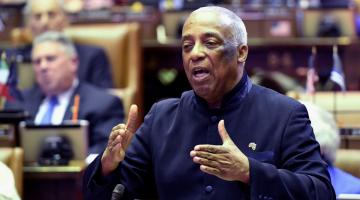 Charles Barron dissects the NYC mayoral race, Mamdani’s struggles with Black voters, and why independent Black radical politics are essential.
 "Killing the Kennedy Center softly for the Reich?" is the latest from BAR's Poet-in-Residence.
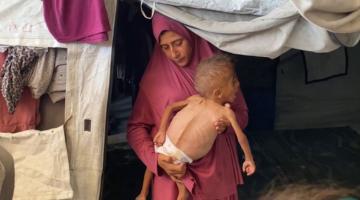 The Israeli government isn’t failing to feed Palestinians in Gaza. They are deliberately starving them. Starvation is their weapon.
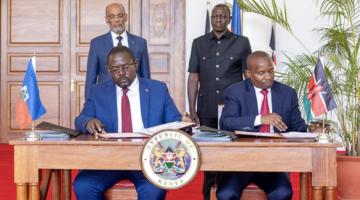 The U.S. exports repression like a global franchise, outsourcing violence while claiming benevolent intent. Kenyan police, trained by American forces and armed with U.S. equipment, are now occupying…


