
by Sounia Johnson
Previous generations of African Americans sought greater freedom in France – and some thought they found it. But for Frances growing African and Muslim minority, “applying for a job with Arab-sounding name such as Mustafa, Mohammed, Nadia or Fatima remains a challenge.”
Debunking the Myth of a Color-Blind France
by Sounia Johnson
“There is a profound disconnect between the French Republic and Muslim youth, who are perceived and treated by the larger French society as radical thugs.”
In the early 1930’s many African American artists fled to Paris in order to escape racial inequalities and the constant oppression and dehumanization experienced in the United States. Liberty, Fraternity and Equality, a motto celebrating freedom that traces its roots to the French revolution, was what attracted many African American expatriates such as James Baldwin and Josephine Baker who found acceptance in what they perceived as a generous France, liberal, receptive and a champion of social equality and civil rights.
Unexpectedly, many found a different reality. World-renowned African American essayist James Baldwin witnessed a deep hatred and unequal treatment of French North Africans. Baldwin pledged support for Algerians (referring to them as “Paris’s niggers”) while vehemently opposing the way white French would treat its own minorities, thereby debunking the notion of color-blind liberal France.
It is thus not surprising that French pretensions to racial equality hold little credibility for the many disenfranchised and marginalized North Africans within her borders. The 2005 riots in France’s most underprivileged cities were the result of ongoing racial and ethnic tensions. These tensions have highlighted the profound disconnect between the French Republic and Muslim youth, who are perceived and treated by the larger French society as radical thugs.
The lives of many French-Magrehbi youth are circumscribed by limited access to education in substandard, subsidized low-rent housing in heavily Pan-African suburbs – a ghettoization not found anywhere else in Europe but mirroring housing projects in American’s most under-served urban areas. High unemployment, which in turn leads to increased juvenile delinquency, has led many young Muslims to fall prey to religious radicalism with all the negative political implications this entails for France and the war against terrorism.
“Race relations and inequalities have created an unprecedented crisis.”
Applying for a job with Arab-sounding names such as Mustafa, Mohammed, Nadia or Fatima remains a challenge for most French North Africans, who feel that they are discriminated against due to their dual heritage. Many feel pressuredto adopt French-sounding names, like Nadine instead of Nadia, Maurice instead of Mustafa. Still, their chances of finding employment are slim. For ghettoized North African youth, Liberty, Fraternity and Equality is an empty slogan.
The lack of equal employment opportunities is a reality experienced amongst many French North Africans who feel that no matter how much they try, they will never be provided with the same opportunities accorded to their French white counterparts. This reality is reflected in the organizational charts of French corporations, revealing a systematic white corporate ceiling culture. Racism is indeed well and alive in France.
With an increasingly diverse population, France must realize that it cannot keep burying its head in the sand. Race relations and inequalities have created an unprecedented crisis.
It is in France’s interest to regain its credibility as a champion of human’s rights by aggressively promulgating laws that celebrate cultural and religious differences. At the same time, France must invest in its crumbling educational system and rejuvenation of the inner cities. France must find a way to attract minorities to professional fields that have historically been denied to them rather than tracking Africans to vocational trades. And the government must enforce stiff penalties against companies that practice discriminatory hiring.
France needs a highly educated work force that includes African lawyers, judges, doctors, politicians, journalists, corporate executives and scientists, but above all, an honest national discourse that celebrates cultural differences while acknowledging France’s role in slavery and colonialism – something France has yet to do.

 The governor of Missouri refused to grant clemency to Kevin Johnson and the state Supreme Court denied motions to halt his execution. The US Supreme Court refused to hear his case. Kevin Johnson was…
 Racial inequity is the result of racist and capitalist policies and can't be defeated by the self-interested Black political class.
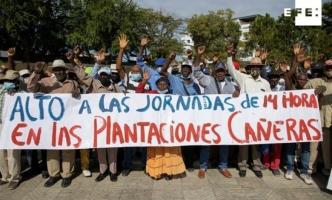 There is a long and terrible history of exploitation and abuse of Haitians and Haitian descended people in the Dominican Republic's sugar industry.
 The US desire to secure Venezuela's oil has resulted in the easing of the diplomatic and commercial "maximum pressure" campaign. The Venezuelan government was resolute in its fight for sovereignty.
 The opening of a new Canadian embassy in Rwanda is an effort to ensure that the plunder of Congo's mineral resources will continue under the protection of a US ally.


