 by BAR executive editor Glen Ford
In Somalia, the United States has reverted to ancient siege tactics to starve the people into submission. The U.S. seeks to prevent food aid from getting to areas controlled by Shabab resistance fighters. However, “if international aid were restricted to areas controlled by the U.S.-backed puppet regime, only a few neighborhoods in Mogadishu, the capital, would be fed.”
U.S. Wages Food War Against Somalia
by BAR executive editor Glen Ford
“United Nations compliance with U.S. conditions would mean starvation for about three million people.”
While nearly half the population of Somalia teeters at the edge of starvation, the U.S. is preventing the United Nations from delivering desperately needed food. According to documents obtained by the New York Times, the Americans demand that aid agencies guarantee that no fees are paid “at roadblocks, ports, warehouses, airfields or other transit points'' controlled by Shabab resistance fighters. Since the Shabab and other militias control more than half of the area in conflict, United Nations compliance with U.S. conditions would mean starvation for about three million people.Indeed, if international aid were restricted to areas controlled by the U.S.-backed puppet regime, only a few neighborhoods in Mogadishu, the capital, would be fed.
America’s Somali puppets are incapable of even defending themselves, much less maintaining a functioning government and infrastructure. Five thousand African Union (AU) soldiers – comprised mainly of Ugandans, the U.S.’s shock troops in Africa – keep control of the airport, the regime’s main link to the outside world. According to the United Nations, AU soldiers engage in “indiscriminate shelling” of civilians.
As the Americans’ Somali puppets’ position becomes more untenable, the U.S. squeezes the UN’s food delivery system, in effect punishing the entire Somali people. U.S. food relief to the UN’s Somali operations in 2009 was only half that of 2008. In 2007, United Nations officials declared Somalia the “worst humanitarian crisis in Africa…worse than Darfur,” as a result of the U.S.-backed Ethiopian invasion in late 2006. Thus, the United States has been waging continuous war against the people of Somalia, directly or by proxy, for over three years under the guise of the “war on terror.”
The United Nations official in charge of humanitarian operations in Somalia, Mark Bowden, says Washington’s charge that Shabab militants are siphoning off UN aid are “ungrounded.” A White House spokesman claimed that it’s not the U.S., but the Shabab that are denying Somalis access to food aid through their war against the Mogadishu “government.” It’s a macabre variation on the excuse Americans routinely offer when they massacre civilians: that the “insurgents” use civilians as “human shields,” forcing the Americans to kill them.
“The United States has been waging continuous war against the people of Somalia, directly or by proxy, for over three years.”
When the UN’s Mark Bowden complained to officials in Washington about the withholding of food to Somalia, he was told, ‘This is beyond our pay grade.’” Meaning, the orders come from much higher up, likely from UN Ambassador Susan Rice, the administration’s most prominent acolyte of “humanitarian military intervention” – a doctrine Rice has twisted into the ultimate obscenity in the Horn of Africa.
“Humanitarian military intervention” maintains that it is the duty of greater powers – that is, the U.S. and its allies – to intervene in the affairs of weaker countries if their governments cannot, or will not, attend to the needs of their people. Also known as “responsibility to protect” – or “R2P” – the doctrine, by definition, requires no consent from the soon-to-be subject populations. R2P can be immediately invoked against “failed states,” as designated by the “protective” and “humanitarian” intervener. Indeed, once a state has been declared “failed,” the great powers are obligated to intervene, according to the logic of R2P. It is all the more convenient when the U.S. has, in fact, caused the “failure” of the weak nation’s state.
Such was the case in 2006, when a fledgling state had finally emerged in south-central Somalia, organized by a movement called the Islamic Courts. When the Islamic Courts defeated U.S-backed warlords and succeeded in bringing a modicum of peace, law and order to their part of Somalia, the Americans instigated and bankrolled an Ethiopian invasion, plunging Somalia into “humanitarian crisis.”
“Once a state has been declared “failed,” the great powers are obligated to intervene, according to the logic of R2P.”
As a Democrat on the political sidelines, Susan Rice ranted for greater U.S. military intervention in the Horn Africa, including an air and naval blockade of Sudan. Rice’s ravings, modulated for diplomatic purposes, became U.S. policy upon Barack Obama’s election. Thousands of ethnic Somalis in Kenya were recruited into the puppet Somali government’s forces across the common border (see “U.S. Sows Seeds of Wider War in East Africa,” BAR November 17, 2009) – although to little apparent military effect in Somalia. However, the recruitments cannot help but undermine Kenyan national cohesion, by encouraging ethnic Somalis to identify, not with Kenya, but with the neighboring state. More ominously, the U.S. has pressured the UN Security Council to impose sanctions against Eritrea for allegedly providing material support to the Somali Shabab – a charge Eritrea vehemently denies (see “Who Demonizes Eritrea and Why?” BAR February 16, 2010).
Every action the U.S. takes in the Horn of Africa seems calculated to undermine the stability of some of the region’s constituent nations or, in Somalia’s case, prevent a national state from emerging at all, unless it is handpicked by Washington. (In Sudan, the U.S. and Israel have long worked toward partition of Africa’s largest country.)
Unable to find or cultivate a Somali front man capable of defeating the Shabab, the U.S. lays siege to the Somali people, to starve them into submission. Refusing to authorize the release of grain piled high in warehouses in Mombasa, Kenya, the American regime reveals itself as somewhat less humanitarian than Genghis Khan.
BAR executive editor Glen Ford can be contacted at Glen.Ford@BlackAgendaReport.com.

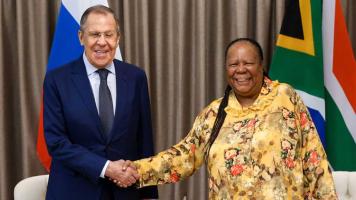 The Ukraine project is an obsession of the "collective west" but global south nations are resisting intimidation and making their own decisions in regard to the conflict.
 This week we learn about an effort in Mississippi to undo Black political power, and we’ll hear some of my commentary on the U.S. role in the Ukraine conflict, and support for Mumia Abu Jamal among…
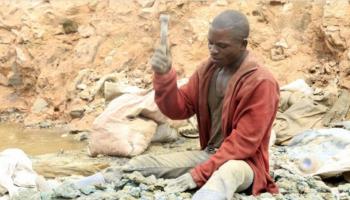 Maurice Carney is Executive Director of Friends of the Congo. He joins us to discuss cobalt, one of Congo’s mineral resources and one that plays a large role in green energy projects. But Congo’s…
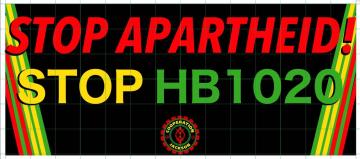 Nsombi Lambright is Executive Director of One Voice, a statewide non-profit located in Jackson, Mississippi. She joins us to discuss a legislative proposal to create a new court system within the…
 Margaret Kimberley participated in a February 21 webinar sponsored by the United National Anti-War Coalition, Ukraine One Year On. These are excerpts of her remarks.


