A Black Agenda Radio commentary by Glen Ford Click the flash player to listen to or the mic to download an audio in MP3 format.
“When it comes to civil and political liberties, the U.S. is a far less free place than it was, a generation ago.” Citizens acting under the slogan “Free Nelson Mandela” would have been prosecuted as criminals under the Patriot Act, as interpreted by both the Bush and Obama administrations.
Obama Would Have Been Jailed Under Patriot Act
A Black Agenda Radio commentary by Glen Ford
“In some ways, the post-9/11 political and legal climate is worse than in the bad old days of the McCarthy era.”
If the Patriot Act had been in effect when the Free South Africa Movement was in full swing in the 1980s, hundreds of thousands of Americans would have been liable for imprisonment on charges of rendering “assistance” to “terrorists.” When it comes to civil and political liberties, the U.S. is a far less free place than it was, a generation ago.
On February 23, the U.S. Supreme Court will hear arguments on the scope of the Patriot Act’s ban on rendering “support” to organizations designated as “terrorist” by the U.S. State Department. The Obama administration’s interpretation of the law, like it’s predecessors’, is so broad, it could put American citizens in prison for engaging in almost any contact with any person the government linked to a designated group. This includes organizations that have never attacked the United States, and have no direct grievance with United States.
It’s all in the language, the interpretation of the statute. Justice Department lawyers claim it is a violation of the Patriot Act even to file a friend-of-the-court brief on behalf of an organization on the list. In the case before the High Court, the U.S.-based Humanitarian Law Project insists on its right to help mediate conflicts among peoples abroad, such as the Kurdish people’s struggle for national expression and self-determination in Turkey. The Law Project wants to assist in finding a peaceful solution to the conflict between the Turkish government and the Kurdistan Workers Party. But the Kurdish party is on the American terror list, and the administration contends that even doing peace work with the Kurdish group amounts to assisting in terror. Once on the list, Americans are banned from virtually any contact whatever with the designated organizations.
“Americans are being prevented from exercising their free speech rights to promote peace in the world.”
It should be noted that the Kurdish Workers Party has no fight with the United States, has never attacked American installations, and is a secular party not connected with Islamic fundamentalism.
The New York-based Center for Constitutional Rights argues that Americans are being prevented from exercising their free speech rights to promote peace in the world.
In some ways, the post-9/11 political and legal climate is worse than in the bad old days of the McCarthy era, almost 60 years ago. Back then, said veteran civil rights lawyer Ralph Fertig, “ It was not illegal to help the communists or to be a communist. You might lose your job, you might lose your friends, you might be ostracized. But you’d be free. Today,” Fertig told the New York Times , “the same person would be thrown in jail.” Imagine, then, if the Patriot Act had been in force in the 1980s. Ronald Reagan had placed the African National Congress of South Africa and the world's most famous political prisoner, Nelson Mandela, on the State Department's terror list, from which they would not be removed until 2008 . Yet hundreds of thousands, millions, of Americans offered every assistance possible to the liberation movement – including, or so he claims, Barack Obama, himself. Yet, the Obama Justice Department is just as eager as the Bush regime to wield the Patriotic Act as an awesome weapon of fear. BAR executive editor Glen Ford can be contacted at Glen.Ford@BlackAgendaReport.com.

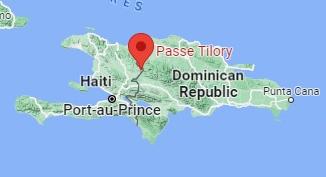 The Dominican Republic does not restrict its assaults on Haitians and its Haitian descended citizens. Its military feels free to enter Haiti itself and to commit killings there.
 The International Criminal Court (ICC) has no legitimacy. It has always acted on behalf of the U.S. and its allies.
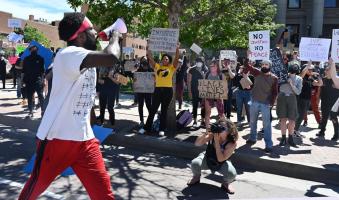 In 2020 law enforcement continued their practice spying on activist groups and attempting to entrap them. Police infiltration of movement spaces never ended.
 In this segment, we learn why Atlanta is the site of the planned Cop City police training facility in what purports to be a Black mecca
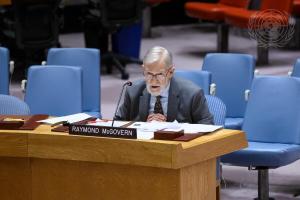 Ray McGovern served as a CIA analyst for 27 years, from the administration of John F. Kennedy to that of George H. W. Bush.


