There is a special burden that goes with being "the first", or "the only", or "one of the few" black faces in a workplace, school or professional situation. Jackie Robinson was neither the first nor the last to bear this load. The Seven Foot Poet speaks to those who bear this load.
I HATE BEING JACKIE ROBINSON
(Dedicated to the brothers and sisters competing in America’s rat race.)
Click the flash player below to hear the Seven Foot Poet perform this original work.
{mp3}poetry/090_7ft_jackie-robinson{/mp3}
I Hate Being Jackie Robinson
Being the only one
Being the first one.
You look at me with envy.
I look in the mirror and shun.
Monday thru Friday
Though no one yells slurs
Or
Explicitly threatens to terminate my existence on this earth
It hurts being Jackie Robinson.
Make no mistake
Even if my teammates are great
Championship caliber
They still can’t really relate
To my fate.
I hate being Jackie Robinson.
Material goods badly compensate
For torment endured
By me the lonely baobab tree
In a forest of timber wood and evergreens.
Being Jackie Robinson is no fun.
And I ain’t even half of him.
So don’t congratulate me on how well I’ve done
Because over the cheers of the fans – I hear my soul booing.
I hate being Jackie Robinson.
By Kemit Mawakana (aka The Seven-Foot Poet)
Peace (when appropriate) War (when necessary)
Copyright 2008.
Kemet Mawakana (aka “The Seven-Foot Poet”) is a highly acclaimed spoken-word artist, and has published two books A . . . Z . . . Infinity and Crucifixion of My Soul. The collective body of his works presented weekly in BAR are in tribute to Listervelt Middleton, Dr. John Henrik Clarke, and “For The People”. Currently, he is a facilitator at AYA Educational Institute (www.ayaed.com) and can be reached at sevenfootpoet@gmail.com.

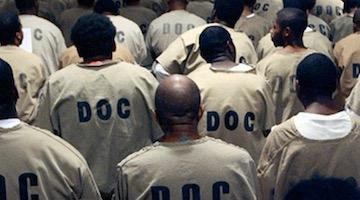 In an essay titled, “What Kind of Society Are We?” New York state prison inmate Donti Mitchell says citizens outside the walls should not be resentful that he is allowed
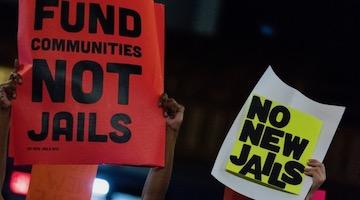 The Black Alliance for Just Immigration supports the “No New Jails NYC” campaign to prevent the city from building 12 new prisons to replace the cells that will be lost when the infamous Rikers Isl
 The lack of food outlets in Black neighborhoods is part of the larger reality of labor exploitation and corporate domination, according to Ashante Reese, professor of anthropo
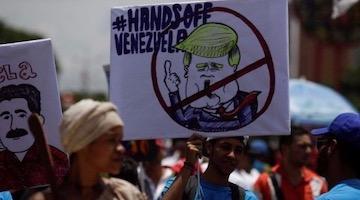 So-called progressives sound just like Donald Trump when they describe Venezuela’s elected government as a “dictatorship,” said Nicholas Evan Ayala, co-editor of Anti
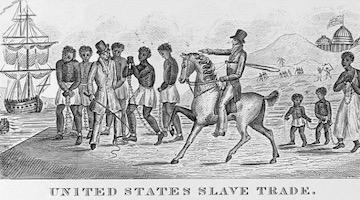 The New York Times’ “1619 Project” essays on the arrival of African slaves in Jamestown, Virginia “is not a critique of American exceptionalism – it is an attempt to told slavery



