Supreme Court: Humans Have No Rights That a Corporation is Bound to RespectA Black Agenda Radio commentary by Glen Ford
“The High Court has swept away the last remaining facade of America’s Disney World democracy.”
The U.S. Supreme Court has given its approval to what was already an accomplished fact: corporate ownership of the governmental apparatus of the American state. In affirming that corporations have the right to buy as much influence as they can pay for with campaign contributions, the High Court has swept away the last remaining facade of America’s Disney World democracy. The U.S. political system is revealed as nothing more than a theme park that offers the public fake election thrills that simulate one-man, one vote.
The barbaric principle underlying the decision was established 124 years ago, when another Supreme Court ruled that corporations had the constitutional rights of persons. Like the recent ruling, the 1886 Supreme Court decision essentially ratified the emerging reality of the day: the corporations were already running the economy and government of the United States as if they owned it. It is said that more than half of U.S. senators owned stock in the railroads, stock that had been given to them by the railroad corporations as gifts in return for millions of acres in federal lands. It was the age of the rise of the great Robber Barons, who invented the modern corporation and demanded that their paper avatars be treated as full fledged citizens of the Republic. Dutifully, the Supreme Court complied, providing constitutional justification for already-existing corporate rule.
The current Supreme Court is simply expanding on the 1886 principle of corporate personhood, to fit modern, much more expensive, circumstances. The supremacy of corporate power in U.S. elections is a fait accompli – a manifest, self-evident fact. Only corporate “persons” or actual human beings associated with corporations could spend a total of $5.3 billion dollars on the elections of 2008. Barack Obama himself received $650 million, the vast bulk of it from the corporate class, who gave more money to Democrats than to Republicans.
“Wall Street is to the Democrats what Big Oil is to the Republicans.”
The Democrats are complaining that the Supreme Court ruling will further advantage the Republicans. But the more profound effect will be to complete the corporatization of the Democratic Party, whose leadership is already at least as closely allied with Wall Street as the GOP. Remember, it was candidate Barack Obama who saved George Bush’s bank bailout bill, in 2008, and put Wall Street operatives at the helm of his new administration's economic policy. Wall Street is to the Democrats what Big Oil is to the Republicans – their sugar daddies.
In response to the Supreme Court's damnable decision, more than 40,000 people have joined in support of a move to amend the U.S. Constitution, to once and forever proclaim that corporations are not people – only people are people, with the civil and political rights of human beings. Such a constitutional amendment is necessary to reverse, not only the latest travesty from the Supreme Court, but the original sin of 1886, when corporations were recognized as persons. Those rulings created a legal construct in which the American people have no rights that a corporation is bound to respect.
For Black Agenda Radio, I'm Glen Ford. On the web, go to www.BlackAgendaReport.com.
BAR executive editor Glen Ford can be contacted at Glen.Ford@BlackAgendaReport.com.

 The history and significance of Black August, presidential elections and politics in Kenya, and reflections on the anniversary of the Sandinista Revolution.
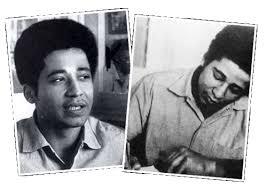 Kalonji Changa is co-founder of Black Power Media and founder of FTP Movement. He joins us from Atlanta to talk about Black August, which has been a fixture of the liberation movement for 43 years.
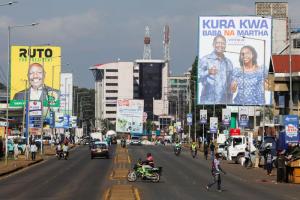 Irene Asuwa joins us from Nairobi, Kenya. She is co-convener of Ecological Justice and supports outreach at Ukombozi Library. We discuss the recent presidential election in that country.
 In a recent webinar hosted by the United National Antiwar Coalition (UNAC), Margaret Kimberley discussed what she witnessed during the commemoration events for the 43rd anniversary of the Sandinista…
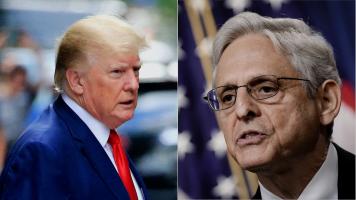 Why would Black people laud the FBI or criticize protection against self-incrimination? The FBI search of Donald Trump's home has reawakened Trump Derangement Syndrome.


