As the old song goes, “They smile in your face...back-stabbers.” The Obama administration “artfully pursues a policy of smiles and handshakes all around – while undermining democratic forces through proxies whenever the opportunity arises.” Washington reserves its rawest deceits for the small countries of the Americas – like Honduras and Haiti.
In Honduras and Haiti, the U.S. Rules by Proxy
A Black Agenda Radio commentary by Glen Ford
“Wherever the U.S. has the power to thwart the democratic process, it does so.”
The Barack Obama presidency was supposed to signal a new era in U.S. foreign policy, including in Latin America, which had turned decisively against George Bush’s blustering, bullying and coup-making. What has emerged under Obama is not a reversal of historic U.S. imperial policies in the Americas, but a cosmetic adjustment. President Obama uses far less warlike language than his predecessor, but he deploys every trick and deceit in the book to maintain U.S. dominance in the region. And like all bullies who have had their noses bloodied, he tries to create fear in the hemisphere by picking on the smaller countries.
For most of the 20 th century, Haiti and Honduras were de facto colonies of the United States. Haiti was occupied by the U.S. military for nearly 20 years , between 1915 and 1934. Honduras was the original, prototypical “ banana republic ,” ruled by a local oligarchy totally subservient to the United States. Both Haiti and Honduras are prime examples of a U.S. strategy to under-develop its neighbors – a deliberate policy of impoverishment and petty tyranny. But blatant gunboat diplomacy doesn’t work very well anymore for the United States in most of Latin America, where a popular consensus has been achieved that rejects U.S. hegemony. Recognizing the drawbacks of overt American aggression, President Obama artfully pursues a policy of smiles and handshakes all around – while undermining democratic forces through proxies whenever the opportunity arises.
“What has emerged under Obama is not a reversal of historic U.S. imperial policies in the Americas, but a cosmetic adjustment.”
In Haiti, the U.S. proxy is the United Nations, which took over the job of military occupier from George Bush in 2004, after the Americans sent democratically elected President Jean-Bertrand Aristide into exile. Aristide's Lavalas Family party has been suppressed ever since.
In Honduras, the Americans still find it possible to act in the old-fashioned way, through the local oligarchy and its U.S.-dominated military. Back in June, the Honduran military bundled democratically elected President Manuel Zelaya into a plane, made a stop at a U.S. airbase, and sent him into exile in Costa Rica. Zelaya then snuck back into Honduras, living under the protection of the Brazilian embassy. The U.S., standing virtually alone in the hemisphere and the world, refused to call the removal of President Zelaya a coup, and announced that Washington would recognize the results of last weekend's elections to succeed Zelaya even though they were held under military martial law. Hondurans who opposed the coup had no one to vote for, so of course, the oligarchy's candidate won in a very low turnout . President Aristide's party was last week barred from taking part in legislative elections scheduled for February, in Haiti. The oligarchy-controlled elections commission claimed the party failed to fill out some forms properly. Back in June, only about ten percent of the people turned out for elections in which Aristide's party was excluded. These two electoral travesties are the true face of President Obama's policy on democracy in the Americas. Wherever the U.S. has the power to thwart the democratic process, it does so, and then bides its time, waiting for another opportunity to stab its neighbors in the back. For Black Agenda Radio, I'm Glen Ford. On the web, go to www.BlackAgendaReport.com . BAR executive editor Glen Ford can be contacted at Glen.Ford@BlackAgendaReport.com.

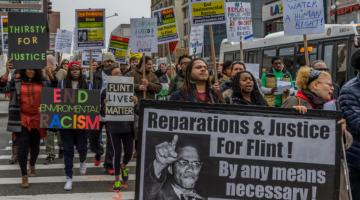 The climate movement will never be effective as long as it refuses to confront white supremacy within its own organizations and as a belief system which is unconcerned about Black and brown death.
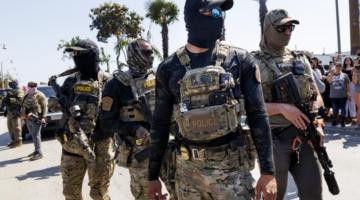 "They Wear The Masks" is the latest from BAR's Poet-in-Residence.
 Fisk University, an HBCU, is presenting a $400 million A.I. data center as progress for the North Nashville community. In truth, it means more pollution, more surveillance, and another chapter in a…
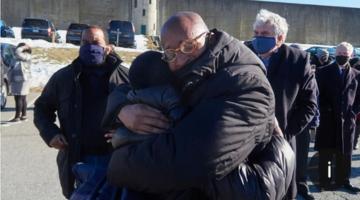 The mass incarceration system demands thousands of Black bodies behind bars. That system is maintained by prosecutorial misconduct which goes unpunished. That impunity is integral to keeping the…
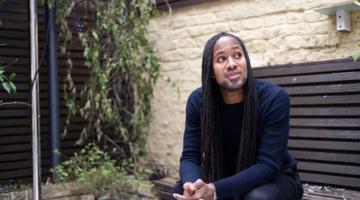 Arday was killed by the contradiction at the heart of white elite institutions: they want the appearance of racial progress without structural change, and they readily discard Black people, even…


