 by Political Research Associates
Right-wing evangelicals from the United States have invested heavily in promulgating their anti-gay ideology in Africa. “Through their extensive communications networks in Africa, social welfare projects, Bible schools, and educational materials, U.S. religious conservatives warn of the dangers of homosexuals and present themselves as the true representatives of U.S. evangelicalism.”
U.S. Christian Right Promotes Homophobia in Africa
by Political Research Associates
The following is a press release from Political Research Associates, of which Rev. Kaoma is the director. We thought our readers would find it of interest. – The Editors
“The U.S. Right – once isolated in Africa for supporting pro-apartheid, White supremacist regimes – has successfully reinvented itself as the mainstream of U.S. evangelicalism.”
Sexual minorities in Africa have become collateral damage to our domestic conflicts and culture wars as U.S. conservative evangelicals and those opposing gay pastors and bishops within mainline Protestant denominations woo Africans in their American fight, a groundbreaking investigation by Political Research Associates (PRA) has discovered.
Globalizing the Culture Wars: U.S. Conservatives, African Churches, and Homophobia, a new report by the Rev. Kapya Kaoma, PRA Project Director, exposes the U.S. Right’s promotion of an agenda in Africa that aims to criminalize homosexuality and otherwise infringe upon the human rights of LGBT people while also mobilizing African clerics in U.S. culture war battles. U.S. social conservatives, who are in the minority in mainline churches, depend on African religious leaders to legitimize their positions as their growing numbers makes African Christians more influential globally.
The investigation’s release could not be timelier, as the Ugandan parliament considers the Anti-Homosexuality Bill of 2009. Language in that bill echoes the false and malicious charges made in Uganda by U.S antigay activist and Holocaust revisionist Scott Lively that western gays are conspiring to take over Uganda and even the world.
“U.S. social conservatives depend on African religious leaders to legitimize their positions.”
These partnerships have succeeded in slowing the mainline Protestant churches' recognition of the full equality of LGBT people, in part due to liberals’ sensitivity to the charge of colonialism. However, as Kaoma argues, it is U.S. conservatives who are imposing their own concerns about homosexuality on Africa. Further, although U.S. conservatives have organized African religious leaders as a visible force opposing LGBT equality, it would be wrong to conclude that all of Africa stands with these clerics and their U.S. patrons.
In the United States, Kaoma focuses on “renewal” groups in The Episcopal Church, United Methodist Church USA, and Presbyterian Church USA; U.S conservative evangelicals; and the Institute on Religion and Democracy, a neoconservative think tank that for decades has sought to undermine Protestant denominations' tradition of progressive social justice work.
In Africa, Kaoma investigates ties U.S. conservatives have established with religious leaders in Nigeria, Uganda, and Kenya and the impact of homophobia exported from the United States to these Anglophone countries.
As Kaoma argues, the U.S. Right – once isolated in Africa for supporting pro-apartheid, White supremacist regimes – has successfully reinvented itself as the mainstream of U.S. evangelicalism. Through their extensive communications networks in Africa, social welfare projects, Bible schools, and educational materials, U.S. religious conservatives warn of the dangers of homosexuals and present themselves as the true representatives of U.S. evangelicalism, so helping to marginalize Africans’ relationships with mainline Protestant churches.
“What’s been missing is the effect of the Right’s proxy wars on Africa itself.”
"We need to stand up against the U.S. Christian Right peddling homophobia in Africa," said Kaoma, who in recent weeks challenged U.S. evangelist Rick Warren to denounce the billand distance himself from its supporters. "I heard church people in Uganda say they would go door to door to root out LGBT people and now our brothers and sisters are being further targeted by proposed legislation criminalizing them and threatening them with death. The scapegoating must stop."
While the American side of the story is known to LGBT activists and their allies witnessing struggles over LGBT clergy within Protestant denominations in the United States, what’s been missing is the effect of the Right’s proxy wars on Africa itself. Kaoma’s report finally brings this larger, truly global picture into focus.
“Just as the United States and other northern societies routinely dump our outlawed or expired chemicals, pharmaceuticals, machinery, and cultural detritus on African and other Third World countries, we now export a political discourse and public policies our own society has discarded as outdated and dangerous,” writes PRA executive director Tarso Luís Ramos in the report’s foreword. “Africa’s antigay campaigns are to a substantial degree made in the U.S.A.”
Leaders within mainline Protestant denominations hailed the report.
"The exploitation of African Christians by right-wing organizations in the United States is reprehensible. Where were these individuals and organizations and their leaders during the struggles against colonialism and apartheid? They certainly were not standing in solidarity with the people of Africa. Today, they use a variety of corrupt practices and methods in a vain attempt to turn back the tide of history. This report reveals the truth about what is going on and should be required reading for American church leaders," said Jim Winkler, the general secretary of the international public policy and social justice agency of The United Methodist Church.
For his 16-month investigation, Kaoma, an Anglican priest from Zambia, traveled in the United States and Uganda, Kenya, and Nigeria, attended the notorious antigay conference of Uganda’s Family Life Network in March, and documented concerns among the region’s clergy that U.S. conservatives are contributing to corruption among bishops with their lax requirements for donated funds.
Although written primarily for a U.S. audience, Globalizing the Culture Wars is certain to cause a stir in English-speaking Africa, where conservative U.S. evangelicals have for too long escaped the close scrutiny of African social justice activists and movements.
The full report in PDF format is at:
Project Director Kapya Kaoma is an Anglican priest from Zambia now leading churches in the Episcopal Diocese of Massachusetts. A doctoral candidate at Boston University School of Theology, he has studied in evangelical schools in Zambia and the United Kingdom. From 1998 to 2001, he served as dean of St. John’s Cathedral in Mutare, Zimbabwe and lecturer at Africa University, where he coauthored a text in ethics, Unity in Diversity. From 2001 to 2002, he was academic dean of St. John’s Anglican Seminary in Kitwe, Zambia, where he launched its women’s studies and church school training programs. An active campaigner for women’s reproductive rights, Kaoma is a passionate activist for social witness in the world.
Political Research Associates (PRA) is a progressive think tank devoted to supporting movements that are building a more just and inclusive democratic society. We expose movements, institutions, and ideologies that undermine human rights, with a focus on the U.S. political Right. Political Research Associates seeks to advance progressive thinking and action by providing accurate, research-based, information, analysis, and referrals.

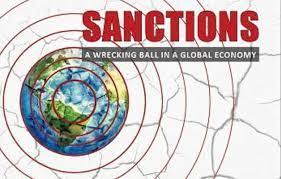 Sara Flounders joins us to discuss her work as editor of the newly published anthology, 'Sanctions: A Wrecking Ball in a Global Economy.' The book is an analysis of U.S. unilateral coercive measures…
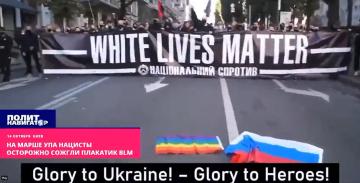 The open white supremacy and fascism exhibited in Ukraine are conveniently swept under the rug. Nazis are bad, unless they serve the interests of the U.S. state.
 A round-up of The Black Agenda Review’s posts from 2022 – and a reprint of Haiti’s January 1, 1804 declaration of independence.
 The hope that the U.S. will intervene anywhere in the world for humanitarian reasons is misguided in the extreme. Claims of concern are always a ruse hiding ulterior motives. Imperialist…
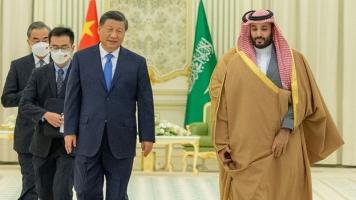 Every U.S. action intended to increase its power actually results in it being diminished. Multipolarity is here to stay.


