Like a pyromaniac, the United States threatens to ignite the entire East African region in its campaign to suppress Islamist forces in Somalia. Unable to marshal support for the pitiful puppet regime in Mogadishu, the Americans try to buy ethnic Somali recruits in surrounding countries. A new military offensive is set for late December.
U.S. Sows Seeds of Wider War in East Africa
A Black Agenda Radio commentary by Glen Ford
“The Americans have organized mass recruitment among the hundreds of thousands of Somalis who have fled the fighting to refugee camps in Kenya.”
Somali refugees and ethnic Somali citizens of Kenya are being recruited and trained by the thousands for a U.S.-backed offensive in Somalia, to begin next month. The Associated Press, citing numerous sources among refugees, young men who have deserted from the new militia and their families, local Kenyan officials and foreign diplomats, reports that the offensive against Islamist forces in Somalia is planned for late December, the end of the Somali rainy season. That’s the same seasonal window the Americans took advantage of three years ago, when the U.S. instigated an Ethiopian invasion of Somalia that plunged the country into what the United Nations described as the “worst humanitarian crisis in Africa.” That crisis continues, complicated by a severe drought and a U.S. blockade of food aid. Washingrton supports a puppet government that controls little more than a small corner of Mogadishu, Somalia's capital, and would immediately collapse where it not for the protection of Rwandan and Burundian troops that guard the airport. Most of central and southern Somalia is controlled by Islamist Shabab fighters. The U.S. is attempting to starve the region into submission by withholding 40 million pounds of food warehoused in Mombasa, Kenya.
With little support inside Somalia, the Americans have organized mass recruitment among the hundreds of thousands of Somalis who have fled the fighting to refugee camps in Kenya – a practice that violates international law. Recruits are also being drawn from ethnic Somalis who are Kenyan citizens, in the northeastern part of the country. The Associated Press has learned of similar recruitment and training in the Somali regions of Ethiopia and Djibouti, where the United States maintains a huge military base.
The recruits are lured into service with promises of $600 a month, but deserters say they are often beaten, ill-fed and unpaid.
“The Americans are fanning the flames of war among Somalia's neighbors – including Kenya.”
The Americans are playing a very dangerous game. In addition to breaking international law and discrediting aid agencies by recruiting among refugees, the U.S. is encouraging a wider conflict in East Africa. Ethnic Somalis dominate in northeastern Kenya, in the Ogaden region of Ethiopia, and in Djibouti. Ethnic Somalis waged a secessionist war in Kenya in the mid-1960s and continue to resist Ethiopian rule in the Ogaden. According to the Associated Press, recruits in Kenya are deprived of their identification cards and told, “You are not a Kenyan. From this moment, tell yourselves and other people you are a Somali.” Recruiters are apparently doing the same thing among ethnic Somalis in Ethiopia and Djibouti. The Americans, in their zeal to defeat the Islamist Shabab in Somalia, are encouraging Somali nationalism in neighboring countries, and thus planting the seeds of future wars of secession. Although the U.S. may think that it is turning brother Somalis against one another for U.S. foreign policy purposes, in reality the Americans are fanning the flames of war among Somalia's neighbors – including Kenya. These are the fruits of AFRICOM, the U.S. military's African Command. Commander-in-Chief Barack Obama is destabilizing his father's own homeland, and the whole of East Africa. BAR executive editor Glen Ford can be contacted at Glen.Ford@BlackAgendaReport.com.

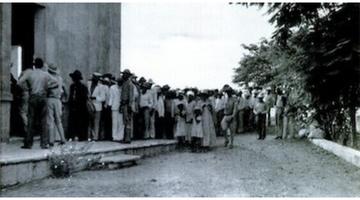 “Between October 2 and October 8, 1937, between 15,000 and 40,000 Haitians and Black Dominicans were slaughtered by Dominican troops…”
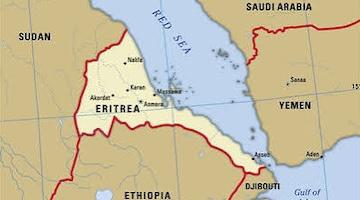 Ethiopia and Eritrea are on the brink of a war that could further destabilize the Red Sea, disrupt oil tanker traffic, and drive gas prices even higher.
 The UN's renewal of the Gang Suppression Force mandate is part of a wider hemispheric project to reassert military control across the Americas. Caribbean leaders cannot claim to support a Zone of…
 The Islamic Revolutionary Guard Corps (IRGC) has issued a letter addressed to the American people, outlining its views on recent developments and Iran-U.S. relations.
 The Trump administration's new sanctions on Cuba, are part of a dual strategy to create unendurable hardship while simultaneously making Cuba financially dependent on the United States.


