 by Sikivu Hutchinson
To some, the Black Church is a fountain of liberation. But what of women's liberation? “Although black women are far more likely than men to attend church more than once a week, the officialdom of black religious establishments, and certainly the political face of the black church, is steadfastly male.” Does the African American brand of religiosity buttress the hierarchical status quo?
This Far By Faith? Race Traitors, Gender Apostates and the Atheism Question
by Sikivu Hutchinson
“Mainstream Protestantism is still, of course, a Jim Crow throwback and a man’s man’s world.”
Martin Luther King, Jr. once dubbed Sunday at 11:00 a.m. the most segregated hour in America, a microcosm of the titanic divide that specifically separates black and white America. Yet racial divisions are not the only prominent schism in the Sunday churchgoing ritual that encompasses much of the social and cultural life experience of one of the most God-obsessed nations on the planet. Despite all the “liberal” revisions to biblical language and claims to progressivism among some Christian denominations, mainstream Protestantism is still, of course, a Jim Crow throwback and a man’s man’s world. As Mark Galli, editor of the Evangelical magazine Christianity Today once remarked, “It’s a cliché now to call institutional religion 'oppressive, patriarchal, out of date and out of touch.' So what else is new? I feel sorry for those people who don't think there's anything greater than themselves…It leaves out the communal dimension of faith.”
From the Deep South to South Los Angeles, this “communal dimension of faith” is one of the most compelling and problematic aspects of women’s investment in organized religion. When it comes to accounting for the disproportionate male to female ratio for self-identified atheists, there has been much wrongheaded conjecture about the supposed emotionalism of women versus the rationality of men. Bloggers muse about women’s intuitive sensitivity to the warm and fuzzy “verities” of religious dogma. Women are portrayed as naturally timorous and thus less inclined to question or suspend belief about the inconsistencies of organized religion. For the most part, there has been no serious evaluation of the perceived gendered social benefits of religious observance versus the social costs of espousing such a gender non-conforming “individualist” ideology as atheism, particularly with respect to American born women of color. Indeed, in many communities of color the very structure of organized religion offers a foundation for the articulation of female gendered identity that has been a source of agency and an antidote to marginalization. On the other hand, patriarchy entitles men to reject organized religion with few implications for their gender-defined roles as family breadwinners or purveyors of cultural values to children. Men simply have greater cultural license to come out as atheists or agnostics because of the gender hierarchies that ascribe rationalism, individualism, intellectualism and secular or scientific inquiry to masculinity. So women in traditionally religious communities who come out in real time (as opposed to online) risk greater ostracism because women don’t have the cultural and authorial privilege to publicly express their opposition to organized religion as men.
“Women remain a minority among deacons, pastors and senior pastors of most black congregations.”
African American women provide an illustrative case in point. Imagery such as filmmaker Tyler Perry’s bible thumping malapropism spewing Madea, stereotypically heavyset black women in brightly colored choir robes belting out gospel music and sweat-drenched revelers cataleptic from getting the holy ghost are some of the most common mainstream representations of black femininity. These caricatures are buttressed by the unwavering financial and social support of the black church, which is predominantly Christian-based, by African American communities of all income brackets. According to blackdemographics.com African Americans remain the most solidly religious racial group in the United States, outstripping whites in their churchgoing fervor by a nearly 20% margin.Sunday in and Sunday out, between the hours of 8 a.m. to 4 p.m., a familiar scene emerges in both working and middle class black communities across the nation. Black women shuttle dutifully to church in their sartorial best, backbone of a dubious institution that still accords them only second class citizen standing. The gender dynamics in the breakdown of regular churchgoers reflect an utterly predictable disparity in power and access. While more black women have been allowed to assume leadership roles in black churches in recent years, they remain a minority among deacons, pastors and senior pastors of most black congregations. So although black women are far more likely than men to attend church more than once a week, the officialdom of black religious establishments, and certainly the political face of the black church, is steadfastly male.
“Christian religiosity pervades the slang of misogynist black hip hop artists and sports figures.”
What is the relationship between these gendered religious hierarchies and cultural politics in African American communities? Christian religiosity pervades the slang of misogynist black hip hop artists and sports figures and worms its way into their Jesus touting boilerplate award acceptance speeches. Christian religiosity engorges multi-million dollar faith-based empires in poor urban black communities where “prime” real estate is often a triad of storefront churches, liquor stores and checking cashing places. Sex scandals and financial improprieties fester amongst the leadership of black churches yet sexist and homophobic rhetoric remain a mainstay. Blind faith speaks through bulging collection plates and special tithes to the latest charity, pastor’s pet cause or capital campaign, “blessing” donors with another chit to heaven and certitude that black apostates are also race traitors. If mainstream African American notions of black identity are defined by a certain degree of essentialism, then religious identity is certainly a key element. Alternative belief systems are viewed with suspicion because they are deemed to be inconsistent with authentic black identity.
Given this context it is unsurprising that comedian and self-appointed dating guru Steve Harvey’s diatribe against atheism this past spring went largely unchallenged by African American cultural critics. Doling out sage dating advice, Harvey condescendingly warned black women to avoid atheist “gentlemen callers” at all costs because they simply have no morals. Harvey’s swaggeringly ignorant declaration was not only a repudiation of atheism but a thinly veiled warning to black women that they should toe the religious line with their personal choices. Failure to do so would have serious consequences for racial solidarity and their ability to be good (black) women, compromising their heterosexual marketability and legitimacy as marriage partners and mothers. It is this brand of essentialism that makes stereotypes associating black identity politics with an anti-secularist stance and religious superstition so irritatingly persistent.
“Steve Harvey condescendingly warned black women to avoid atheist 'gentlemen callers' at all costs because they simply have no morals.”
While the greater religiosity of women of color in comparison to men is no mystery, why has this peculiarly gendered regime gone relatively unquestioned? The gravity of the social and economic issues confronting black communities—and the tremendous cultural capital and social authority that organized religion exercises within them— compels further analysis. Just as women are socialized to identify with and internalize misogynistic and sexist paradigms, religious paradigms that emphasize domestication and obeisance to men are integral to mainstream American notions of femininity. For many observant women questioning or rejecting religion outright would be just as counterintuitive as rejecting their connection to their lived experiences. In this regard religious observance is as much a performance and reproduction of gender identity as it is an exercise of personal “morality.” Many of the rituals of black churchgoing forge this sense of gendered identity as community. Whether it be maintaining ties with peers within the context of a church meeting, ensuring impressionable children have some “moral” mooring by sending them to Sunday School or even invoking sage bits of scripture to chasten malcontents, enlighten casual acquaintances or infuse one’s quotidian doings with purpose—all carefully delineate enactments of kin and community that have been compulsorily drilled into women as the proper fulfillment of a gendered social contract. And if this gendered social contract were violated en masse patriarchy and heterosexism would have less of a firmament.
What, then, are the lessons for promoting secular humanist, agnostic or atheist belief systems? First, that there must be more clearly defined alternatives to supernaturalism which speak to the cultural context of diverse populations of women and people of color. Second, that moral secular values should provide the basis for robust critique of the serious cultural and socioeconomic problems that have been allowed to thrive in communities of color under the regime of organized religion. Finally, in an intellectual universe where rock star white men with publishing contracts are the most prominent atheists and atheism is perceived in some quarters as a “white” thing, it is also critical that acceptance and embrace of non-supernatural belief systems be modeled in communities of color “on the ground.” Only then can secularism defang the seductions of the communal dimension of faith that defines our most segregated hour.
Sikivu Hutchinson is the editor of blackfemlens.org and a speaker at the Atheist Alliance International Conference in October. This article is an excerpt from Scarlet Letters a forthcoming book of essays on race/gender politics, atheism and secular belief.

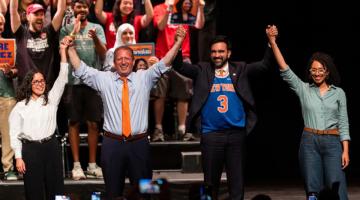 The Democrat establishment poured millions into protecting its incumbents in New York City, but voters chose progressive anti-genocide challengers. That party will fight against the reality that…
 Joshua Reaves-Charmelus spoke with Ben Passmore to discuss the “Freedom 250” UFC event, its meaning, and the broader problem of right-wing fighting culture.
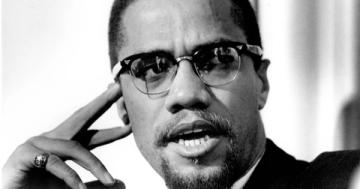 Malcolm X explained it well. Every Black person in this country is a prisoner, sometimes literally behind bars, and sometimes on the outside of jail, but a prisoner, nonetheless.
 The United States announced that Kenya, with the permission of a comprador government, would serve as an Ebola quarantine hub for Americans, ignoring the will of the Kenyan people and treating the…
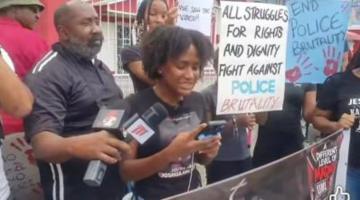 A protest leader in Trinidad was arrested during Labour Day celebrations for the crime of demanding justice for a paralyzed shooting victim. The government's willingness to silence dissent at home…


