by John Payton
The Gulf regions “Road Home” program hasn't brought nearly enough former residents of New Orleans back home. Four years after the Katrina, there is danger that even those who remain in New Orleans may not be counted in the upcoming Census – especially those who are Black and brown.
The Long Road Home: Marking the 4th Anniversary of Hurricane Katrina
This article originally appeared in The DefendersOnline, a publication of the NAACP Legal Defense and Educational Fund.
by John Payton
“Efforts must be made to ensure that those who have been impacted by and those who remain displaced as a result of Hurricane Katrina are counted and counted accurately.”
Hurricane Katrina remains one of the most tragic moments in our nation’s recent history. The disturbing images of human suffering and loss of life in the storm’s aftermath continue to haunt us. Equally troubling is the fact that too many of those affected by the storm, the vast majority of them African American, continue to endure great suffering today. We have an obligation to see our nation fulfill its promise of rebuilding the great City of New Orleans while working to remedy the systemic discrimination, poverty and inequality that continues to plague the region today.
For African Americans, the effects of Hurricane Katrina have proven particularly devastating. Recent estimates suggest that the City of New Orleans has returned to 76 percent of its pre-Katrina population but too many African Americans face real obstacles in their efforts to return and rebuild. Among them is Carl Galmon, a long-time activist who, after being displaced to Atlanta, recently returned home to insurmountable utility bills that were charged to him during a time when his home was uninhabitable. Galmon has been fighting, with little success, to get these charges. For others, the demolition of much of the city’s public housing stock has been demolished leaving affordable housing options for renters few and far between.
“Too many African Americans face real obstacles in their efforts to return and rebuild.”
Disturbingly, the Road Home Program, which aims to restore storm-devastated communities by providing rebuilding grants, has fallen short on its promise to help many families rebuild. The program turns upon a formula that ties the amount of assistance provided to the lower of two figures: the cost of damage to rebuild or the pre-storm value of the home. In operation, this formula has had a discriminatory impact on African Americans whose homes are often deemed lower in value due, in no small part, to decades of racial discrimination and segregation in the Louisiana housing market.
The discriminatory disparity in the Road Home grant formula is now the subject of a lawsuit brought by LDF and the law firm of Cohen Milstein Sellers & Toll which is now pending in the D.C. District Court.
“The Road Home Program has fallen short on its promise to help many families rebuild.”
But even beyond these housing challenges, the Gulf region also faces obstacles in connection with the upcoming 2010 Census. Given the unique challenges, efforts must be made to ensure that those who have been impacted by and those who remain displaced as a result of Hurricane Katrina are counted and counted accurately. An accurate Census count is critical to not only ensuring that states receive adequate federal funding but also to redistricting which will take place in communities across the state over the course of the next few years. Ensuring that displaced voters maintain meaningful access to the political process also remains a critical and important goal.
As we take a moment to reflect upon the 4th anniversary of Hurricane Katrina we must appropriately pay tribute to the storm’s survivors whom have shown tremendous resilience in their efforts to restore their communities and homes. But we must also vow to never forget the suffering endured by those who lost their lives while continuing the fight to ensure that tomorrow’s Gulf region is a more equal and just community for all of its citizens.
John Payton is President of the NAACP Legal Defense and Educational Fund, Inc.

 Sanders has been made into a non-person, and his proposals routinely distorted, because the corporate media want Americans to meekly submit to the Race to the Bottom.
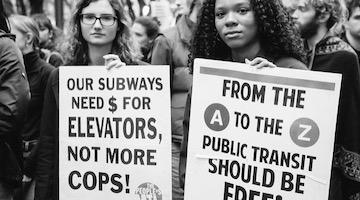 A thousand young people demonstrated in Brooklyn, jumping over turnstiles in solidarity with others arrested and brutalized by the cops.
 Whether Trump tried to make an impeachable arms deal with Ukraine or not, “the last thing Ukraine needs is more weapons of any kind.”
 Black political captivity in the Democratic Party has a lot to do with why there is no clear peace movement in the United States.
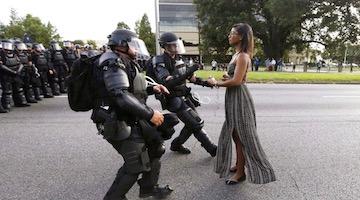 Much of the internet chatter over low- hanging fruit issues fails to address our material realities within a settler colony.



