
Her father taught his students to "value, study and honor their collective history," and his daughter to follow her heart. That legacy took the author on a journey to the Congo, where six million have died without shocking western sensibilities. "I vowed that when I returned home I would talk and write about the Congo in as many public forums as possible. To advocate for the Congolese, I must teach friends, family and others that the deaths of millions is a global issue that cannot be ignored."
by Makeda Crane
This article originally appeared in the Baltimore Sun.
"How many Congolese lives had been sacrificed to produce the coltan in my cell phone?"
On the weekend after Thanksgiving, I went home to Brooklyn, N.Y., to visit my father - the man whose height and stature always felt like a wall of protection between me and the world. As I sat beside his hospital bed in these last few months of his life, I had watched the body of this once robust, 6-foot-2, 240-pound man slowly transform into a wilted flower.
Now he was down to about 130 pounds. I whispered in his ear, "Daddy, do you remember me telling you that I'm going to the Congo"? He nodded back, but I wasn't sure if it was a mere nod of recognition or true comprehension.
My personal connection to the Congo had been forged by my father, Ernest Crane. Born and raised in Harlem, he would often say, "I feel like a walking history book," as he recalled the important moments he participated in and lived through: Jim Crow, the March on Washington, Vietnam, Watergate. He often credited "Mama Lilla," his grandmother, with giving him a love of history. She would tell him bedtime stories of her parent's lives as slaves - this was the root of his interest in his African ancestors.
It is no wonder that he was a lifelong student of liberation movements in America and abroad, and an avid reader of African history. Later, as a professor of psychology and African-American history, he taught students to value, study and honor their collective history.
"How can 6 million people die and the world stands by, in silence?"
I had never been to the Congo but had been transplanted there by my father's accounts of its history. He spoke of the Congo as a beautiful, lush country that had been sought after, first by Portugal and Belgium, then by neighboring Rwanda and Uganda. I recall him saying, "The Congo is one of the most underreported massacres in history, how can 6 million people die and the world stands by, in silence?" He spoke of the courage of Patrice Lumumba, a personal hero of his, who stood up against Belgian colonial rule.
I got closer to the Congo after watching a news program on which a guest spoke about the plight of the Congolese people. Later, flipping through the channels on my TV, I accidentally turned to a program about the systematic rape of women in Eastern Congo. I found myself drawn to stories about the area, and even though these were coincidences, there were too many for me to ignore the call.
I felt compelled to act and battled with myself about how - and if - I could make a difference from thousands of miles away. It was increasingly difficult to continue living the awful cliche of the sympathizing American who talks about the world's suffering over a chai latte, but goes home and does nothing.
"As I met the eyes of an armed soldier, I felt my stomach drop."
Instinctively, I realized the hidden message in my father's words: "Makeda, always follow your heart." It was his love of freedom and dignity that compelled me to ask 150 people for $33 so I could go to Goma, Democratic Republic of Congo, as an independent journalist through Friends of the Congo, a Washington, D.C.-based advocacy organization.
My father passed away on Jan. 3, and two days later, I left for the Congo. As I crossed the border into Goma and met the eyes of an armed soldier, I felt my stomach drop, as if I were on a roller coaster that had just made a sharp plunge. The nearly 6 million people who had died in the 12 years of conflict seemed to loom over the dusty streets of Goma and its people.
At Goma's main hospital, I looked into the pupils of a woman who represented the hundreds of thousands of women who had been systematically raped by foreign troops and Congolese militiamen; I sought evidence that she still had breath in her body. I felt a bond with her that surpassed sympathy; I knew her struggle was my own.
I listened like an empty vessel to a Congolese trader of coltan (a mineral vital to cell phones and other electronics) say, "The voice of a poor man doesn't have any importance." He spoke of U.S., Britain, Rwandan and Ugandan companies profiting from the unregulated mining and selling of Congo's vast mineral deposits, and I wondered: How many Congolese lives had been sacrificed to produce the coltan in my cell phone?
At refugee camps, I witnessed the inadequate food rations dispensed to the refugees, while in the distance were vast green forests. When I asked children whose villages had been destroyed in the conflict how long they had been in the camps, many couldn't recall living anywhere else.
"He spoke of U.S., Britain, Rwandan and Ugandan companies profiting from the unregulated mining and selling of Congo's vast mineral deposits."
As I walked through the last refugee camp on the line of conflict between Rwandan troops and Congolese rebels, I again felt the uneasiness that had accompanied my first steps onto Congo soil. I pulled out my father's picture and looked at his smile, which assured me that I was protected.
Someone once told me: "People rarely take risks because they want to, but they take a leap of faith because of the persistent yearning that can only be resolved through action." I knew this trip was the start of an intimate relationship with the Congo.
Paying the highest tribute to my father, I vowed that when I returned home I would talk and write about the Congo in as many public forums as possible. To advocate for the Congolese, I must teach friends, family and others that the deaths of millions is a global issue that cannot be ignored. And people must be told that the root cause of the conflict is not ethnic division between the Hutu and Tutsi tribes, but control of the Congo's natural resources.
I will continue to act on behalf of those who have been silenced, grabbing the torch that was given to me, and keeping my father's legacy in front of me as a guide in creating my own.
Makeda Crane, who works in The Baltimore Sun's editorial department, is a graduate of the University of Maryland, Baltimore County. She plans to pursue a law degree, specializing in human rights and international advocacy issues.

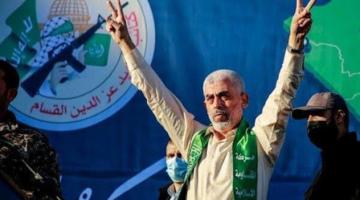 October 7, 2023, was not an isolated attack, but the culmination of generations of Palestinian imprisonment and resistance in Gaza, comparable to Nat Turner's rebellion. History will record the Al…
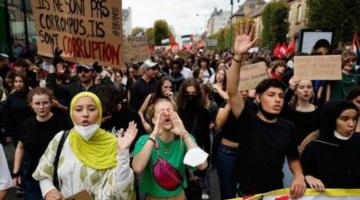 Julia Wright sent the following lightly edited message about protests in France on October 17, 2026, explaining the importance of immigrants in the movement, both today and in 1968.
 Disregard for Palestinian rights is a feature of Israeli politics rather than a bug. The upcoming Knesset election will change nothing for Palestinians, because every candidate across the political…
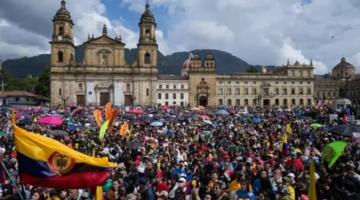 Thousands of people took to the streets across Colombia on Wednesday in the first national strike against President Abelardo de la Espriella’s administration, as police used tear gas, rubber bullets…
 As we are experiencing a world order in disorder, with war and conflagrations and a shifting balance of power, Issa Shivji calls for a Sovereign Pan-African Project. The analyses recap the…


