 by Michelle Chen
As Nina Simone sang it, “Mississippi Goddamn!” The Magnolia State, which ranks last in the nation on human development criteria, achieved that distinction by relentlessly debasing the life prospects of its Black citizens. Black Mississippians earn about $10,00 a year less than whites, and die four years sooner, according to a new study. High rates of infant mortality are linked directly to poor health care for Black women – one of many “lifelong barriers” the state erects to block Black social advancement. “The state currently spends twice as much to house each prisoner as it does to keep each child in school.”
Framing Race in Mississippi
by Michelle Chen
“Black people’s median earnings in Mississippi are about $10,000 less than whites.”
From the bleak poverty of the Delta to the tatters of the Gulf Coast, many Mississippi residents suffer from pervasive income inequality and broken social services. Now, a new study reveals that the color line cuts through nearly every basic measure of human welfare, making the state a freeze-frame of the country’s brutal legacy of racial injustice.
According to researchers, Black people’s median earnings in Mississippi are about $10,000 less than whites, which in effect means that even the poorest whites typically are better-off than the majority of Blacks in the state. And on average, Blacks die four years sooner than whites in Mississippi.
The study’s authors conclude that Black Mississippians “on average, experience the level of access to choices and opportunities of the average American in 1974.” Geography complicates the picture: whites in Hinds County have higher development scores than the country as a whole, while Blacks in Pike-Adams County live at the same level as the average American did in 1960.
“Blacks die four years sooner than whites in Mississippi.”
The statistics are laid out in A Portrait of Mississippi: Mississippi Human Development Report 2009, published by the research group American Human Development Project. Drawing on the United Nations Human Development Report, the study tracked three fundamentals of well-being: health, education and income. The report follows a national study published last year, The Measure of America, which ranked Mississippi last among all states on human development criteria.
“There’s a large constituency in Mississippi that believes that these disadvantages come largely from people’s personal decisions and choices,” said Kristen Lewis, codirector of the American Human Development Project. “And part of our work is to try to document how and where policy does make a difference.”
The study parses structural factors underlying the disparities. Researchers link Black women’s limited access to healthcare to high infant mortality and also point to a connection between incarceration trends—with a disparity of more than three-to-one between Black and white imprisonment rates—and lifelong barriers to social advancement. The state currently spends twice as much to house each prisoner as it does to keep each child in school.
Of course, Mississippi doesn’t have a monopoly on such racial disparities. According to the American Human Development Project, there was a more than five-fold disparity nationwide in the economic “net worth” between whites and people of color in 2004. In urban centers, about four in 10 Black children and five in 10 Latino children are kept indoors, unable to play outside, “because of parental perceptions of neighborhood danger.”
“There was a more than five-fold disparity nationwide in the economic “net worth” between whites and people of color in 2004.”
The Project sees the index as a rough barometer. Though it omits many nuanced social factors, like cultural and civic engagement, Lewis noted that income, education and health are widely accepted around the world as “the basic building blocks of a life of choice and value.”
With the nation’s ongoing economic decline threatening to deepen racial fault lines (the mortgage crisis has devastated Mississippi, hitting Black households especially hard), advocates are pressing lawmakers to target issues that acutely impact communities of color: affordable housing, children’s healthcare and predatory lending. A Portrait of Mississippi offers a stark backdrop for the new legislative session, as activists seek to reframe the discussion around race and inequality.
“Our hope is that in seeing the image of a very ugly picture of the state,” said Derrick Johnson, president of the Mississippi NAACP, “policymakers would be more willing to take actions to change the image they see in the mirror.”

 While Gaza burns, a collaborationist class is being handed the keys to a prison and calling it a state, all in service to western imperialism.
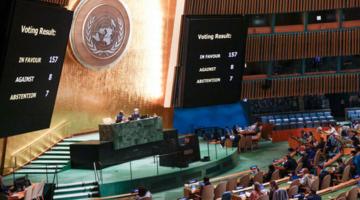 Western nations complicit in occupation and genocide offer a fig leaf of sovereignty by recognizing a Palestinian state that in reality would still be occupied.
 In this week’s segment we discuss the need for self-defense against racist, white supremacist forces. But first we hear about efforts to Build and Fight through a solidarity economy, self-…
 Our guest is Kali Akuno, co-founder and director of Cooperation Jackson in Jackson, Mississippi. He joins us from New York to discuss the Build and Fight Formula, its work with the Peoples Network…
 Our guest is Daryle Lamont Jenkins, founder of One People’s Project. One People’s Project seeks to combat right wing, white supremacist groups and individuals by exposing their threat to the world.…


