A BA Radio Commentary by Bruce Dixon
Click the flash player to hear or the mic below to download a broadcast quality MP3 of this BA Radio commentary
President Obama pledged the extension of low-cost broadband would be a high priority of his administration. But Verizon, Comcast and other players seek to privatize the broadband mapping process and freeze in place the digital divide forever.
Public Broadband Census Must Expose Digital Redlining To End the Digital Divide
A BA Radio Commentary by Bruce Dixon
In the 21st century, cheap, fast and ubiquitous internet access is already as vital to local economic development as paved streets and roads were in the centuries before. Communities where broadband is scarce and expensive will continue to miss out on education and government services. They will be medically underserved. Fewer new businesses will be started in those areas and fewer existing business will move there. Communities where internet access is slow, expensive and hard to get, in the 21st century will be economic backwaters where growth in jobs, wages and wealth will be slower than everywhere else.
President Obama promised that ending the digital redlining of poor and minority communities, and ensuring the availability of cheap, fast broadband internet to the rural, small town and big city neighborhoods inhabited by minorities and the poor would be among his administration's first and highest priorities. The obvious first step in keeping that promise is a reliable, accurate and public broadband census which will reveal just where broadband is scarce, expensive or unavailable, along with the routes, locations and capacities of all existing and planned fiber optic and other lines.
The obvious problem with that first step is that cable and phone companies don't want a broadband census. They are fighting it tooth and nail, and since they're also among the biggest TV, news and radio gatekeepers, they are able to keep discussion of it out of the news. These greedy, self-interested corporations created the digital divide for their own profitability and they have no desire to see it go away. The market-driven business models of cable and telecom corporations have been remarkably consistent since the nineteenth century. They focus on creating artificial scarcities, delivering premium service to lucrative upscale markets and avoiding low-cost universal service wherever possible. After a tidal wave of public outrage built over decades buying laws that protected telephone monopolies, allowing them to deny and preventing others from selling phone service to millions, universal service to small towns, rural areas, the poor and senior citizens was forced upon them by government action in the first half of the twentieth century. The corporate brand names and communications technologies have been transformed, but neither the underlying business models nor the corporate greed and scorn for the public good have changed one iota.
Since a broadband census will reveal the extent of digital redlining, price fixing and other abuses, the cable and phone companies are resisting it on many fronts. On one hand, they are lobbying the federal government to redefine excluded and underserved communities out of existence. On another, they are insisting that a private contractor, Connected Nation , on whose board execs from Verizon, Comcast, AT&T and other digital redliners sit, ought to conduct the broadband mapping, and that all the useful data gathered should be their private property, not disclosed to the public. This is worse than a joke.
Broadband mapping must be done by a public body, accountable to the public, with all processes and data exposed to public scrutiny. The telecom corporations can't be trusted to choose the digital destines of our communities. They're the ones who gave us the digital divide in the first place. The FCC will be accepting public comments on the broadband mapping process till April 17, and there is much more information available on the current state of the digital divide and the solutions at hand in a new report called “Wired Less; Disconnected In Urban America.” You can find “Wired Less: Disconnected in Urban America at the web site of Free Press, www.freepress.net , that's www.freepress.net .
For Black Agenda Radio, I'm Bruce Dixon.

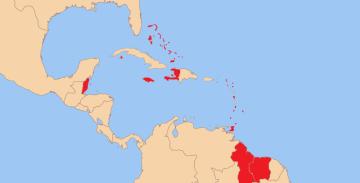 The author asks CARICOM member states to support the Haitian people in their struggle for sovereignty.
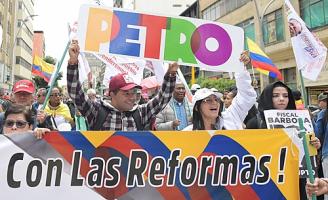 Colombia's new president is popular with the people but beset by enemies. It is a common situation where the popular vote is not indicative of who really holds political power.
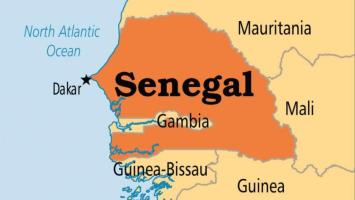 At least 16 people were killed after protests broke out in Senegal following the sentencing of leading opposition figure Ousmane Sonko to two years in prison. Mass public unrest has grown against…
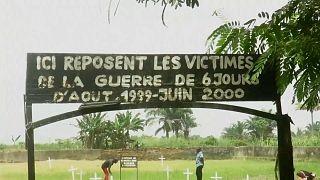 Uganda and Rwanda began their incursions into the Democratic Republic of Congo 23 years ago. Full reparations to victims have not been paid and the two invader countries still act with impunity.
 Tunde Osazua is Outreach Coordinator for Black Alliance for Peace and a civil society representative in the UN Permanent Forum on People of African D


