 by Julie Hollar
U.S. corporate media pretend to explore issues of race in America, but seldom go beyond matters of general perception, anecdotes, images, and questions about the availability of cab rides. ABC television prefers to package their racial reports as “encouraging stories,” writes Hollar. “But it's only possible to tell such encouraging stories by limiting your focus to one kind of racism--the overt kind that plays out through individually held prejudices.” Hard facts of institutional racism, such as wealth and incarceration disparities, most often escape ABC’s attention. Which is a slick and soothing way to sweep structural problems under the rug.
Structural Racism Not on ABC's Agenda
by Julie Hollar
“It's only possible to tell such encouraging stories by limiting your focus to one kind of racism--the overt kind.”
ABC's Good Morning America did a special 3-part series on race [last] week, "Black and White Now," to "look at race relations in America." All three parts revisited old experiments or news stories.
The first (3/31/09) was a repeat of an experiment with children playing with black and white dolls, showing that now kids don't tend to think that the black doll is mean and the white doll nice, like they did in the '40s--although some black girls still say the black doll is ugly and the white doll pretty. The report cited William Julius Wilson saying "there's still work to be done, especially with girls, even with Barack Obama as president, his family in the White House, to make sure the weight of a prejudice past doesn't secretly make its way into the hopes of a brand-new day."
Number two (4/1/09): another experiment repeated, black men trying to hail cabs in New York City. This time, in their very non-scientific experiment, black men do fine during the day, but have a harder time getting a cab once it's dark out. They also talk to people of color who feel discriminated against at high-end stores.
And number three (4/2/09): GMA anchors Diane Sawyer and Robin Roberts went back to their hometowns in the South and talked to groups of white and black children, respectively, about their perceptions of race. Ten years ago, when they did this in Mobile, the kids talked about a racial divide and expressed negative stereotypes of the other race. This time, "the kids don't wanna talk a lot about skin color" and were "expressing one hope that a rainbow of kids can show grown-ups how to learn, have parties, live together." Roberts asks them why they think (old) people still want to talk about race a lot, and one kid says, "Because they're so happy it's not like that anymore."
"The kids don't wanna talk a lot about skin color."
These are, overall, encouraging stories. But it's only possible to tell such encouraging stories by limiting your focus to one kind of racism--the overt kind that plays out through individually held prejudices. Notice that none of GMA's episodes looked at the racial wealth gap, or the ways that the foreclosure crisis is impacting people of color more severely than white people, or the disproportionate number of people of color locked up in our criminal justice system versus white people (just to name a few examples). Sure, overt prejudice has diminished over the years, and that's a good thing (though there's still plenty ofitoutthere). But ABConly perpetuates the very serious underlying racism by pretending prejudice is the only kind of racism there is.
Julie Hollar is managing editor of FAIR’s magazine, Extra!

 This week the incoming administration was on your minds.
 The streets permeate dominant understandings of Blackness, and the life-and-death consequences of these perceptions are at the heart of this book.
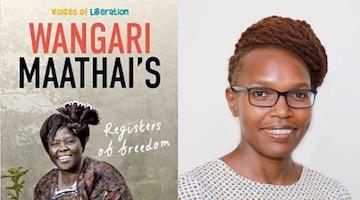 Maathai’s approach to environmental conservation centers poor rural communities, especially women, and their need for fuel, fodder and income
 Afro-pessimism theorizes slavery as a social relation which distinguishes Blackness as a paradigmatic position antithetical to humans.
  The denial of Black humanity is essential to the order of racial capitalism, and dictates that Blacks deserve whatever treatment they get.


