 by Judith Browne-Dianis
 The United States could make great progress towards racial equality if the federal government simply enforced the laws that are already on the books. Environmental racism, health inequities, mass minority incarceration – “All of these disparities exist with government support or permission.” Under George Bush, “our government largely pursued a ‘hear no evil, see no evil’ approach to structural racism and injustice.” President Obama has an opportunity to “reverse some of these terrible trends by enforcing laws” such as Title VI of the Civil Rights Act of 1964, “which authorizes federal agencies to prevent discrimination by recipients of federal funding.” Properly applied, Title VI could “ensure that government is no longer part of the disease but rather part of the cure.”
Writing the Next Chapter on Race: Enforce the Law
by Judith Browne-Dianis
This article originally appeared in RaceWire
”President Obama and his administration have the opportunity to take dramatic steps towards dismantling institutional racism and inequality by simply enforcing the laws that are already on the books.”
For several months, the media has been pushing the fairy tale that the United States moved beyond racism with the election of President Obama. As untrue as that is, there are people who started acting on their post-racial fantasies years ago, eight years in fact, as the Bush Administration used that excuse to essentially stop enforcing the civil rights laws we already have. President Obama and his administration have the opportunity to take dramatic steps towards dismantling institutional racism and inequality by simply enforcing the laws that are already on the books. Rather than blindness or silence, taking this action requires us to live in reality so that we can change that reality.
On November 5th, 2008, we woke up in a nation where people of color are nearly twice as likely as Whites to live near toxic waste dumps. We woke up in a nation where healthcare inequities mean that a Black child is more than twice as likely as a White child to die before age one. We woke up in a nation where Black and Latino students are more than 20 percent less likely to graduate from school than their White classmates and more than twice as likely to be arrested when they are at school. All of these disparities exist with government support or permission.
”President Obama can initiate another chapter of history by vigorously enforcing Title VI.”
Despite these glaring inequalities, for the past eight years the federal government did nothing, living in the comfort of the post-racial fairytale. Thus, our government largely pursued a “hear no evil, see no evil” approach to structural racism and injustice. The Supreme Court has refused to “hear” the evil of discrimination through decades of narrowing discrimination protections and taking away citizens’ rights to bring their complaints to the ears of the courts. In complicity with the Court, the Bush Administration willfully refused to “see” the discrimination around the country. Although the executive branch has broad power to intervene against structural racism and injustice, it turned a blind eye and stood idly as though nothing were wrong.
There is hope, however. As the Obama Administration opens its eyes and ears, we have a chance to reverse some of these terrible trends by enforcing laws we already have on the books. Let’s start with Title VI of the Civil Rights Act of 1964, which authorizes federal agencies to prevent discrimination by recipients of federal funding. That discrimination can be proven either by pointing to bad intentions or by revealing disparate outcomes.
This potent statute laid dormant for eight long years during which the Environmental Protection Agency could have stopped the disproportionate placement of toxic waste dumps in communities of color or construction of major highways through these communities. The Department of Education could have ended the school-to-prison pipeline that disproportionately affects children of color through racially discriminatory school discipline policies or discredited the academic tracking that puts youth of color on the road to dropping out rather than to college. The Department of Health and Human Services could have done its part to end health disparities by halting the closure of hospitals that serve communities of color. The list could go on for pages.
”The Department of Education could have ended the school-to-prison pipeline.”
\We didn’t achieve this new direction in the last decade for two reasons. First, the Supreme Court stripped citizens of the right to enforce this law, leaving it to the federal government to do the job. In turn, the Bush Administration shirked the federal government’s obligation to weed out such discrimination. Thus, significant structural racism did not stand a chance of being eradicated. President Obama has a chance to restore public faith in the government, and he can take no stronger step in that direction than by eliminating racial inequities and barriers to opportunity through enforcement of existing civil rights laws and regulations.
Simply enforcing the law will no more end racism than the election did. However, it can put us on a path toward eliminating structures that perpetuate mass inequities that contradict America’s promise. Just as Title VI would have prohibited funding of racially segregated schools and public swimming pools with our tax dollars decades ago, it should be used to weed out today’s federally-funded injustices. In 1970, the U.S. Commission on Civil Rights wrote that the enforcement of “Title VI had failed to match the law’s promise.” The time has come to write a new script. President Obama can initiate another chapter of history by vigorously enforcing Title VI and ensuring that government is no longer part of the disease but rather part of the cure. We have come too far to stop our progress toward equality for all.

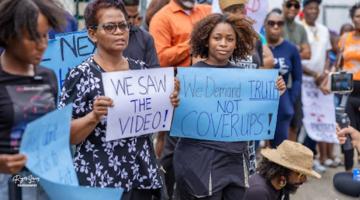 Trinidad and Tobago's Prime Minister says she backs Trump's conservatism and capitalism, and the criminal case against a hairdresser paralyzed in a police shooting shows exactly what that partnership…
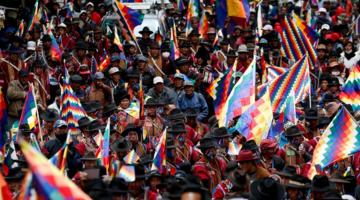 Former Bolivian president Evo Morales Ayma spoke with Black Agenda Report correspondent Clau O’Brien Moscoso.
 The World Cup is meant to be a celebration of global unity, not a propaganda shield for a superpower waging genocide abroad and running detention gulags on its own soil.
 The immigrants who revolted inside the Delaney Hall immigration jail are not criminals but prisoners of war, and their actions are those of resistance against a fascist detention system.
 Since early May, the World Health Organization and the African Centers for Disease Control and Prevention have been working to contain the spread of a rare and virulent strain of Ebola virus disease.


