Congo and Darfur: Where Anti-Arab Prejudice and Oil Make the Difference
by Roger Howard
Three million to four million Congolese have been killed, compared with the estimated 200,000 civilian deaths in Darfur.”
This article originally appeared in The Guardian, UK.

In a remote corner of Africa, millions of civilians have been slaughtered in a conflict fueled by an almost genocidal ferocity that has no end in sight. Victims have been targeted because of their ethnicity and entire ethnic groups destroyed – but the outside world has turned its back, doing little to save people from the wrath of the various government and rebel militias.
You could be forgiven for thinking that this is a depiction of the Sudanese province of Darfur, racked by four years of bitter fighting. But it describes the Democratic Republic of Congo, which has received a fraction of the media attention devoted to Darfur.
The UN estimates that 3 million to 4 million Congolese have been killed, compared with the estimated 200,000 civilian deaths in Darfur. A peace deal agreed in December 2002 has never been adhered to, and atrocities have been particularly well documented in the province of Kivu – carried out by paramilitary organizations with strong governmental links. In the last month alone, thousands of civilians have been killed in heavy fighting between rebel and government forces vying for control of an area north of Goma, and the UN reckons that another 50,000 have been made refugees.

How curious, then, that so much more attention has been focused on Darfur than Congo. There are no pressure groups of any note that draw attention to the Congolese situation. In the media there is barely a word. The politicians are silent. Yet if ever there were a case for the outside world to intervene on humanitarian grounds alone – "liberal interventionism" – then surely this is it.
“The Democratic Republic of Congo has received
a fraction of the media attention devoted to Darfur.”
The key difference between the two situations lies in the racial and ethnic composition of the perceived victims and perpetrators. In Congo, black Africans are killing other black Africans in a way that is difficult for outsiders to identify with. The turmoil there can in that sense be regarded as a narrowly African affair. In Darfur the fighting is portrayed as a war between black Africans, rightly or wrongly regarded as the victims, and "Arabs," widely regarded as the perpetrators of the killings.
In practice these neat racial categories are highly indistinct, but it is through such a prism that the conflict is generally viewed. It is not hard to imagine why some in the west have found this perception so alluring, for there are numerous people who want to portray "the Arabs" in these terms. In the United States and elsewhere those who have spearheaded the case for foreign intervention in Darfur are largely the people who regard the Arabs as the root cause of the Israel-Palestine dispute.
From this viewpoint, the events in Darfur form just one part of a much wider picture of Arab malice and cruelty. Nor is it any coincidence that the moral frenzy about intervention in Sudan has coincided with the growing military debacle in Iraq – for as allied casualties in Iraq have mounted, so has indignation about the situation in Darfur. It is always easier for a losing side to demonize an enemy than to blame itself for a glaring military defeat, and the Darfur situation therefore offers some people a certain sense of catharsis.
“The US backed an Ethiopian invasion of Somalia to topple an Islamic regime that the White House perceived as a possible sponsor of anti-American ‘terrorists.’”
Humanitarian concern among policymakers in Washington is ultimately self-interested. The United States is willing to impose new sanctions on the Sudan government if the latter refuses to accept a United Nations peacekeeping force, but it is no coincidence that Sudan, unlike Congo, has oil – lots of it – and strong links with China, a country the US regards as a strategic rival in the struggle for Africa's natural resources; only last week Amnesty International reported that Beijing has illicitly supplied Khartoum with large quantities of arms.
Nor has the bloodshed in Congo ever struck the same powerful chord as recent events in Somalia, where a new round of bitter fighting has recently erupted. At the end of last year the US backed an Ethiopian invasion of Somalia to topple an Islamic regime that the White House perceived as a possible sponsor of anti-American "terrorists." The contrasting perceptions of events in Congo and Sudan are ultimately both cause and effect of particular prejudices.
Those who argue for liberal intervention, to impose "rights, freedom and democracy," ultimately speak only of their own interests. To view their role in such altruistic terms always leaves them open to well-founded accusations of double standards that damage the international standing of the intervening power and play into the hands of its enemies. By seeing foreign conflicts through the prism of their own prejudices, interventionists also convince themselves that others see the world in the same terms. This allows them to obscure uncomfortable truths, such as the nationalist resentment that their interference can provoke. This was the case with the Washington hawks who once assured us that the Iraqi people would be "dancing on the rooftops" to welcome the US invasion force that would be bringing everyone "freedom". Highly seductive though the rhetoric of liberal interventionism may be, it is always towards hubris and disaster that it leads its willing partners.

 In this week’s segment, we discuss events in the Horn of Africa as the Somaliland region requests U.S. recognition and the Trump administration ends some sanctions against Eritrea. But we begin by…
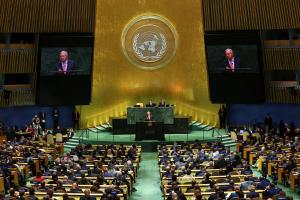 Ajamu Baraka discusses U.S. influence over the United Nations and its Security Council as the 81st General Assembly high-level meetings take place.
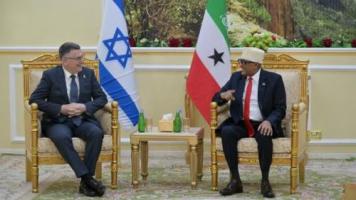 Abayomi Azikiwe, editor of the Pan-African Newswire, discusses Israeli recognition of the Somaliland region, the US reduction of sanctions on Eritrea, a new anti-government alliance in Ethiopia, and…
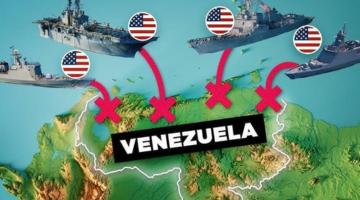 The trope of the United States being in a state of decline is a common one, but it should not be accepted without scrutiny. The U.S. faces crises but remains dangerous, powerful, and single-minded in…
 The "Antifa summit" and the NSPM-7 represent another institutional step toward consolidating fascism in the United States by criminalizing opposition to fascism itself.


