 by Askia Muhammad
The New York Times routinely reinvents history, even as it claims to be the first draft. On the subject of Black press interaction with the White House, the Times acts like a novice discovering history for the first time. The “Gray Lady” made a great deal about President Obama’s inclusion of lots of friendly Black media in his prime-time press conference – and in the process erased the real record of Black interaction and frustration with the executive branch of government. Veteran Black journalist Askia Muhammad sets the record straight, as he lived and remembers it.
The White House, ‘The Gray Lady’ and The Black Press
by Askia Muhammad
This article previously appeared in Black Journalism Review.
“The New York Times article is a classic example of how short-term memory can revise history.”
More than 28 years ago, when—thanks to Ted Clark—I started doing commentaries for National Public Radio’s “All Things Considered,” I was in a constant race with the staid old “Gray Lady”—The New York Times, so named because of its stodgy, hidebound, gray appearance and style—and with The Washington Post to pitch story ideas to my editors before they appeared in those two important, national “newspapers of record.”
After a story appears in one of those publications, no reporter can claim it’s still “news.” So for me, as often as not when editors rejected my story suggestions, if and when the story later appeared in print, I would always call and remind them that I pitched the story to them, before it was seen in The Times or The Post. I wanted them to know they could trust my “nose for news.”
But once in a while, there is still some “news” after a story appears in The Gray Lady. In this instance, it’s an old saga made new, by a report by Times writer Rachel L. Swarns, published March 27, 2009. “Obama Brings Flush Times for Black News Media,” reads the headline:
“For the nation’s black magazines, newspapers, and television and radio stations, the arrival of the Obama administration has ushered in an era of unprecedented access to the White House,” she begins. That may well be true, and it’s about time!
“At his news conference Tuesday (March 24), he skipped over several prominent newspapers and newsmagazines to call on Kevin Chappell, a senior editor at Ebony magazine,” she continued. “It was the first time an Ebony reporter had been invited to question a president at a prime-time news conference.”
Stop right there.
What we see today may or may not be “The Greatest” days The Black Press has ever seen at the White House, but understand: these are just “The Latest.” And, by a long shot, they certainly are not The First!
The Times article, well intentioned as it may have been, is a classic example of how short-term memory can revise history.
“When I came to Washington in 1977 Johnson Publishing icon Simeon Booker had long been an accredited White House correspondent.”
First, the declaration that this was the first time an Ebony reporter had been invited to question a president at a prime-time news conference, may have been technically accurate because back in the day when Black reporters broke the glass ceiling in the White House Press Corps there were very few prime time news conferences at all.
When I came to Washington in 1977 for the Chicago Daily Defender during the Carter administration, Johnson Publishing icon Simeon Booker—a member of the second Nieman Fellowship class of journalists at Harvard University in 1947, and a winner of the prestigious National Press Club Fourth Estate Award, among many, many, many notable achievements—was writing his “Ticker Tape USA” column in JET magazine and had long been an accredited White House correspondent.
Mr. Booker told me that when he agreed to work for the immortal John H. Johnson, his first condition of employment was that his office and everything about the Johnson Publishing Co. news bureau had to be not just “First Class,” but “Top Shelf First Class,” just like all the other well respected news operations in town. The office was and is located in the 1700 block of Pennsylvania Ave., just one block from the White House, for example.
But most press conferences by Presidents Carter, Reagan, and even George H.W. Bush, were not held in “prime time” unless it was a national emergency. Black reporters from the Black-owned press were rarely called on, if ever, in those days. In fact, in 1969 Mr. Booker had to press then Nixon administration communications head Herbert Klein to allow JET to even have a seat in Mr. Nixon’s press conferences.
Mr. Booker’s colleagues Roy Betts and the late E. Fannie Granton, were also White House “hard pass” holders, as was JPC photographer Maurice Sorrell. With my own White House “hard pass,” Roy Betts and I, along with Don Agurs representing Mutual Black Network, Tamu White of Howard University Radio, and Glen Ford of Sheridan Radio, often attended, press conferences, but were never called on, although Mr. Agurs did get an exclusive one-on-one interview with Mr. Carter, and I managed to ask him a question at two press conferences, and participated once in a high level briefing with just eight other reporters.
“In 1969, Mr. Booker had to press then Nixon administration communications head Herbert Klein to allow JET to even have a seat in Mr. Nixon’s press conferences.”
Later, after one particularly hurtful snub by Pres. Carter at a late afternoon press conference just ahead of a meeting he was to have (also in the East Room) with a group of Black mayors, Tamu White and I literally hid in the bushes along the North Portico, until Mayors Marion Barry and Richard Hatcher approached. We whined and cried, telling them the president just had a press conference and did not call on any Black reporters, even though he was set to meet with the Black mayors immediately afterward.
Mayor Hatcher spoke to the president about our complaint and at the next press conference, this time in prime time, just days after the Delta Force got bogged down by a sandstorm in the Iranian desert trying to rescue the American hostages at the U.S. Embassy in Tehran, I was called on again. Instead of asking my “civil rights” question, I asked the (scowling I’m told, I can’t remember because I was too nervous trying to not sound afraid) President why he did not try to use peaceful means to get the hostages out, instead of launching the disastrous attack? Well, as you might imagine that was it for me and other Blacks from the Black Press being trusted to ask questions at press conferences for years to come.
The legendary Ethel L. Payne was a Black Press pioneer at the White House. She was so highly regarded for her work at The Chicago Defender that when the U.S. Postal Service issued its first stamps honoring women journalists in 2002, Miss Payne was one of the four journalists pictured. She was also a thorn in the side of presidents, even incurring the wrath of President Eisenhower when she demanded to know, as the U.S. anti-apartheid (Civil Rights) movement was heating up, why he would not simply issue an executive order banning segregation on interstate bus travel, which was his prerogative, via the Interstate Commerce Commission.
“Chicago Defender White House correspondent Ethel Payne demanded to know why President Eisenhower would not simply issue an executive order banning segregation on interstate bus travel.”
Before Miss Payne there was Alice Dunnigan, who also represented the Chicago Defender and the Associated Negro Press (ANP). She fought and secured her credential in 1946.
In the 1980s, along came David Ruffin representing Mutual Radio, or was it Black Enterprise magazine? He was a trusted member of the White House Press Pool, and was even elected President of the White House Correspondents Association. Since then of course we have had the twin Divas, Sonya Ross (an honorary member of The Black Press) working for the Associated Press (AP), and April Ryan of American Urban Radio Network (AURN). They were (and April is a) fixture(s) of the White House Press Corps and were frequently called on by Presidents and by Press Secretaries at daily White House Press Briefings.
The Gray Lady also makes a big deal out of a reception held for members of the National Newspaper Publishers Association (NNPA) with the current White House incumbent. President Obama, the author reports: “gave Black Enterprise magazine his first print interview and gave a black talk show host one of his first radio interviews. This month, he invited 50 black newspaper publishers to meet with him at the White House.”
The fact of the matter is that the then President-elect actually gave an interview to Ebony magazine before anyone else. It’s about time the Black Press got to the front of the line.
But receiving Black editors and publishers is nothing new. In 1981 or 1982, L.H. Stanton, publisher of National Scene magazine (a monthly rotogravure supplement which appeared in NNPA newspapers, which I edited) attended a reception for publishers with Pres. Reagan. The president signed a comp copy of a picture shaking hands with Mr. Stanton.
In 1978 Black Enterprise publisher Earl Graves took a delegation of the “BE 100? top businesses to the White House to meet Mr. Carter, and I’m certain he as well as John H. Johnson, who is the namesake of the Howard University School of Communications, were also among delegations of their peers at White House receptions, probably on multiple occasions.
In addition, in 1992 or ‘93, Pres. Clinton hosted a delegation from NNPA. I attended that event, and my friend Sharon Farmer, Chief White House Photographer (a Black woman!) took my picture when His Nibbs shook my hand. I have an unsigned copy of that print.
So, that’s why I maintain the Times’s claim is a bit off the mark. Again: we may or may not be seeing “The Greatest” days The Black Press has ever seen at the White House, but understand: these are just “The Latest.” And, by a long shot, they certainly are not The First!
Askia Muhammad is the Washington Bureau chief of the Final Call. He can be contacted at askiaaa@verizon.net.

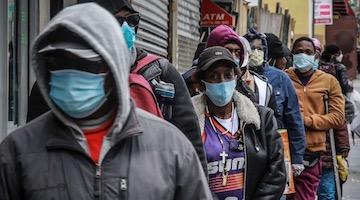 Not just Trump, but the whole US ruling class must pay for the mass Covid death toll among Blacks, because only the ruling class has the power to systematically allocate life-death chances for
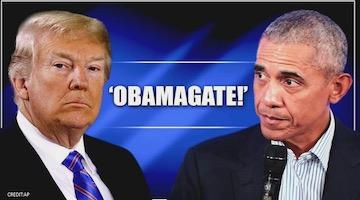 Obama’s fans like to think of the First Black President as scholarly and above the fray of dirty politics, but he appears to have conspired with the FBI to set up the incoming administration.
 The threat that the American Left sees in China aligns with the white supremacist underpinnings of American exceptionalism.
 The elevation of anti-blackness as a kind of universal problem eliminates the basis for solidarity among the colonized and puts some African Americans on the side of U.S. imperialism.
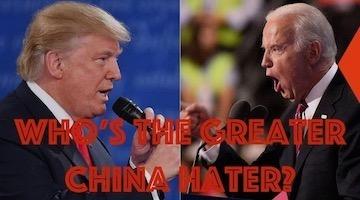 Trump and Biden promise their fans a roaring hate-fest this election cycle, as they vie for the honor of defending America’s right to full spectrum dominance of every corner of the globe.



