 by Marcelo Ballvé
New York’s so-called Rockefeller Drug Laws condemned hundreds of thousands of individuals and whole communities to a living hell for a generation-and-a-half, under a mandatory imprisonment regime. Now, as the draconian laws are in the process of being repealed, a crusading activist – and one-time Rockefeller Law victim – savors the victory. “Tony Papa sometimes thought this day would never come. Now that it has, he's still not quite sure how to handle it.” We’re confidant the brother will do just fine. He’s already handled the worst that the American Gulag can conjure.
Tony Papa's Vindication: NY Reforms Rockefeller Drug Laws
by Marcelo Ballvé
This article previously appeared in New American Media.
“Papa lobbies on behalf of those trapped in what some activists call the ‘Rockefeller Gulag.’"
As hard as he fought for it, Tony Papa sometimes thought this day would never come. Now that it has, he's still not quite sure how to handle it.
An hour after the announced deal to reform the so-called Rockefeller drug laws, New York statutes that routinely lead to long prison sentences for nonviolent drug offenders, Papa sits in his office cluttered with memorabilia from half a lifetime fighting the laws, and can't shake the disbelief. "I'm actually still in a daze, really," he says.
Papa, who had no prior criminal record, was arrested in 1985 as he was delivering four ounces of cocaine, something he said he did only because he was desperate for the promised $500 payoff, and sentenced to 15 years to life. Under the Rockefeller laws, enacted in 1973, the judge had no discretion to hand down a more lenient sentence. So, like thousands of young drug offenders sentenced under the laws, the Bronx-born and raised Papa went straight from the streets to
Sing Sing Maximum Security Prison, with no stops in between. He wasn't given a shot at probation, counseling or treatment.
The reforms will allow judges more discretion when sentencing and allow them to order more alternatives like treatment and probation. They also will eliminate mandatory prison sentences for first- and second-time drug offenders and retroactively allow more than 1,000 nonviolent inmates to apply for re-sentencing.
”The Bronx-born and raised Papa went straight from the streets to Sing Sing Maximum Security Prison, with no stops in between.”
In a recent column at the Huffington Post, a kind of open letter to Bernard Madoff, Papa describes his time in prison so that the Ponzi scam artist might know what to expect: "It's about learning how to live in the present, no matter how bleak the present is. Dwelling on your past and hoping for the future will become as painful as it is futile. You will have to forget about life on the outside in order to maintain your sanity on the inside."
For 12 years, Papa remained on the inside, and it was only the paintbrush that saved him from more time. He took up art in prison, and one day the Whitney Museum chose one of his paintings for an exhibit. In the painting, Papa grips his bald head, a gesture of desperation, while an inky blackness swirls in the background. A paintbrush points outward, and a digital watch on his wrist alludes to that common denominator of prison sentences, however unjustified: time.
He became something of a minor celebrity, an embodiment of what critics perceived as the laws' fundamental unfairness. Finally, in 1997, Gov. George Pataki granted him clemency. In the years since, Papa has been featured in hundreds of articles, news programs and documentaries. He wrote a memoir about his experiences, “15 to Life: How I Painted My Way to Freedom,” and co-founded Mothers of the New York Disappeared, which lobbies on behalf of those trapped in what some activists call the "Rockefeller Gulag."
Bits and pieces of Papa's career as an artist-activist decorate his office at the Drug Policy Alliance or DPA, where along with other staffers he lobbies for an end to the drug war and criminal justice reform. There are parts to his art installation, "The Drug War," built around a banner that reads, "According to DPA Zogby poll 45 percent support making cigarettes illegal within 10 years: Time to build more prisons?" He also has a binder full of photos with celebrities and politicians who have supported him, including Def Jam founder Russell Simmons and, notably, New York Gov. David Paterson.
According to the DPA, 20 percent of the state's prison population was sentenced for drug violations, and 90 percent are black or Hispanic.
”Some upstate districts of New York dependent on prisons for employment and revenue also tried to oppose the deal.”
Paterson became governor early last year, when former Gov. Eliot Spitzer was forced to resign after it was found he was a client of a prostitution ring. Paterson, the state's first black governor, is highly unpopular right now, but Papa credits him with loyalty to the movement for a reform of the Rockefeller laws.
"I knew something positive would happen with him as governor," says Papa, 49, who wears a salt-and-pepper goatee and glasses. "He's stood by us for many years. I'm glad that the stars finally aligned."
Prosecutors and some Republican legislators opposed a reform of the Rockefeller laws. They pointed out that parts of the laws had already been eased in 2004 and 2005, and argued that further softening of drug sentencing could lead law enforcement to lose control of crime in the state and New York City.
Legislators in some upstate districts of New York dependent on prisons for employment and revenue also tried to oppose the deal. But with the governor's office and both houses of the legislature controlled by Democrats, and a budget crisis creating demands for cost cutting, opponents lost the battle. Democrats say the announced reforms will save the state $250 million a year.
Although the political will to reform the Rockefeller laws had been building for months, as recently as three weeks ago Papa still wasn't sure a deal would go through, since similar efforts had been blocked before by political maneuverings. "I have a little faith," he said uncertainly then.
Now, the laws seem headed for the history books, and Papa has another reason for satisfaction: Three days before, producers of Will Ferrell's Broadway show on President George W. Bush had optioned his memoir for a feature film. "I've been waiting a long time for this day," says Papa. How will he celebrate? "I'm definitely going to have a couple of drinks."

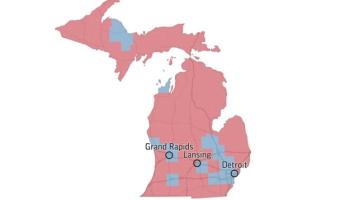 Abayomi Azikiwe, editor of Pan-African News Wire joins to discuss Michigan's Black voters, the Abandon Biden campaign, and the prospects for the swing state in the 2024 presidential election.
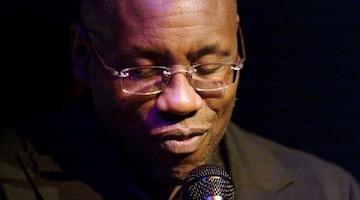 BAR Poet-in-Residence, Raymond Nat Turner, joins us from New York City to talk about his work and an upcoming performance with his group, Upsurge New York City.
 Gerald Perreira of Organization for the Victory of the People in Guyana joins us to discuss the long running territorial dispute with neighboring Venezuela and the increasing activity of U.S. in the…
 Any sign of even tiny opposition is enough to send Israel into a frenzy of bloodletting. Hospital attacks, murders of aid workers, violations of the sovereignty of embassies, are all par for the…
 The statement on the UN Partition of Palestine by the Arab Higher Committee is a reminder of the sordid history of the U.S. in the expropriation of land and the attempted ethnic cleansing of the…


