 by Sikivu Hutchinson
Women’s History Month cannot be allowed to pass without recognition of Ida B. Wells, an indefatigable opponent of American lynch law, pioneering Black journalist, and one of the founding mothers of the modern civil rights movement. Wells was “perhaps the only nursing mother to travel nationwide to give political addresses.” Her progressive credentials shine through the generations since her death in 1931. “As an early critic of western gunboat diplomacy she would have seen a clear connection between the U.S. government’s interventionist policies and its imperial relationship with over-incarcerated black communities.”
Remembering Ida B. Wells
by Sikivu Hutchinson
“Wells was perhaps the first journalist to speak out on the racist and sexist implications of lynching.”
In their landmark 1982 anthology on black feminism, Gloria Hull, Barbara Smith and Patricia Bell Scott proclaimed that “all the women are white, all the blacks are men, but some of us are brave.” Perhaps no pioneering activist more fervently embodied the spirit of this sentiment than Ida B. Wells. A giant of the independent black press and early media literacy educator, Wells’ leadership and uncompromising vision continue to reverberate for black women. As we recognize International Women’s Day and Women’s History Month we can look to her life for lessons and inspiration; not only regarding her activism but on how she negotiated the double burden. In the era before daycare and leave time, Wells, like scores of other black women before her, was a caregiver navigating the divide between her domestic responsibilities and her life’s work as the greatest media watchdog of her time.
Accused of not knowing her place because she challenged the vacuum in male leadership around lynching, Wells struggled for recognition and compensation for her work. The constant juggling of her roles as writer, activist, orator and mother loomed large in both her public and private stance on women’s rights. Wells once boasted that she was perhaps the only nursing mother to travel nationwide to give political addresses. After the birth of her second child she announced that she was retiring from public activism to devote all her energies to motherhood, only to come blazing back onto the national stage three months later to protest the lynching of a black postmaster and his family.
“Wells once boasted that she was perhaps the only nursing mother to travel nationwide to give political addresses.”
In her fearless defense of lynching victims and African Americans’ right to due process, Wells often bucked the backward conventional wisdom of the era. When she began her campaign against lynching in the late 19th century there wasn’t consensus among African Americans that lynching was worthy of a national social justice movement, nor was there agreement about the terroristic sexual politics that motivated white lynch mobs. Wells was perhaps the first journalist to speak out on the racist and sexist implications of lynching. In her editorials she consistently blasted the hypocrisy of white savagery against black men accused of raping white women and exposed the long history of black female sexual exploitation by white men. Catapulted into twenty first century America, Wells might not be surprised at the power that this legacy has had on contemporary media images of black femininity. She might not be surprised that reconciling black liberation struggle with feminism is still dicey. As an outspoken suffragist and defender of the black female image she would have choice words for the young woman who told me recently that it’s ok when she’s addressed as a bitch or a ho because “I know I’m not one.” As a Chicago organizer ever skeptical of black politicians, she might have initially celebrated the election of Barack Obama then used her bully pulpit to separate the rhetoric of post-racial inclusion from the reality of racial apartheid. And as an early critic of western gunboat diplomacy she would have seen a clear connection between the U.S. government’s interventionist policies and its imperial relationship with over-incarcerated black communities.
“Her relative obscurity parallels her conflicts with a black political establishment that deemed her too radical for her gender.”
Despite her challenges to the American criminal justice system, her long record of publication at home and abroad, and her influence on Frederick Douglass and W.E.B. DuBois (both of whom were ambivalent if not threatened by her single-mindedness), Wells’ legacy remains undervalued. Eclipsed by the cult of charismatic masculinity that privileged the contributions of male leaders like Douglas and DuBois, her relative obscurity parallels her conflicts with a black political establishment that deemed her too radical for her gender. Remarking that “the people must know before they can act, and there is no educator to compare with the press,” Wells remains a beacon of justice and a testament to the radical power of black feminist media literacy.
Sikivu Hutchinson is the editor of blackfemlens.org and a commentator for KPFK 90.7 FM.

 Prison officials across the country are apoplectic over inmate access to cell phones, partly because “it allows people that are incarcerated to serve as reporters, to broadcast firsthand what they
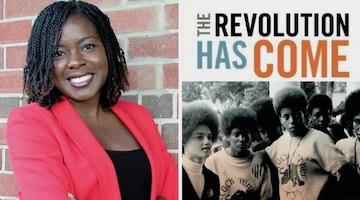 The Black Panther Party “saw the world through a lens of global justice,” said Robyn Spencer, author of the new book, The Revolution Has Come: Black Power, Gender and the Black
 The Women’s March on the Pentagon, scheduled for October 20 and 21, “is an important part of ‘Anti-war Autumn’” activities, said Ajamu Baraka, director of the Black Alliance for Pe
 The Manufactured McCain and the Real McCain
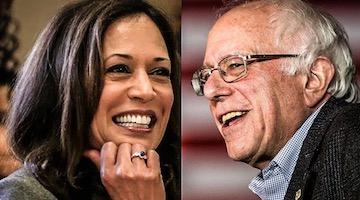 The biggest obstacle to Bernie Sanders winning the Democratic nomination in 2020 is Kamala Harris, the corporate, anti-Black prosecutor. But Black voters are now in Bernie’s camp.



