Click the flash player above to hear this Black Agenda Radio commentary, or click here to download an mp3 copy.
A Black Agenda Radio commentary by Glen Ford
The Economic N-Word: What it Means, and Doesn't
A Black Agenda Radio commentary by Glen Ford
"The idea is to give the banking class, what's left of it, a chance to reestablish itself as the ruling institution in the U.S. economy and society."
By now even some of the most right-wing members of Congress are talking about nationalizing banks that have become bottomless pits for federal bailout dollars. That's one more sign that the capitalist financial system is so thoroughly dysfunctional, even its most loyal servants, like South Carolina Sen. Lindsey Graham, feel the need to use the economic N-word. The public isn't afraid of the word, either. A Newsweek poll shows 56 percent of respondents favor bank nationalization, as defined by Newsweek magazine. Newsweek, Sen. Graham and most other establishment politicians and economists share similar definitions of the meaning of bank nationalization. When the word trips from their lips, "nationalization" amounts to nothing more than another attempt to save the bankers, as a class.
Newsweek defined bank nationalization as a "temporary" arrangement, whereby "the government takes over a failing bank, cleans its balance sheets, and then quickly sells it off." In most of the scenarios under discussion in the corporate media, the bank's shareholders would be wiped out, but the government would take possession of the toxic assets, which would ultimately cost the taxpayers a bundle. And then other banks would get to buy up what remains, almost certainly at bargain basement prices. The idea is to give the banking class, what's left of it, a chance to reestablish itself as the ruling institution in the U.S. economy and society. In other words, Newsweek's and Lindsey Graham's brand of bank nationalization is designed to bring the banking class back from the dead - to temporarily dismember some zombie banks so that most of their body parts can be resurrected, to rule the Earth, once again. It's a kind of tough-love bailout of the banking class. At the end of the process, the public gets the bill, and most of the bankers get a new lease on life.
Three questions come to mind: Can bank salvation through temporary nationalization work? Is it desirable to resuscitate the banking class? And, what's the alternative?
"The pathology begins with the financial capitalist class itself, which produces nothing and has no choice but to create false values."
The disease that has brought down the bankers, worldwide, is fatal to the capitalist system as presently configured - and eventually to human life on Earth. The pathology begins with the financial capitalist class itself, which produces nothing and has no choice but to create false values through bubbles, exotic arrangements like derivatives that are actually huge financial crimes, and parasitical privatization of every conceivable resource on the planet. Saving the banking class is the equivalent of trying to cure a patient of cancer by giving the cancer growth hormones. Yet that is what the various forms of banker bailouts attempt to do.
The alternative is to use the people's money to rebuild an economy that serves the people's needs, rather than the bankster parasites and their war industry cousins. That's called democratic development, carried out through state-owned banks and state-owned development agencies answerable to the public. The people are already paying the cost. They should also have outright ownership and control. It's time to put the zombies in the ground once and for all, and cover them over.
For Black Agenda Radio, I'm Glen Ford. On the web, go to www.BlackAgendaReport.com.
BAR executive editor Glen Ford can be contacted at Glen.Ford@BlackAgendaReport.com.

 The Kamala Harris campaign for the 2024 presidential election was a display of the democratic party's willingness to abandon the most loyal segment of their base to remain fully committed to their…
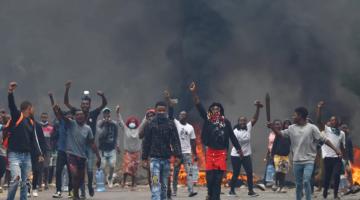 Western corporate interests have targeted Mozambique to exploit its natural resources, using tactics of destabilization and neoliberal austerity measures to weaken the nation. While these imperialist…
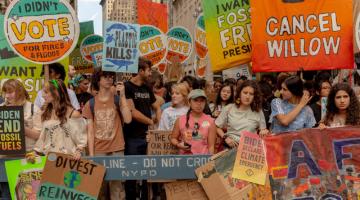 The ineffectiveness of the climate movement during the 2024 election signals its inevitable collapse. But from the rubble, a new movement dedicated to the working class can be built.
 The heartwrenching story of Dr. Khaled Al Serr is a haunting example of the barbarity of the Israeli entity and the strength of the Palestinian people.
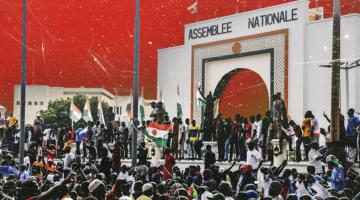 Activists from across Africa and the world will gather in Niger from November 19 to 21 for the “Conference in Solidarity with the Peoples of the Sahel”.


