Black Unionists Losing Share of Membership
A Black Agenda Radio commentary by Glen Ford
To listen to this Black Agenda Radio commentary, click the flash player below
{mp3}20090110_gf_blacks_lose{/mp3}
"Black union membership has been declining faster than for whites."
The saga of Black economic progress has largely been a story of men and women who fought to get into unions and, once in, became organized labor's most militant members. By the mid 1980s, African Americans were 50 percent more likely than whites to be members of a union. But by 2007, Black workers were only 30 percent more likely than whites to belong to a union. In other words, while union membership has been in general decline for two generations, Black union membership, while still at relatively high levels, has been declining faster than for whites.
The data make clear that the decline in Black union membership is partly related to the overall shrinkage in manufacturing jobs. By the 1960s, Blacks were disproportionately represented in the heavily unionized auto industry, although Blacks were no more likely than whites to work in manufacturing in general. A study by the Center for Economic and Policy Research, a Washington think tank, shows that Blacks were employed in manufacturing at about the same percentage as whites "from the end of the 1970s through the early 1990s." But then, Black fortunes in manufacturing took a turn for the worse. According to the study, "By 2007, blacks were about 15 percent less likely than other workers to have a job in manufacturing."
The decline in manufacturing has been cruel to Black workers, loosening what once seemed to be a firm hold on middle income status. The decline in union employment has been even worse, because that's where Blacks found long term job security and non-wage benefits - the fruits of labor that bring dignity and stability to the lives of individuals and communities.
‘Between 1979 and 2007, the Black share of manufacturing jobs went from 24 percent to less than 10 percent."
In the period between 1979 and 2007, the Black share of manufacturing jobs went from 24 percent to less than 10 percent, a drastic, community-destroying decline. Manufacturing workers are now no more likely to belong to a union than workers in other sectors of the economy.
Since 1983, the share of Blacks covered by union contracts has declined by half, from almost 32 percent 25 years ago, to less than sixteen percent in 2007.
The Bush years were catastrophic for Black trade unionists. As Black labor journalist Dwight Kirk wrote in February 2005, "55 percent (or 168,000) of the union jobs lost in 2004 were held by black workers, even though they represented only 13 percent of total union membership."
For Black women, the numbers were even more disastrous. "More stunningly," wrote Kirk "African American women accounted for 70 percent of the union jobs lost by women in 2004." That meant "100,000 black union women - many the sole or primary breadwinner in their households - lost their paychecks, their job security, medical insurance for their families and their retirement nest eggs in just one year."
Modern Black history and Black trade unionism are deeply entwined. The American union movement as a whole is gravely weakened by the decline in Black membership. Studies have repeatedly shown that Black women are the most pro-union group in the United States, followed by Black men, Hispanic women, Hispanic men, white women, and finally, white men. The decline in the Black share of membership means that unions are losing their most committed members.
For Black Agenda Radio, I'm Glen Ford.
BAR executive editor Glen Ford can be contacted at Glen.Ford@BlackAgendaReport.com.

 To commemorate 100 years since the birth of former political prisoner Martin Sostre, the Black Agenda Report Book Forum interviews Garrett Felber, A Visiting Fellow at Yale University who is…
 Banks operate with impunity and so they act accordingly.
 On December 7, 2022 a right wing coup removed Perú’s President Pedro Castillo Terrones from power, but the people have protested against the coup regime ever since.
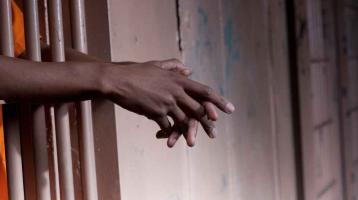 "We cannot go through decades of this physical and psychological abuse behind these walls and think We are coming home undamaged, without scars," explains New African political prisoner Shaka Shakur.
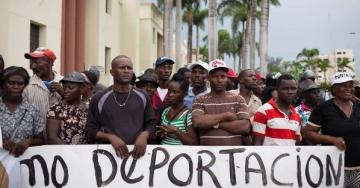 Violence against Haitians and Haitian descended people continues in the Dominican Republic. The Socialist Movement of Workers of the Dominican Republic condemn the latest state sanctioned…


