 A Black Agenda Radio Commentary by Glen Ford
The federal economic stimulus plan provides less stimulus for New Orleans than for any other congressional district in the United States. The logic is simple and savage: Less people, less money, rather than more needs, more money.
To download a broadcast quality MP3 of this Black Agenda Radio commentary, click here.
A Black Agenda Radio commentary by Glen Ford
"Obama refuses to use his bully pulpit to defend Americans in trouble in the poorest and most oppressive states."
The treatment that New Orleans has been accorded by the economic stimulus package is the clearest evidence that the federal plan is not in the least transformational - that is, the massive funds that are allocated do little or nothing to rectify the economic and social assaults inflicted on African Americans because they are Black. At the same time, the threatened refusal to spend some of the stimulus funds by the governors of Louisiana, Mississippi and South Carolina, show that the same racist forces that have always kept the South, in general, and Blacks, in particular, at the bottom of the national economic barrel, remain as entrenched and vicious as ever. The combined effect will be to maintain or worsen racial disparities in the United States, especially in the Republican bastions of the South, and to ensure that the crimes of Katrina will be set in stone, a permanent injury and insult to Black America.
New Orleans is scheduled to receive far less money for job creation than any other congressional district in the United States. That's because the payouts are based on population, and Louisiana's Second Congressional District, centered in New Orleans, is still missing something approaching 200,000 persons, scattered to the four winds three and a half years ago and prevented from returning by a host of public policies. A transformational recovery program would treat New Orleans as a gaping, infrastructural wound, to be addressed by providing the means to make the city livable once again for its exiled citizens. Instead, President Obama's plan simply counts heads, and takes away job creation money for those citizens who would like to return, but cannot.
"That which was unequal and unjust before the recovery program, will remain unequal and unjust after the money has been spent."
Just as New Orleans recovery is not part of the national recovery plan, neither does the plan address any of the country's gross racial disparities. That which was unequal and unjust before the recovery program, will remain unequal and unjust after the money has been spent. That's not an oversight; it's built into President Obama's plan. This fact bears repeating: nothing in the hundreds of billions of dollars to be spent for national recovery is designed to address the institutional harms that have been done to Black people, including the massive racial crime that we call Katrina.
While the federal government pretends to be neutral on race, the governors of Louisiana, Mississippi and South Carolina put their racial and class depravity on display, threatening to reject millions of dollars in aid to their unemployed. These three states are the Blackest in the nation, historically, and clustered at or near the bottom in household income. The two facts are inextricably related. The governors preside over a system whose purpose is to deny economic security to the great mass of residents, with Blacks forever relegated to the very bottom rungs of society. President Obama says he finds the southern Republican governors' rejection of the unemployment funds "understandable." He refuses to use his bully pulpit to defend Americans in trouble in the poorest and most oppressive states. And so, the United States slumps toward the second decade of the 21st Century spending trillions of dollars, but with no intention of truly transforming itself.
For Black Agenda Radio, I'm Glen Ford.

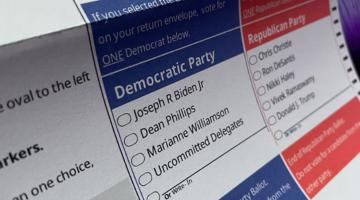 The Uncommitted Movement is the means through which voters across the country are resisting forced complicity in genocide and making it clear to the Democratic Party that their positions are not as…
 This week, we discuss the International Criminal Court's decision to pursue arrest warrants for Israeli government leadership and the 2024 U.S. presidential election. But first, we hear from a…
 In part two of our interview, Austin Cole joins us to discuss his suspension from MIT due to his participation in the Gaza Solidarity Encampment and his own experience with the attack directed by the…
 Ajamu Baraka joins us to discuss the International Criminal Court, the ICC, and the announcement by Chief Prosecutor Karim Khan that he is applying for arrest warrants for both Israeli and…
 Margaret Kimberley recently joined Sputnik News program, Fault Lines, and discussed why incumbent president Joe Biden is struggling to make the case for a second term.


