"AFRICOM's actual purpose is to ensure that control of Africa's oil and other valuable natural resources remains with western corporations."
In recently published reports, Nigeria's Minister of Foreign Affairs, Chief Ojo Maduekwe urged that Africa Command (AFRICOM) be rejected in favor of the African Union's Standby Forces. This was one of the latest complaints coming out of Africa about a special U.S. military unit that the Bush Administration claimed will guide and train the troops of African governments to combat "terrorism." However, most of the African World is convinced that AFRICOM's actual purpose is to ensure that control of Africa's oil and other valuable natural resources remains with western corporations. Maduekwe said: "...[W]ith a Standby Force, the African Army can move in. It will be indigenous, not seen as imperialistic like AFRICOM as being perceived now...that breeds suspicion."
Why would there be suspicion of imperialist aims for AFRICOM when the war on Iraq provided ample evidence that the Bush Administration was prepared to go in and take whatever it wanted in the world by force, and with U.S. troops? Why would it be necessary to go to the trouble of creating AFRICOM as a vehicle for use of African proxy troops to lock down control of Africa's natural resources? The U.S. approach to the troubles in Sudan provides a big part of the answer.
"Powell used the term genocide to characterize what is happening in Darfur."
In 2004, then-Secretary of State Colin Powell made a purported fact-finding visit to the Darfur region of Sudan on behalf of the Bush Administration. He returned filled with righteous indignation, and proclaimed that the Sudanese government was engaged in a campaign of "genocide." It is more than suspicious that Powell used the term genocide to characterize what is happening in Darfur when there were other possible terms (e.g., crimes against humanity, human rights violations, etc.) that might have been more accurate depending upon the particular facts and circumstances surrounding particular mass killings in the region. Genocide has a specific meaning in international law.
The Convention on the Prevention and Punishment of the Crime of Genocide states:
"...genocide means any of the following acts committed with intent to destroy, in whole or in part, a national, ethnical, racial or religious group, as such: a) killing members of the group; b) causing serious bodily or mental harm to members of the group; c) deliberately inflicting on the group conditions of life calculated to bring about its physical destruction in whole or in part; d) imposing measures intended to prevent births within the group; e) forcibly transferring children of the group to another group."
When evaluating the credibility of Powell's charge of genocide, the threshold question is whether any mass killings in Darfur are intended to destroy a particular national, ethnic, racial or religious group. Although it is a widely held belief that "Arabs" are killing "black Africans" in Darfur, most informed observers have concluded that it is not really possible to characterize the conflict in such simple, stark racial terms. The January 2009 issue of British-based New African magazine, contains a dramatic photo display of a Darfurian "black" rebel, alongside a photo of a member of the Janjaweed, the group accused of committing acts of terror on behalf of the government. Based only on skin color, physical characteristics and dress, it is difficult, if not impossible to distinguish the two men. This was likely a reason that a special United Nations commission that investigated conditions in Darfur in 2005 rejected the Bush Administration's characterization of the killings as genocide.
"The threshold question is whether any mass killings in Darfur are intended to destroy a particular national, ethnic, racial or religious group."
Why then would the U.S. stand alone in insisting that genocide is occurring in Darfur? The one word answer that seems most likely is oil. In 1997, President Bill Clinton signed Executive Order 13067 that imposed an embargo against Sudan and effectively excluded all U.S.-based oil companies from oil industry activities and transactions in that country. (Clinton cited Sudanese support for terrorism, slavery, human rights violations and other misdeeds as the basis for the sanctions, but he did not refer to genocide.) For years now, American oil executives have watched with rage and frustration as other countries - most notably China - have continued their operations in Sudanese oil fields raking in large profits that U.S. companies believe should be theirs. Against a backdrop of global rage about human rights violations in Sudan, the Bush Administration could not have (on what would have appeared to have been an opportunistic, profit-motivated whim) lifted the sanctions.
To eliminate the need for sanctions, the slate had to be wiped clean. This could best be accomplished with a regime change in Sudan. However, given the disastrous invasion of Iraq, and the entire world's ever-growing opposition to U.S. military meddling in the affairs of other countries, sending U.S. troops into Sudan was simply not an option. If a regime change were to happen, it would have to be executed by proxies. Enter Colin Powell and his solo proclamation that genocide was underway in Sudan. If he could have built a consensus that genocide was indeed occurring, a pre-existing United Nations General Assembly resolution would have required military intervention by foreign countries. Specifically, the resolution requires military intervention "...should peaceful means be inadequate and national authorities are manifestly failing to protect their populations from genocide..."
"If a regime change were to happen in Sudan, it would have to be executed by proxies."
Several years have passed since the Bush Administration's proclamation that genocide is underway in Sudan, and obviously, the U.N. never effected a regime change. From the U.S. perspective, AFRICOM can potentially be available to act in situations like this without the uncertainty, fuss, bother and delay that attends diplomatic maneuvering. For U.S. corporations, prompt, efficient military intervention becomes increasingly important as western corporate interests are threatened in an ever-growing number of regions on the African continent. AFRICOM is made to order - provided it can overcome the near unanimous opposition that it faces from Africans the world over.
Now is not the time for Africans on the continent and in the Diaspora to relax on the issue of AFRICOM. Nigeria's opposition is both welcome and timely given the widely-held presumption that an Obama administration will do right by Africa. When it comes to AFRICOM, President Obama has been off the mark, and he needs to hear the most militant demands for AFRICOM's abolition that we can muster.
Mark P. Fancher coordinates the National Conference of Black Lawyers' AFRICOM Task Force. He can be contacted at mfancher@comcast.net.

 In this week’s segment, we hear about the ongoing uprising in France against neo-liberal austerity, colonialism, and white supremacy. But first, we discuss a new report that reveals a 25% decline in…
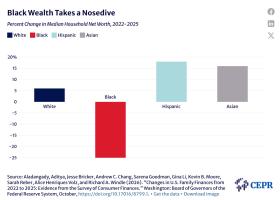 The Center for Economic and Policy Research (CEPR) recently reported on Federal Reserve data indicating that Black people in the U.S. have lost 25% of their wealth between 2022 and 2025. Whites,…
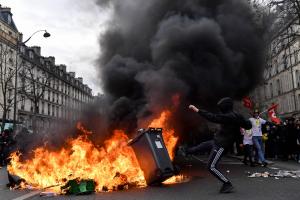 Bouna Mbaye is an activist, writer, and a member of the Pan-African League-Umoja, the Pan-African Brigade for Palestine, and the US Out of Africa Network. He joins us from Paris to discuss the…
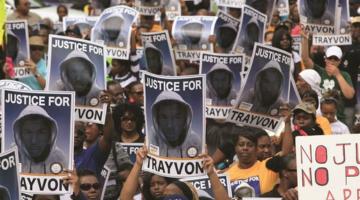 As Black Agenda Report is poised to celebrate its 20th anniversary, we reprint Glen Ford's commentary on the killing of Trayvon Martin and the impunity provided to his killer in a criminal justice…
 The Democratic Party is terrified of even small liberal reforms and will not abide left leaning democrats thwarting their plans for austerity and neoliberal orthodoxy.


