Somalia After the Ethiopian Occupation
by Abukar Arman
"Ethiopia has become
Africa 's hegemonic brute."
In light of the development of several critical issues that
include U.S. economic volatility and the new political direction it's likely to
turn towards, it's not farfetched to predict that Washington-supported
Ethiopian occupation of Somalia will soon come to an end. However, what
ensues might not provide comfort to some who erroneously bought into the
mindset that politics and Islam cannot and should not mix. But, unfortunately,
their reaction would be the element that would tip the
scale.
Evidently, Ethiopia is unable to feed her own people and
thus could not feasibly sustain this occupation without Washington 's
financial, political and technical support. In fiscal year 2007, the U.S.
awarded the Ethiopian regime approximately $300 million dollars in a
non-humanitarian aid, and it was supposed to award double that amount in fiscal
year 2008 in order to "fight against Islamists in neighboring Somalia." Be that
as it may, unless Ethiopia takes drastic measures (and soon) it can become the
next epicenter of violence in the Horn of Africa.
The cruel occupation and the violent insurgency that it
inspired have paved the way for the creation of the worst humanitarian crisis
in the world. According to the UN estimate, 3.5 million Somalis are now on the
verge of starvation, and about 1.5 million are IDPs (internally displaced
persons). This, coupled with the widely documented brutal oppression against
ethnically Somali people of Ogadenia, has profoundly contributed to the rapid
erosion of Ethiopia 's international image. Ethiopia has become Africa 's
hegemonic brute with a long record of gross human rights abuses and war crimes
violations.
"Ethiopia is unable to feed her own people and thus could
not feasibly sustain this occupation without Washington's financial, political
and technical support."
Last year, ten U.S. Senators sent a bi-partisan letter to
the Secretary of State expressing their grave concern over Ethiopia 's mounting
human rights violations. Likewise, the U.S. House of Representatives passed a
bill that became known as the Ethiopia Democracy and
Accountability Act to restrict U.S. military aid unless Addis Ababa
improved its human rights record.
Compounding the pressure, the insurgency becomes much
fiercer and more popular every day, while public trust for the Transitional
Federal Government (TFG) has eroded beyond repair. There is no escaping the
writing on the wall: the lethal debacle that led to the worst misery in Somali
history is coming to an end.
Now, the question is: Would an end to occupation establish
peace and order in Somalia? Or, would that set the stage for Somalia to become,
as some have been saying, a breeding ground or a safe haven for fugitive
terrorists? Would that ensure security for Somalia's neighbors and respect for
their territorial integrities?
Of course, it would be naïve to think that the Somali
political problem, an intertwined set of complex issues, could be solved the
day after the Ethiopian troops vacate Somalia . It will take a process, a
painful one at that; but certainly nothing like the current
nightmare.
Naturally, the insurgents will declare victory. But, they
are not monolithic; neither in ideology nor in identity. They are a mixture of
what's left of the ICU (Islamic Courts Union) and its radical wing Al-Shabaab,
secularist nationalists, victims of the occupation, and clan loyalists.
However, it's highly plausible for an inter-factional power struggle to ignite.
One that is reminiscent of the May 2006 when ICU was fighting for its survival
against a CIA-backed gang of the most abhorred warlords in Mogadishu who called
themselves the Alliance for Restoration of Peace and
Counter-Terrorism.
"The Islamists have an unmatched record of public
service."
In due course, there will be peaceful surrenders, amnesty,
and disarmaments. How soon will this come to pass, and, whether or not the
triumphant entity will be willing to share power, and, how susceptible would
they be to radicalization depends mainly on how Washington reacts. And the last
thing that Washington wants to do is to repeat the same ill-advised reaction
that led to the current catastrophe in the first place.
For almost a decade, the mention of the word "Islamist"
has blurred the West's sense of perspective. Everything was seen through the
biased prism of "global war on terrorism," hence a blanket rejection was thrown
over any form of "political Islam" - a loaded phrase that, to many Western
ears, connotes something sinister and evil.
However, even in this landscape of predisposed negative
attitudes toward anything that mixes Islam with politics, the Islamists have an
unmatched record of public service. They operated schools, hospitals,
and for six months before the occupation removed every checkpoint in Mogadishu
and brought a semblance of peace.
Of course, the Islamists have made many reckless mistakes. Certain
hardliners within the courts have haphazardly restricted certain liberties such
as the right to watch movies and the right of women to opt out of wearing
hijab.
But Islamists still ride high when it comes to sincerity of
action. However, the masses, with their vigilant skepticism, will ultimately
prevail. People look forward to a new, consensus-building leadership that
puts law and order first. Leadership that would bring an end to the kidnapping,
rape, human-trafficking, and piracy. Leadership that would subscribes to
enlightened nationalism devoid of irredentist aspiration. People will embrace
pluralistic, non-puritanical Islamic governance.
Lastly, people are yearning for a wise and a charismatic
leader who would articulate a new vision and inspire the masses to dream a new
Somalia.
Abukar Arman is a writer who lives in Ohio . His
work has appeared on the pages of International Herald Tribune, Al-Jazeera
Magazine, Arab News, and Foreign Policy In Focus. He can be contacted at abukar_arman@yahoo.com.

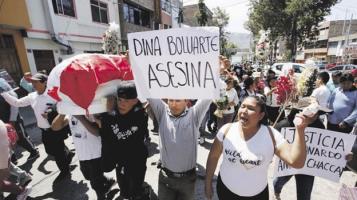 Clau O'Brien Moscoso continues her dispatches from Peru in the wake of a natural disaster and the ongoing coup against President Castillo. A Spanish translation follows.
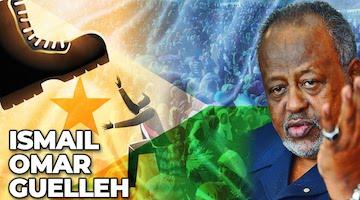 The legacy of colonialism and interference from the U.S. and other states keeps Djibouti's president in office after 25 years. Djibouti needs democracy and sovereignty for its people.
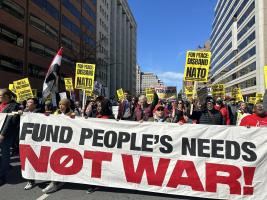 On March 18 thousands of people rallied in Washington DC to mark the 20th anniversary of the invasion of Iraq and to call for an end to the war in Ukraine.
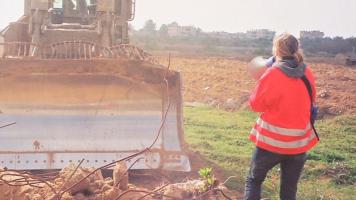 Being a white ally is a very serious matter. They can be "martyred on a shrine of white supremacy in an effort to discourage other whites from following their lead."
 The FBI raid on the Uhuru Movement has resulted in economic sanctions like those imposed on countries that dare to be sovereign despite being under U.S. attack.


