South Africa: Whose Liberation Was It?
A Black Agenda Radio commentary by Glen Ford
"The revolution was only partially completed."
South Africa seems finally willing to seriously assess the
fruits of its victory against apartheid, achieved in 1994 with the assumption
of power by Nelson Mandela and his African
National Congress, the ANC. The system of legalized white supremacy seemed
to go out with a whimper, rather than the apocalyptic finale that so many had
feared. But that was because the revolution was only partially completed. It
brought social, political and economic mobility to a small sliver of the Black
population - especially the politically well-connected - but did not alter the
fundamental relationships between the rich and the poor Black majority; between
the multinational firms that dominate South African economic life and the
continent's most organized industrial Black working class. And it did not
meaningfully address the grotesquely disproportionate white ownership of land.
These questions of social democracy, that go much deeper
than one-man, one-vote, were put off indefinitely in the interest of
"stability" - of avoiding white and capital flight. As a result, the dreams of
the masses of South Africans were deferred, so as not to create white panic.
Rather than embark on a thoroughgoing transformation of
South African society, the ruling factions in the African National Congress
under Thabo Mbeki, who succeeded Nelson Mandela as president, decided they
would create a class of Black millionaires. The focus of their very narrow,
Black capitalist project seemed to favor integration of Johannesburg's rich,
formerly all-white neighborhoods rather than rapidly improving the quality of
life in sprawling "townships" like Soweto, where the people live. It was a
picture of new Black luxury that Ebony and Black Enterprise
magazines would certainly appreciate, but in no way resembled the "free" and
truly equal South African society for which so many had sacrificed and died.
"The ruling factions in the African National Congress
under Thabo Mbeki decided they would create a class of Black millionaires."
The "grand alliance" that brought down white minority rule
was based on the ANC, the South African
Communist Party, and the Congress of South African Trade Unions, COSATU. In the interest of unity, the
Communists and COSATU long avoided an outright break with Thabo Mbeki's leading
faction in the ANC, which too often seemed to be the guardian of corporate
South Africa and the new, Black corporate class.
I will never forget the spectacle of COSATU's leader,
addressing a meeting of Black American labor leaders, the Coalition of Black
Trade Unionists, in Phoenix, Arizona, in 2006. He quite literally begged for
assistance from the African American trade unionists - who were barely able to
keep their own heads above water after so many defeats at the hands of U.S.
corporations. The South African union leader beseeched U.S. Blacks to buy South
African textiles, which had been decimated by Chinese competition. Amazing, I
thought! COSATU's "allies" in the ANC hold state power, yet he appeals to
marginalized Black American workers for help. What Black South Africans need,
clearly, is a kind of regime change - to get on with the revolution.
Now Thabo Mbeki has been deposed by the ANC, in favor a
former ally of his named Jacob Zuma. COSATU, the Communists and the ANC youth
wing succeeded in forcing a change at the top. Now let us see if they have the
courage and ideas to create real change at the bottom, to truly empower the
South African majority.
For Black Agenda Radio, I'm Glen Ford.
BAR executive editor Glen Ford can be contacted
at Glen.Ford@BlackAgendaReport.com.
Click the flash player below to hear this Black Agenda Radio commentary.
{mp3}20080924gf_africa.mp3{/mp3}
Broadcasters and others desiring an MP3 copy of this commentary can get it on our Black Agenda Radio
archive page.

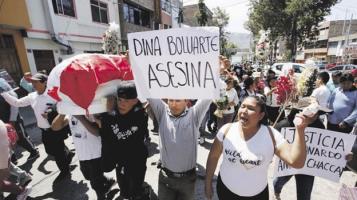 Clau O'Brien Moscoso continues her dispatches from Peru in the wake of a natural disaster and the ongoing coup against President Castillo. A Spanish translation follows.
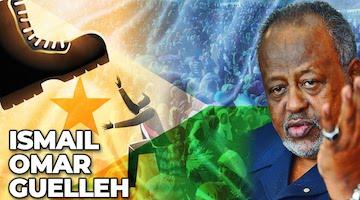 The legacy of colonialism and interference from the U.S. and other states keeps Djibouti's president in office after 25 years. Djibouti needs democracy and sovereignty for its people.
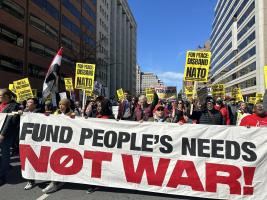 On March 18 thousands of people rallied in Washington DC to mark the 20th anniversary of the invasion of Iraq and to call for an end to the war in Ukraine.
 Being a white ally is a very serious matter. They can be "martyred on a shrine of white supremacy in an effort to discourage other whites from following their lead."
 The FBI raid on the Uhuru Movement has resulted in economic sanctions like those imposed on countries that dare to be sovereign despite being under U.S. attack.


