Preserve Gangster History
Broadcasters
and others who need a downloadable MP3 copy of this Black Agenda
Radio commentary may get it from the Black Agenda Radio archive
page.

A Black Agenda Radio commentary by Glen Ford
"What kind of country allowed assassins, pimps,
pornographers and racketeers of all kinds to rise to such wealth and
prominence?"
Famed gangster Dutch Schultz was gunned down, along with two
of his associates, at a Newark, New Jersey eatery called the Palace
Chop House in October, 1935. That part of downtown Newark is now a
protected, historic neighborhood, where buildings cannot be demolished without
permission from the Landmarks and Historic Preservation Commission. The current
owner wants to tear the building down to make way for a parking lot. To get
around the restrictions on demolishing historic buildings, the landlord claims
the original steak house where Dutch Schultz met his violent end was later torn
down and replaced; therefore, the existing building is not an historical
landmark.
The records are not clear as to whether the Palace Chop
House was demolished in the years after Dutch Schultz's death, or not. But the
Landmarks Commission didn't seem too excited about the historical value of the
site, when it first surveyed the neighborhood. The steak joint was listed as
"non-contributing" to the historic nature of the district; in other worlds, not
really worth preserving.
I disagree. Dutch Schultz was a very important figure in the
rise of organized crime in the United States, and the place and circumstances
of his death are reminders of that period in U.S. history. One cannot develop
an accurate picture of urban America in the 1920s and ‘30s without some
understanding of the interaction of politics and organized criminality. What
kind of country allowed assassins, pimps, pornographers and racketeers of all
kinds to rise to such wealth and prominence? Schultz was an important player in
Black urban history, the kingpin of the Harlem numbers racket, as
popularized in the movies The Cotton Club (1984) and Hoodlum
(1997).
"In the Nineteen-teens and Twenties, the overwhelmingly
Jewish neighborhood of Brownsville, Brooklyn had the highest murder rate in New
York City."
The designation of historical places is a political act, by
which those so empowered tell the rest of us, and posterity, who and what
comprise the important events and people of the past. In the process, history
is illuminated - or whitewashed. In this age of vicious racial libel and
slander, when the ills of the ghetto are blamed on an alleged "pathology"
inherent in Black culture, it is important to know the historical-racial face
of crime in the United States. Dutch Schultz was a prominent member of the
powerful Jewish mob, as were the Murder Incorporated hit-men who killed him,
under a contract put out by the high Commission of organized crime, of which
Jewish gangsters were an integral part. When Dutch Schultz was growing up in
the Nineteen-teens and Twenties, the overwhelmingly Jewish neighborhood of
Brownsville, Brooklyn had the highest murder rate in New York City. During that
period, Jewish kids were vastly over-represented in the juvenile detention
centers of New York state. It was Jewish criminals, as much as Italian
criminals, that beat down, knifed down, and shot down the previously supreme
Irish gangs of New York.
Dutch Schultz caught his bullet in Newark, New Jersey, where
he had found a haven among criminals of all white ethnicities when New York
Mayor Fiorello La Guardia ordered him arrested on sight. Newark remained a
mob-dominated town until the election of its first Black mayor, Ken Gibson, in
1970.
Newark needs to preserve the historical status of Dutch
Schultz's death place as a reminder of the truly pathological time when white
gangsters ruled.
For Black Agenda Radio, I'm Glen Ford.
BAR executive editor Glen Ford can be contacted
at Glen.Ford@BlackAgendaReport.com.

 Black Agenda Radio for Week of April 23, 2018 Corporate Media “Could Care Less” About International Law
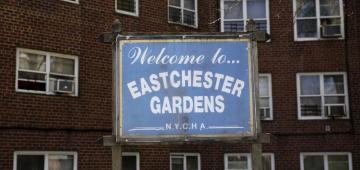 Two years ago, New York City police and federal agents stormed into five housing developments in the Soundview section of The Bronx and swept up 120 young men on criminal conspiracy charges.
 “Brothers are going to find a way to communicate with the outside, and they will no longer tolerate the kind of human rights abuses that previous generations experienced,” said longtime prisoner ri
 A ten-group coalition won unanimous passage of a bill prohibiting the Durham police department from exchanges of training or information with Israel -- the first city in the U.S. to do so.
 University of Illinois professor of international law Dr. Francis Boyle said the illegality of U.S. attacks against Syria and occupation of its territory is a non-issue for U.S.



