Black People Should ‘Police’ Themselves The Milwaukee chapter of BND, the Black National Defenders, hold rallies every Saturday and knock on doors in neighborhoods to engage young people in political struggle, rather than fighting among themselves. “We’ve created a hot-line that people can call” to get the BND to intercede in disputes, said organizer Amerikus Luvene . The BND has chapters in Detroit and Baltimore, and is a member of the Black Is Back Coalition for Social Justice, Peace and Reparations, which holds its national conference August 22 and 23, in Philadelphia, under the theme, “Black Power Matters: Black Community Control of the Police.” Ultimately, said Luvene, “we’d like to replace the police” in our communities.
Money CAN Change a Movement “We’ve watched how easily movements can be co-opted, can be bought,” said Phillip Agnew , of the Dream Defenders, the youthful activist group that came together during the outrage over Trayvon Martin’s death, in Sanford, Florida, in 2012. “Something that began very organically, very raw and unaffiliated, unbought and unbossed, can become just the opposite in a short matter of time.” In the year since Michael Brown was shot down by a cop in Ferguson, Missouri, the Dream Defenders have witnessed how “different elements have been able to flourish, that have been smart and strategic,” said Agnew, while others have “been elevated to support a reactionary, separatist view, a sectarian view of liberation for poor people and Black people in this country.”
The Change is in US “We seen little change in terms of public policy” over the past year, said Rev. Osagyefo Sekou , at a demonstration over the arrest of Millennial Activists United leaders, in Ferguson, Missouri, last week. “Everything we’ve seen has been cosmetic. But, we’ve changed,” said Sekou, who was also arrested in protests commemorating the anniversary of Michael Brown’s death. “We’re going to support our young people and defend them at all costs.”
Father Mike Kinman, dean of the Christ Church Cathedral, in St. Louis, provided a haven for protesters who were later arrested fro speaking out against police violence. “This is criminalization of the First Amendment, and it is being done only to our Black and brown brothers and sisters,” said Kinman.
Eyes on Justice Dr. Cornel West , the nation’s best known public activist-intellectual, was among those arrested in Ferguson, where he spoke at a church rally. “The challenge of every generation is whether you are willing to channel your righteous anger and your moral outrage into love of justice or hatred and vengeance,” he told the crowd. President Obama took seven years “before he could find his voice to go to a prison,” said West. “Black faces in high places don’t always translate into justice for poor people.”
Washington Still Has Designs on Cuba After more than half a century, the U.S. embassy in Havana formally reopened, last week. But, that doesn’t mean U.S. subversion against Cuba will end any time soon, said Dr. Gerald Horne , professor of history and African American Studies at the University of Houston and author of many books, including Race to Revolution: The U.S. and Cuba During Slavery and Jim Crow . Horne noted that the U.S. became even more aggressive against Haiti after Washington finally recognized the Black republic, 58 years after the triumph of the Haitian revolution. “At best, you can expect Washington to simply change its strategy to destabilize the Cuban revolution,” said Horne.
Haiti Votes – Four Years Late For the first time in four years, Haiti held elections for its national legislature, earlier this month. “The election had many serious problems,” especially the lack of voting sites in poor neighborhoods, said Brian Concannon , of the Institute for Justice and Democracy in Haiti. This was also the first time since the U.S.-backed coup and occupation of 2004 that the Lavalas party, which used to command huge majorities at the polls, has been allowed to field candidates. The ballot counting has been slow, but Concannon expects “that Lavalas is probably the most popular party,” despite the damage done by 11 years of repression.
Black Agenda Radio on the Progressive Radio Network is hosted by Glen Ford and Nellie Bailey. A new edition of the program airs every Monday at 11:00am ET on PRN. Length: One hour.

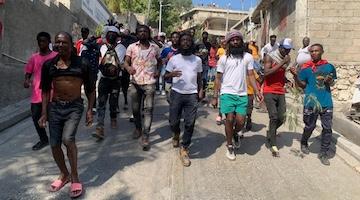 Ann Garrison spoke to Professor Danny Shaw, who speaks fluent Haitian Creole and returned from his last trip to Haiti one month ago.
 "Sitting Shiva in South Florida for Our souls/slivers of democracy …" is the latest from BAR's Poet-in-Residence.
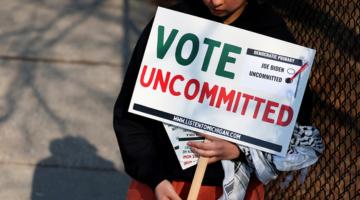 Politicians and the liberal media cite "voter apathy" as the cause of reduced voter turnout, but the reality is that their devotion to corporate interests over those of the people creates a seeming…
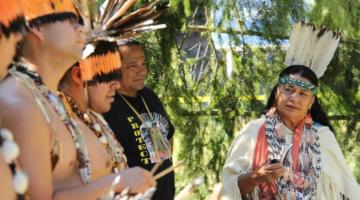 Settler colonialism has caused the destruction of indigenous lands around the world and, as a result, the environment in which we all live. The path forward is an global struggle against these forces.
 For Africans in the U.S., anger is an important first step in mentally emancipating themselves from empire and declaring war on it.


