A Black Agenda Radio commentary by executive editor Glen Ford Missouri’s own statistics confirm “the general impression among Black people that the police are becoming measurably more aggressive in their dealings with African Americans.” Racial disparities in police traffic stops broke state records last year – a key indicator of police attitudes towards Blacks. However, only a handful of states keep comprehensive records on the consequences of Driving While Black.
Data Show Cops Growing More Aggressive Against Blacks In Missouri A Black Agenda Radio commentary by executive editor Glen Ford “The cops’ mission is to project police power against Black people as a group.” New statistics from Missouri show that the racial disparity in police stops, searches and arrests of drivers was higher, last year, than at any time since the year 2000 , when Missouri started keeping records. Black drivers in 2014 were 75 percent more likely than whites to be stopped by police, and 73 percent more likely to be searched. In 2013 , the year before a Ferguson, Missouri, cop killed Michael Brown, setting off the Black Lives Matter movement, Missouri was stopping Blacks 66 percent more often than they stopped whites. So, in Missouri, at least, the statistics tend to confirm the general impression among Black people that the police are becoming measurably more aggressive in their dealings with African Americans.
Missouri is not widely viewed as one of the more enlightened states, but it is one of only about a half dozen states that keep track of how citizens who are Driving While Black are treated on the states’ streets and highways. Missouri provides the kind of information that civil liberties lawyers in New York City had to spend years in court to force police to provide. The Missouri data show an increase in the already familiar pattern, in which Black people who are stopped are also more likely to be searched than whites who get pulled over, but that whites are almost 50 percent more likely to turn out to be carrying some kind of contraband, usually drugs. Nevertheless, at the end of the stop, Blacks were about twice as likely to be arrested as whites.
“Race is the guiding principle of the U.S. criminal justice system.” The New York Times article on the new Missouri statistics included comments from a professor of criminology at the University of Missouri at Kansas City. Prof. Kenneth Novak was reluctant to draw firm racial conclusions about what the data means, because police tend to concentrate their attention in areas where there are higher proportions of Blacks. Therefore, he finds the numbers “perplexing.” But, Prof. Novak has already answered his own question. Yes, the cops do concentrate their energies in Black areas, and they also place Blacks traveling in white areas under greater surveillance. Their mission is to project police power against Black people as a group, wherever they are. The cops do not work under a similar mission in the white community – and that’s why the whites that do wind up getting stopped are more likely than Blacks to be carrying unlawful goods and substances. Generally speaking, you have to be a relatively wild-looking or badly behaving white person to get stopped in the first place. But Black folks are all fair game, because race is the guiding principle of the U.S. criminal justice system.
White supremacy is the reason that one out of every eight prison inmates in the world is an African American; it’s why there are more people of color in U.S. prisons than in the entire prison system of China, a country with a population four and a half times that of the United States. The Black American Gulag has been built stop-by-stop, frisk-by-frisk, sweep-by-sweep, and through constant racialized surveillance of Black people wherever they go in this country.
There’s nothing “perplexing” about it. Mass Black Incarceration is foundational government policy everywhere in the United States.
For Black Agenda Radio, I’m Glen Ford. On the web, go to BlackAgendaReport.com.

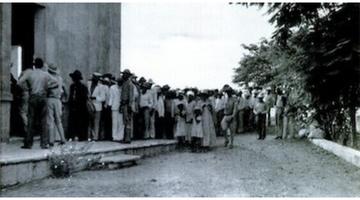 “Between October 2 and October 8, 1937, between 15,000 and 40,000 Haitians and Black Dominicans were slaughtered by Dominican troops…”
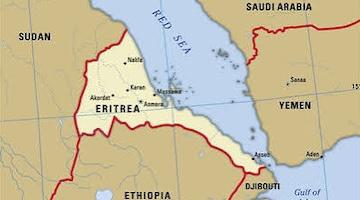 Ethiopia and Eritrea are on the brink of a war that could further destabilize the Red Sea, disrupt oil tanker traffic, and drive gas prices even higher.
 The UN's renewal of the Gang Suppression Force mandate is part of a wider hemispheric project to reassert military control across the Americas. Caribbean leaders cannot claim to support a Zone of…
 The Islamic Revolutionary Guard Corps (IRGC) has issued a letter addressed to the American people, outlining its views on recent developments and Iran-U.S. relations.
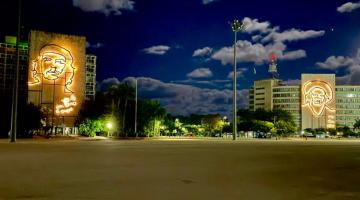 The Trump administration's new sanctions on Cuba, are part of a dual strategy to create unendurable hardship while simultaneously making Cuba financially dependent on the United States.


