by BAR managing editor Bruce A. Dixon
Chicago could become Detroit, an Illinois Senator threatened on March 2, if Chicago fails to re-elect Rahm Emanuel. Staring down this threat tells us a lot about how the game is, and ought to be played.
Why Isn't Sen. Kirk's “Chicago Will Become Detroit” Threat National News?
by BAR managing editor Bruce A. Dixon
On March 2, Illinois Senator Mark Kirk plainly threatened the people of Chicago. If Rahm Emanuel was not re-elected mayor, he declared, banksters and bond market investors concerned about the city's mountain of debt would see that Chicago went the way of Detroit.
Given that Chicago is the nation's 3rd largest city, and finances itself pretty much like every other big US city, a threat like this has potential implications for scores of other cities and ought to be national news. But it wasn't It made a local Chicago headline and dropped down the memory hole, out of sight. Why? The senator's threat wasn't national news because the plain facts beneath it, might have made Chicagoans and people in your city as well even more disturbed.
A great deal of Chicago's debt is pension debt. Pensions are deferred wages which employees agreed to allow the city or state to deposit into prudently invested pension funds so they would be available for payout years later upon their retirement. But public officials in Chicago, in Illinois and in cities, counties and whole states across the US broke these agreements, frequently violated the law and didn't make these payments, sometimes for decades. Now that the payouts are due, they need to blame it on “greedy teachers” or anything that will keep them from taxing the rich, which is the only place that kind of money can be had.
In Chicago, and very likely in your town too they doubled down on their dishonesty by investing hundreds of billions in pensions and other funds as well in exotic investment devices, credit default swaps, derivatives, real estate and stock market schemes which their investment advisors and ratings agencies assured them were sound and lucrative, but turned out to be black holes.
City workers and the public got screwed, but everybody else made out like, well... bandits. And the bandits are good friends of Chicago mayor Rahm Emanuel, of Illinois Senator Mark Kirk, of the mayors of Atlanta, Philly, Sacramento, the governors of California and New York and everyplace in between. Kwame Kilpatrick didn't snort Detroit's pension funds up his nose, he gave them to the same folks Rahm gives Chicago's to. Wall Street gave Kwame Kilpatrick a medal for that, and Rahm's friends who do business with the city have put millions in his campaign coffers. Thanks to them, Chicago to some extent is already Detroit.
Getting out of the city's debt trap will require some real creativity, but there are answers. The state of North Dakota, with maybe 30% of Chicago's population, has its own bank, where state funds are exclusively deposited. There's no good reason why Chicago can't do the same, and have its own funds in its own bank, available for investment in the region's own economic future. A city-owned bank could invest those funds in job-creating green technologies that might put large numbers of young Chicagoans, now out of the labor force altogether, to work. It could do what private banks refuse to do and invest in refitting and construction of affordable housing, and transit, and job-creating municipal broadband, like the city of Chattanooga has already successfully deployed.
Senator Kirk's threat isn't national news because staring it down lays bare the predatory habits of our politicians and their funders, and might even lead us to real solutions. But the next step, at least in Chicago, is to fire Rahm Emanuel on April 7.
For Black Agenda Radio, I'm Bruce Dixon. Find us on the web at www.blackagendareport.com
Bruce Dixon is a Chicagoan living in exile in suburban Atlanta. He's managing editor at Black Agenda Report, a mamber of the state committee of the GA Green Party and a partner in a technology firm. He can be reached at bruce.dixon(at)blackagendareport.com

 The US could finance a “Green” New Deal in the same way that it paid for the first New Deal, during the Depression – with public “banking” institutions.
 Hollywood does not hesitate to totally fictionalize, diminish and malign a Black historical figure, Dr Don Shirley, for its own white supremacist purposes.
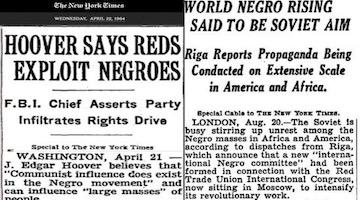 The Russiagate propagandists sound like the segregationists of yesteryear, warning of “outside agitators” trying to “stir up the Nigras.”
 Keisha Lindsay: Questions about black all male schools; Chris Duran & Concerned 44 demand reform of African Studies at Seton Hal; Zayid Muhammad of Newark Concerned Communites on documenting po
 US presidents may seem different from one another, in terms of rhetoric, “but they all have in common being committed to empire,” said Anthony DiMaggio,a political scientist a



