A Black Agenda Radio commentary by executive editor Glen Ford
African American politicians and activists implored President Obama and others in authority to “do something” about gun violence in inner cities. Be careful what you ask for. The current gun hysteria will serve as an excuse to expand the police state, through a new wave of “mandatory minimum sentences and adoption of New York-type stop-and-frisk policies.”
Just Like Crack in the 80s, the Police State Thrives on Gun Hysteria
A Black Agenda Radio commentary by executive editor Glen Ford
“The presence of guns in Black inner cities is sufficient excuse to create a Constitution-free zone.”
From the moment it became known that 20 suburban, mostly white children had been massacred by a young white man in Connecticut, it was inevitable that Black America would pay the price. The nation’s reflexive response to crime and domestic mayhem – real or imagined, and regardless of the actual race of the perpetrators – is always to punish Black people. Whenever the symptoms of the national sickness – America’s endemic violence and alienation – become catastrophically acute, as in Newtown, the standard treatment is mass Black incarceration, by which huge proportions of the Black male population are expelled from the social body like foreign organisms.
The madness in a well-off town in Connecticut had nothing to do with Black inner city violence, which is overwhelmingly rooted in the absence of a legitimate economy, and a lack of social justice – and requires an economic and social justice response. But America is preprogrammed to treat violence as a Black phenomenon. As could be expected, Chicago Mayor Rahm Emanuel – President Obama’s former chief of staff – proposed mandatory minimum sentences for gun crimes. It is a huge step backward. Mandatory minimum sentences have been largely responsible for making the United States home to one out of every four prison inmates in the world, and many states have been backing away from the practice. Opposition to mandatory minimums has historically been strongest in Black America. However, in the current gun hysteria, Black activists and politicians have talked themselves into a corner. When President Obama shed tears over the tragedy in Connecticut, African Americans demanded that he show similar concern for young Black victims of gunfire. It was demanded that “do something.”
“America is preprogrammed to treat violence as a Black phenomenon.”
Then came the shooting death of 15 year-old Chicagoan Hadiya Pendleton. The gun violence issue now had a Black face. Whatever was going to be done about guns, would be done to Blacks, through mandatory minimum sentences and adoption of New York-type stop-and-frisk policies. According to the Gallup polling organization, 44 percent of whites own guns, versus only 27 percent of Blacks and other non-whites. Yet, white gun ownership is politically sacrosanct – untouchable –while the presence of guns in Black inner cities is sufficient excuse to create a Constitution-free zone.
Until Newtown, momentum had been building for Black resistance to the American police state. But history shows it can just as easily collapse. Back in the mid-Eighties, the Reagan administration whipped up an hysteria around crack cocaine. As Michelle Alexander chronicled in her book The New Jim Crow, Reagan’s men used the panic to institute draconian criminal justice policies, including passage of a bill that mandated 100 times the penalties for crack versus powder cocaine. Three hundred and one members of Congress co-sponsored the legislation, including a majority of the Congressional Black Caucus. Many hundreds of thousands of African Americans spent millions of collective years in prison, because Black political leaders jumped on the mass incarceration bandwagon. The stage is being set for another such betrayal – by Black leaders and activists who fail to think before they ask the powers-that-be to “do something.”
For Black Agenda Radio, I’m Glen Ford. On the web, go to BlackAgendaReport.com.
BAR executive editor Glen Ford can be contacted at Glen.Ford@BlackAgendaReport.com.

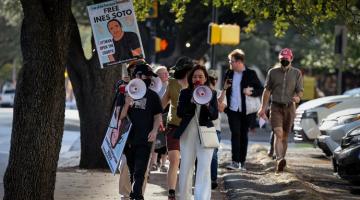 The Prairieland Nine convictions are an example of lawfare designed to criminalize political dissent and intimidate movements challenging the national security state.
 In this week’s segment, we discuss the U.S. and Israeli war against Iran and crises in the Horn of Africa. Sudan is experiencing a humanitarian catastrophe created by United Arab Emirates proxy…
 Bahman Azad, president of the US Peace Council, joins us to discuss the US/Israeli war of aggression against Iran. The US has committed war crimes by assassinating Iranian leaders, and bombing…
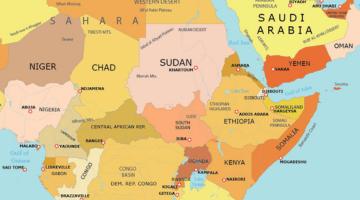 Abayomi Azikiwe, Editor of Pan-African Newswire, discusses events in the Horn of Africa. The U.S. war against Iran is impacting the United Arab Emirates (UAE), whose Rapid Support Force proxies are…
 Regime change is possible but not inevitable. Forces claiming to be leftist and claiming to be revolutionary must actually live up to the true meaning of those words.


