A Black Agenda Radio commentary by executive editor Glen Ford
Sixty years ago, the U.S. Supreme Court ordered public schools desegregated, first “with all deliberate speed” and then, more urgently, “root and branch.” By the early 1970s, substantial desegregation has taken place in the South. But today, segregation has rebounded. In some localities, folks don’t quite remember what happened. “No one paid the court order any attention in St. Martin Parish, Louisiana, for 30 years.”
Segregation Rebounding: The Political Defeat of School Integration
A Black Agenda Radio commentary by executive editor Glen Ford
“Court orders were only effective if the judges were diligent and officials were willing to enforce them.”
Fourteen years after the U.S. Supreme Court ruled segregated education unconstitutional, the justices determined that the pace of integration, which was supposed to be proceeding “with all deliberate speed,” was far too slow. In it’s 1968 ruling
Three hundred school districts remain under desegregation order, today, but some of those communities don’t even know the order is still in effect, many have substantially resegregated, and the Justice Department is sometimes also in the dark, according to Nikole Hannah-Jones, who spent a year researching her authoritative article
“Some communities don’t even know the order is still in effect.”
The fight for school desegregation badly needed the Supreme Court’s “root and branch” mandate. In 1963, only about one percent of Black kids in the South attended integrated schools. But by the early Seventies, fully 90 percent of Blacks in the South attended desegregated schools. However, court orders were only effective if the judges were diligent and officials were willing to enforce them. When Ronald Reagan entered the White House, his Justice Department actively opposed school integration. So did both presidents Bush. Reporter Nikole Hannah-Jones found that the Obama Justice and Education Departments don’t even have an accurate list of the desegregation orders that remain legally in effect in local districts.
It appears that desegregation has been abandoned for so long in some school districts, that the locals assume the court orders are no longer in effect. No one paid the court order any attention in St. Martin Parish, Louisiana, for 30 years. In Gadsden, Alabama, a judge released the school district from a desegregation order, even though nothing had been done to dismantle segregation, one high school was 90-percent Black, and another school was still named for Ku Klux Klan founder Nathan Bedford Forrest. Nevertheless, the judge said he was satisfied that folks in Gadsden got along better than people in Kosovo or Northern Ireland.
The lesson of the ProPublica story appears to be that segregation was never eliminated “root and branch” partly due to lack of consistent enforcement of court orders over time, and in some cases for reasons that nobody seems to remember. Today, Black students are more segregated than in the Seventies, but all the Obama administration wants to talk about is testing and getting rid of teachers, and turning schools into privately-managed charters – which studies have shown tend to be more segregated than public schools.
The political defeat of school integration appears to be all but complete – except on television shows and in the movies.
For Black Agenda Radio, I’m Glen Ford. On the web, go to BlackAgendaReport.com.
BAR executive editor Glen Ford can be contacted at Glen.Ford@BlackAgendaReport.com .

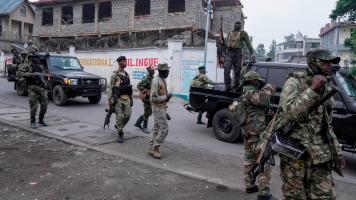 Joseph Kabila, former president of the Democratic Republic of Congo, named himself president of the Front for the Rebuilding of the Nation. He is now formally allied with M23, the Rwanda-backed…
 Isaac Saney is a Cuba and Black Studies specialist and historian at Dalhousie University in Halifax, Nova Scotia, Canada. He discusses the U.S./Canadian partnership in settler colonialism,…
 European puppet states have undermined themselves and their peoples' needs at the behest of the U.S. Now, that subservience may lead to war.
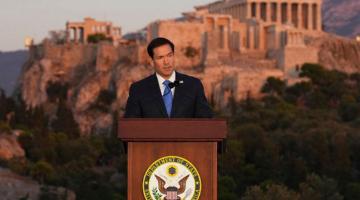 Marco Rubio's appeals to Western civilization, Christian heritage, and the defense of Western dominance are fundamental to the consolidating global fascist project, functioning to transform a crisis…
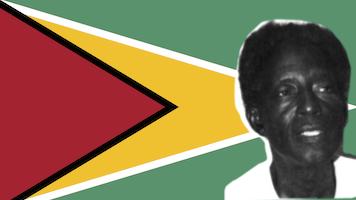 “So we started to preach the doctrine of self-organization. And we made it very clear what we were after — the genuine multiracial and democratic power of the working people.”


