A Black Agenda Radio Commentary by BAR managing editor Bruce A. Dixon
What if policymakers wanted to make marijuana safe for taxation and corporate profit, but needed to make sure legalization didn't produce new jobs and economic opportunities for poor and working class communities, or make them lay off any cops and judges, or have to close any prisons or jails? Well, the model in place in Colorado today would be a good start.
Is the End of Marijuana Prohibition the End of the War On Drugs? Probably Not.
A Black Agenda Radio Commentary by BAR managing editor Bruce A. Dixon
"Ask yourself, what would it look like if policymakers wanted to end the prohibition of marijuana, but not necessarily the the war on drugs..."
The forty years of so-called “war on drugs” has been the rhetorical excuse for a nationwide policy of punitive overpolicing in black and brown communities. Although black and white rates of drug use have been virtually identical, law enforcement strategies focused police resources almost exclusively upon communities of color. Prosecutors and judges did their bit as well, charging and convicting whites significantly less often, and to less severe sentences than blacks.
The forty years war on drugs has been the front door of what can only be described as the prison state, in which African Americans are 13% of the population but more than 40% of the prisoners, and the chief interactions of government with young black males is policing, the courts and imprisonment. Given all that, the beginning of the end of marijuana prohibition, first in Colorado and soon to be followed by other states ought to be great good news. But not necessarily.
Ask yourself, what would it look like if policymakers wanted to end the prohibition of marijuana, but not necessarily the the war on drugs. What if they desired to lock down the potential economic opportunities opened up by legalizing weed to themselves and their class, to a handful of their wealthy and well-connected friends and campaign contributors? What if they wanted to make the legal marijuana market safe for predatory agribusiness, which would like to claim lucrative patents on all the genetic varieties of marijuana which can be legally grown, as they already try to do with other crops?
"The end of marijuana prohibition is not designed to create jobs in our communities, nor is it intended to shrink the prison state..."
If they wanted to do those things, the system in place in Colorado today would be a good start. In Denver today, low income property owners can't just plant pot in the back yard or on the roof in hopes of making one mortgage payment a year out of twelve, it doesn't work that way. Ordinary households are limited to 3 plants per adult, and for reference only the female plants are good for smoking, and prohibited from selling the weed or the seed. To participate in the marijuana economy as anything but a consumer requires background checks, hefty license fees, a minimum of hundreds of thousands to invest, and the right connections. All this currently drives the price of legal weed in Colorado to over $600 per ounce, including a 25% state tax, roughly double the reported street price of illegal weed.
So to enable the state to collect that tax money, and the bankers, growers and investors to collect their profits from marijuana taxed by the state and regulated in the corporate interest, cops and judges and jailers in near future, in Colorado and in your state as well, figure to be just as busy as they always have been the last forty years, doing pretty much what they've always done... conducting a war on illegal drugs, chiefly in the poorer and blacker sections of town, with predictable results.
The end of marijuana prohibition is not designed to create jobs in our communities, nor is it intended to shrink the prison state. Our ruling class simply does not allow economic growth that they can't monopolize, and the modern prison state has never been about protecting the public from drugs or crime. Prisons and our lifelong persecution of former prisoners serve to single out, brand and stigmatize the economic losers in modern capitalist society, so that those hanging on from paycheck to paycheck can have someone to look down upon and so that they might imagine that this vast edifice of inequality is, if not just, inevitable.
For Black Agenda Radio, I'm Bruce Dixon. Find us on the web at www.blackagendareport.com.
Bruce A. Dixon is the managing editor at Black Agenda Report and the co-chair of the Georgia Green Party. He lives and works in Marietta GA and can be reached through this site's contact page or at bruce.dixon(at)blackagendareport.com.

 Carbon and biodiversity offsets are the latest imperialist weapons used against African people and their nations. Self-determination is the key to ecological health for the continent.
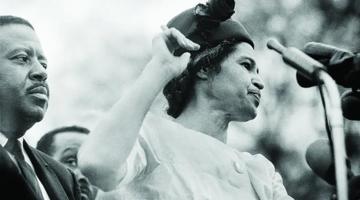 Internationalism is the path toward Black liberation. Black people must resist the push to silo our movements and move in this spirit of Rosa Parks - with fearless integrity.
 Aaron Bushnell's act of self-immolation is a symbol and a call for people around the world to break their silence and fight for a free Palestine.
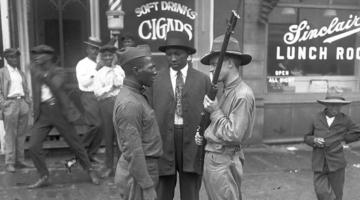 In the time between the two imperialist wars, the spirit and politics of Pan-Africanism grew. African Americans continued to organize and built movements to resist rising fascism.
 The West African trade bloc has lifted a majority of the sweeping sanctions it had imposed on Niger, including border closures and a freezing of state assets. The move followed soon after Niger, Mali…


