A Black Agenda Radio commentary by executive editor Glen Ford
The military defeat of Rwandan-backed “rebels” in the eastern Congo is good news for a people who have suffered the worst genocide since World War Two. But will there be justice for the six million dead? “The United States would not relish a series of trials in which its own role in the slaughter of millions would be revealed in embarrassing detail.”
Rwandan War Criminals Defeated in Congo, But AFRICOM Riding High
A Black Agenda Radio commentary by executive editor Glen Ford
“The U.S. has no intention of allowing anything approximating justice to break out in central Africa.”
After 17 years and the death of six million Congolese, the United States has finally shifted gears in its efforts to dominate central Africa. Earlier this year, Washington cut off military aid to Rwanda, which, along with Uganda, another U.S. ally, has been looting and terrorizing the mineral-rich eastern Congo since 1996. All those years, U.S. Democratic and Republican administrations have lavished arms and money on the two client states, and protected them from sanction by international forums and courts. The genocide in the Congo was central to U.S. policy in the region. While 8 percent of the Democratic Republic of Congo’s population was dying, Rwanda and Ugandan soldiers and thugs got rich acting as middlemen, funneling Congo’s precious minerals to multinational corporations. Meanwhile, both Rwanda and Uganda supplied soldiers to every U.S.-approved military mission on the continent, acting as America’s mercenaries in Africa.
So, why did the U.S. alter its policy? First, international pressure finally made it untenable for Washington to continue deploying its Black henchmen to destabilize central Africa. President Obama appointed former Wisconsin Senator Russ Feingold, a liberal by American standards, as his emissary to the Great Lakes region of Africa, and halted delivery of weapons to Rwanda. The Americans allowed the United Nations to form a special, 3,000-man intervention brigade empowered to use force against the so-called rebel group M23, which is actually led by the Tutsi-dominated government of Rwanda. This week, UN intervention forces backed up the Congolese army defeated the M23 end their insurgency
“Rwandan dictator Paul Kagame cannot be expected to turn on his own men.”
However, Rwanda has pulled these tricks before, and has never acknowledged that M23 is its own creation, or that many of the fighters’ top officers are, in fact, members of the Rwandan armed forces. According to Friends of Congo criminals to trial
Therefore, although Washington has put distance between itself and Rwanda, the U.S. has no intention of allowing anything approximating justice to break out in central Africa. The U.S. military command, AFRICOM, has grown by leaps and bounds under President Obama – who has permanently stationed a brigade of U.S. troops in Africa – and the reinforced United Nations military presence in the region does exactly what the United States tells it to. And finally, at the end of the day, the Rwandan and Ugandan regimes understand that they are only cogs in the imperial machine, and must do as they are told. The U.S. empire is alive and growing in central Africa.
For Black Agenda Radio, I’m Glen Ford. On the web, go to BlackAgendaReport.com.
BAR executive editor Glen Ford can be contacted at Glen.Ford@BlackAgendaReport.com .

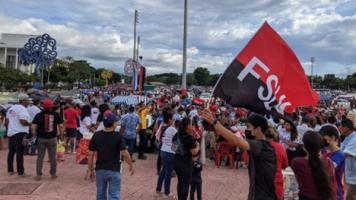 Genuine peoples holidays are hard to come by in the U.S. But in Nicaragua the ongoing revolutionary process is widely celebrated.
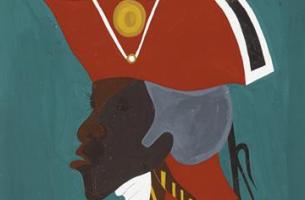 In 1929, Black radical Cyril Briggs penned an essay on Toussaint L’Ouverture and the Haitian Revolution. For Briggs, both provided inspiration for the fight against the U.S. occupation of Haiti. We…
 This week’s featured author is Steven W. Thrasher. Thrasher holds the inaugural Daniel H. Renberg chair at Northwestern University’s Medill School, the first journalism professorship in the world…
 The ineffective and unpopular UN Mission to Haiti must end.
 Under imperialism resource wealth can become a curse, such is the case with the EACOP pipeline in East Africa.


