A Black Agenda Radio commentary by executive editor Glen Ford
Thousands of inmates are pitting their bodies against the State of California, which is determined to reduce them to “non-persons, groveling masses of flesh.” But the Incarceration State “is not in the habit of acting in good faith, even with the judicial branch of government, on prison matters, much less negotiating with inmates.”
Hunger Strike in the Empire of Dungeons
A Black Agenda Radio commentary by executive editor Glen Ford
“The inmates insist that they will not end their action without a signed agreement with the force of law, addressing their core demands.”
The number of California prisoners that remain on hunger strike now hovers around 2,500, at 17 prisons
The epicenter of the protest is Pelican Bay prison where more than a thousand inmates are locked in long term solitary confinement from which some will never emerge, unless there is a change in policy. Prison officials made a show of making concessions in response to the 2011 protests, establishing a program that would allow some inmates a chance to get out of solitary. But the state reviewed only 400 cases, and allowed only about half of them back into the general prison population. And, according to the Center for Constitutional Rights, which is suing the state for imposing cruel and unusual punishment, “not a single one
The inmates insist that they will not end their action without a signed agreement with the force of law, addressing their core demands contempt of court
“Solitary confinement is the ultimate tool of the man-breaker.”
Prisons – especially prison systems designed by diabolical American minds – are meant to break men’s wills, to make them non-persons, groveling masses of flesh. Solitary confinement is the ultimate tool of the man-breaker, narrowing the scope of human activity to the bare functions of processing food into waste. For a person so restricted, the only mode of resistance available is to refuse to eat. California is one of only three states in which prison doctors are prohibited from force-feeding inmates. However, there is a loophole. The State Supreme Court ruled 20 years ago that forced feeding can be used to protect the “custodial environment,” that is, the discipline and security of the prison. If the authorities believe that allowing holdouts to continue their strike until death would be disruptive of the prison order, they could probably get away with forcing tubes down hunger strikers’ noses, like in Guantanamo Bay.
It is way past time that people stop saying that the United States is “moving towards” becoming a police state. It is, in fact, by far the biggest police and incarceration state ever known to man: an empire of dungeons.
For Black Agenda Radio, I’m Glen Ford. On the web, go to BlackAgendaReport.com.
BAR executive editor Glen Ford can be contacted at Glen.Ford@BlackAgendaReport.com .

 The U.S. can never be reformed to render justice to its African residents. “Our struggle must have Africa at its core.”
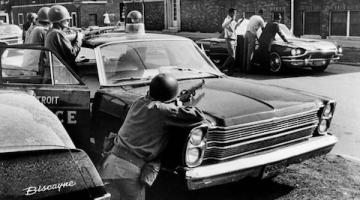 Detroit’s wanton killing of hundreds of Blacks in the civil right era shows why most of today’s proposals to make police more accountable are bound to fail.
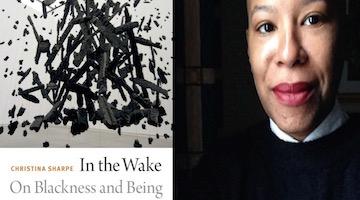 There was no way to make light of this daunting book and its effects on me, no matter how much I thought I knew it.
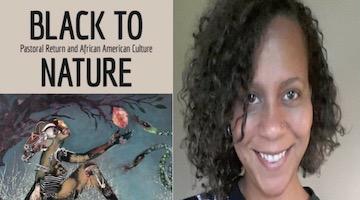 The author explores various social, political, and cultural sites that explore and highlight the Black pastoral experience.
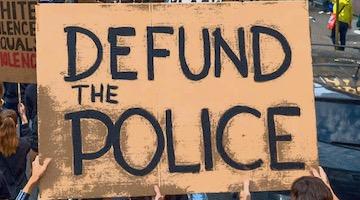 In the past year or two, the proposition of defunding or abolishing police and prisons has travelled from incarcerated-activist networks into mainstream conversations.



