A Black Agenda Radio commentary by BAR executive editor Glen Ford
President Obama claims he’s off to Africa in search of trade. But the Chinese have eclipsed the U.S. in that arena by offering “far better terms of trade and investment than the Americans.” Obama talks trade for public consumption, while the U.S. military locks Africa in a cage of steel.
The Obamas Do Africa
A Black Agenda Radio commentary by BAR executive editor Glen Ford
“The U.S. is not in the business of fair and mutually beneficial trade – it’s about the business of imperialism.”
The President and his family are spending a week in sub-Saharan Africa, with Senegal, Tanzania and South Africa on the itinerary. The focus of the trip, if you believe the White House better terms of trade
No one expects Obama to offer anything on this trip that will reverse America’s declining share of the African market. That’s because the U.S. is not in the business of fair and mutually beneficial trade – it’s about the business of imperialism, which is another matter, entirely. The Americans ensure their access to African natural resources through the barrel of a gun
So, while the Chinese and Indians and Brazilians and other economic powerhouses play by the rules of give and take, the U.S. tightens its military grip on the continent
To justify its rapid militarization of Africa, Washington plunges whole regions of the continent into chaos. U.S. policies, under presidents Clinton, Bush and Obama, have utterly destroyed Somalia, made the Horn of Africa a theater of war, drawn the northern tier of the continent into America’s cauldron of terror, and killed six million people in the eastern Congo.
“The Americans ensure their access to African natural resources through the barrel of a gun.”
The face of America in Africa is war, not trade; extraction of minerals by military intimidation, not conventional commerce. Washington’s priority is to embed AFRICOM
The United States is angry because Washington wanted the Kenyan people to elect a different president, one more acceptable to U.S. policymakers. The Americans expected the whole of Kenyan civil society to bend to Washington’s will, and reject the candidacy
Skipping Kenya was a warning that more serious repercussions may lurk in the future – which is a potent threat, because the U.S. controls most of the guns of Africa. As the U.S.-backed warlord in Somalia said in Jeremy Scahill’s excellent film The Dirty War
For Black Agenda Radio, I’m Glen Ford. On the web, go to BlackAgendaReport.com.
BAR executive editor Glen Ford can be contacted at Glen.Ford@BlackAgendaReport.com .

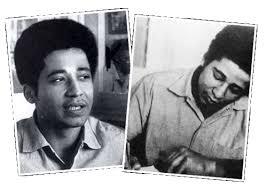 Kalonji Changa is co-founder of Black Power Media and founder of FTP Movement. He joins us from Atlanta to talk about Black August, which has been a fixture of the liberation movement for 43 years.
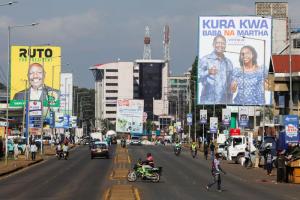 Irene Asuwa joins us from Nairobi, Kenya. She is co-convener of Ecological Justice and supports outreach at Ukombozi Library. We discuss the recent presidential election in that country.
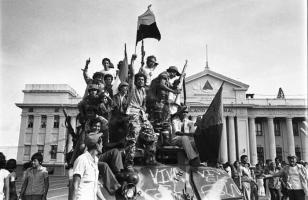 In a recent webinar hosted by the United National Antiwar Coalition (UNAC), Margaret Kimberley discussed what she witnessed during the commemoration events for the 43rd anniversary of the Sandinista…
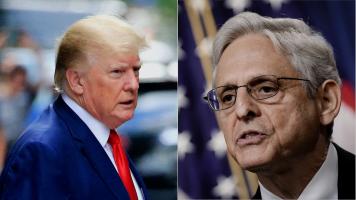 Why would Black people laud the FBI or criticize protection against self-incrimination? The FBI search of Donald Trump's home has reawakened Trump Derangement Syndrome.
 To commemorate Black August and in memory of the forty-two men massacred during the September 13, 1971 Attica Prison uprising we reproduce below an essay and petition from The Black Panther…


