A Black Agenda Radio commentary by executive editor Glen Ford
NAACP president Ben Jealous wants to start a “truth and reconciliation” process in the U.S. – before political prisoners are freed, while mass incarceration devastates Black families and communities, and when Blacks are murdered by the state every 28 hours. Jealous’ “talk of reconciliation is an obscene diversion from reality.”
Ben Jealous’ Obscene “Truth and Reconciliation” Proposal
A Black Agenda Radio commentary by executive editor Glen Ford
“Ben Jealous wants reconciliation without emancipation of those who sacrificed their youth for our people.”
NAACP chief Ben Jealous hasn’t taken a position on Assata Shakur, the exiled former Black Panther who President Obama’s FBI has elevated to Domestic Terrorist Number One – despite the fact that the grandmother has spent the last 29 years living peacefully in Cuba. Yes, Jealous knows that Shakur was a political prisoner before her escape, charged in the 1973 death Democracy Now! Brinks robbery
Ben Jealous’s clear reference is to South Africa’s Truth and Reconciliation Commission, convened in Cape Town, in 1996, by a multiracial cast of notables led by Anglican Archbishop Desmond Tutu. The Commission’s powers were limited to granting amnesty to perpetrators, or offering rehabilitation and reparations to victims. The hearings were quite controversial from the very start, and ultimately produced no political consensus among the races that justice was served.
“What is there to conciliate about?”
It is most important to bear in mind that, at that time, an African National Congress government under Nelson Mandela had been in office for two years. The ANC’s political prisoners, including Mandela, himself, had been freed. The Commission could grant amnesty, but not administer punishment – which seemed far from fair to many members of the non-white majority who had been abused in every imaginable way for generations.
It is curious that Ben Jealous thinks this rather ineffective South African medicine can heal America’s racial wounds – especially since, unlike South Africa, and Barack Obama notwithstanding, whites are still firmly in control, here. Our political prisoners remain behind bars – scores of them, many incarcerated for more than 40 years, and some of them still in solitary confinement. What is there to conciliate about? The only decent demand is that they be set free, to enjoy what years they have left among family and comrades on the outside. Ben Jealous wants reconciliation without emancipation of those who sacrificed their youth for our people. In that light, his talk of reconciliation is an obscene diversion from the reality of still-living human beings trapped in perpetuity in America’s dungeons.
Ben Jealous wants peace much more than justice – forgetting that without some semblance of justice, there can be no peace. That’s why he stakes out a position on some fantasized truth and reconciliation scheme before taking a stand on the actual plight of Assata Shakur, on whose head his favorite president has placed a $2 million bounty. Why doesn’t Ben Jealous work his conciliatory charms on Obama, whose assault on human civilization is making conciliation with America more and more impossible for huge segments of the world’s population?
Clearly, the truth is that Ben Jealous has already reconciled himself with evil, and wants the rest of us to “turn the page” while evil is still on the throne. Sounds more like a Reconciliation and Capitulation Commission.
For Black Agenda Radio, I’m Glen Ford. On the web, go to BlackAgendaReport.com.
BAR executive editor Glen Ford can be contacted at Glen.Ford@BlackAgendaReport.com .

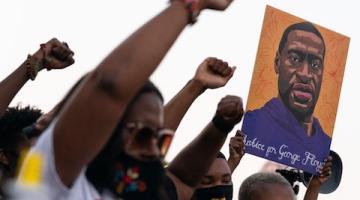 After the guilty verdict, the clarity that was collectively growing became squandered with the words “it’s not justice, it’s accountability.”
 It is vitally necessary to bridge the gap in knowledge and dismantle US misinformation campaigns against Cuba’s realities for international English-speaking audiences.
 American policing is defended as good despite its unmatched amounts of lethal violence.
 Richard Wright’s 1942 novel was testing the limits of what the white novel-reading public would have found imaginable.
 Writers, artists, community organizers and scholars have all contributed their analysis of the resource documents listed, below, and how they might be useful in assessing anti-Black structures arou



